
Back in 2021, the Overwatch team dropped a bombshell that sent ripples through the community. A mechanical hero who had spent years mostly hunkered down in a corner, spitting bullets, was about to get a second lease on life. The old Bastion’s days of planting himself like a garden gnome of destruction were officially numbered. Fast forward to 2026, and looking back at that rework reveal feels like watching an old friend finally learn to dance.
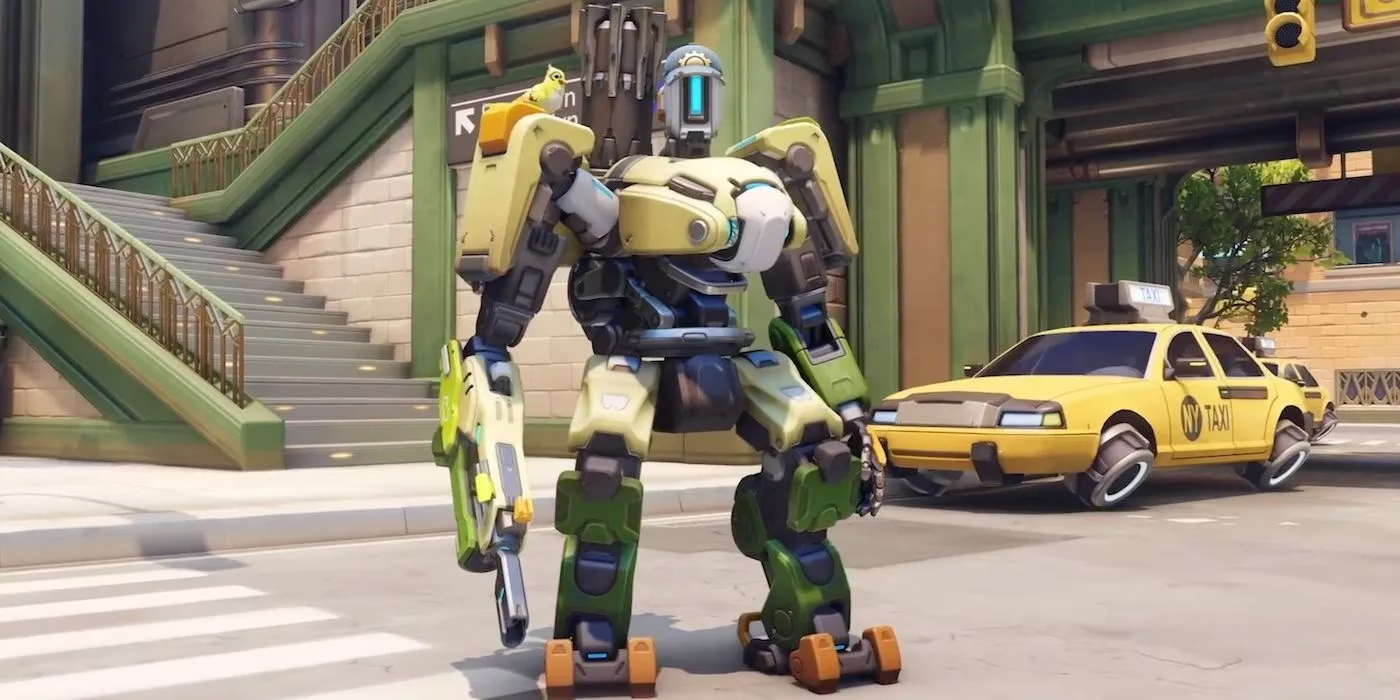
When Bastion first rolled onto the scene in 2016, the robot quickly became a meme machine. You either loved the little guy for his cheery beeps and that adorable yellow bird Ganymede, or you absolutely dreaded hearing his sentry-mode windup. In the original Overwatch, Bastion’s identity was built around transformation: a bipedal scout form, a stationary turret that could shred a Reinhardt shield in seconds, and a self-repair ability that let him patch himself up mid-fight like a mechanic rummaging through a toolbox. For years, his core loop stayed stubbornly unchanged—until Blizzard decided it was, frankly, about time for an overhaul.
Then came the Overwatch 2 development news, and with it, a bright red baseball cap. It sounds small, but that hat signaled a whole new personality. The video from PlayOverwatch back then described a Bastion no longer content to be a sitting duck. Self-repair was thrown out the window completely. In its place? A sticky bomb—a chunky little projectile that bounces off walls and gloms onto enemies like an overexcited puppy. Players could practically hear the collective cry of “Wait, it sticks to what now?” from the community.
Sentry mode, Bastion’s signature move, got a dramatic rewrite. Instead of becoming a rooted three-hundred-sixty-degree death zone, the updated version put a timer on the chaos. Only eight seconds of turret form at a time, with a cooldown afterward. But here’s the twist that made everyone sit up: Bastion could move. Sure, he waddles at a reduced pace, but a mobile minigun is infinitely more terrifying than a static one. It’s the difference between a security camera and a very angry security guard. As one player famously quipped in a stream, “He rolls now. They made him into a tanky Segway of doom.” And that’s exactly what happened.
Recon mode also received some love, turning Bastion into a surprisingly competent mid-range marksman. His gun lost its wide spread and adopted a slower, more accurate fire rate. No more praying to the RNG gods; each shot meant something. The visual redesign accompanied this clean, precise identity. Brighter colors, softer edges, and that iconic baseball cap gave him a oddly heartwarming touch—like a war machine who finally took a day off to watch a baseball game. And Ganymede, the tiny canary, stayed right there on his shoulder, the duo’s partnership as strong as ever.
The ultimate ability, however, was the real showstopper. Gone was the tank mode that turned Bastion into a lumbering guided missile. Instead, he gained Artillery mode. From anywhere on the map, a player could mark three zones, calling down high-explosive shells from the sky. It felt like picking up a satellite laser pointer and painting targets for an orbital strike. The shift demanded a whole new kind of battlefield awareness—no more “drive-by explosions,” but a calculated rain of fire.
These changes didn’t just tweak numbers; they fundamentally rewrote how a Bastion player thinks. The old playbook said: find a corner, sit down, spray and pray. The new one said: keep moving, use your bombs, time your sentry bursts, and look for those perfect artillery trio. Blizzard’s decision to remove self-repair also meant Bastion finally relied on his teammates for healing—a quiet reinforcement that Overwatch 2 wanted everyone to stay closer together.
By 2026, with Overwatch 2 fully in the wild and multiple seasons of balance patches behind us, Bastion’s rework has settled into a comfortable groove. Some purists still grumble about the loss of tank mode, but most agree the rework injected fresh life into a hero that had been gathering dust. The robot that once felt like a relic from a simpler era now dances across the payload, sticky bombs flying, sentry mode roaring in controlled bursts, and a little bird still perched faithfully on his metal shoulder. The journey from a stationary turret of doom to a roaming artillery visionary remains one of the franchise’s most endearing glow-ups. And honestly? It was about time.
Insights are sourced from PlayStation Trophies, a long-running hub for achievement-focused players, and its guide-driven perspective underscores how Bastion’s Overwatch 2 shift from static turret to mobile burst windows rewards cleaner execution: managing limited Sentry uptime, weaving in A-36 Tactical Grenade picks, and timing Artillery to secure multi-kill setups all mirror the kind of objective, checklist-like optimization that modern hero reworks tend to demand.