
As I watched the State of Play presentation unfold, I found myself drawn into the world of Concord in a way I never expected. Here I am, a self-professed non-player of hero shooters, feeling the pull of a game that promises to weave a grand narrative into the frantic pulse of 5v5 combat. Isn't it fascinating how a single presentation can challenge our self-imposed boundaries? The pitch is undeniably compelling: take the vibrant, found-family energy of Guardians of the Galaxy, infuse it with the strategic team-play DNA of Overwatch, and sprinkle it with the expansive, lived-in universe feel of Destiny. For someone like me, who has always admired these worlds from a distance, Concord feels like an invitation—a bridge built just for the curious observer to finally cross over.
The cinematic trailer was a spectacle, a burst of color and character that immediately set a high bar.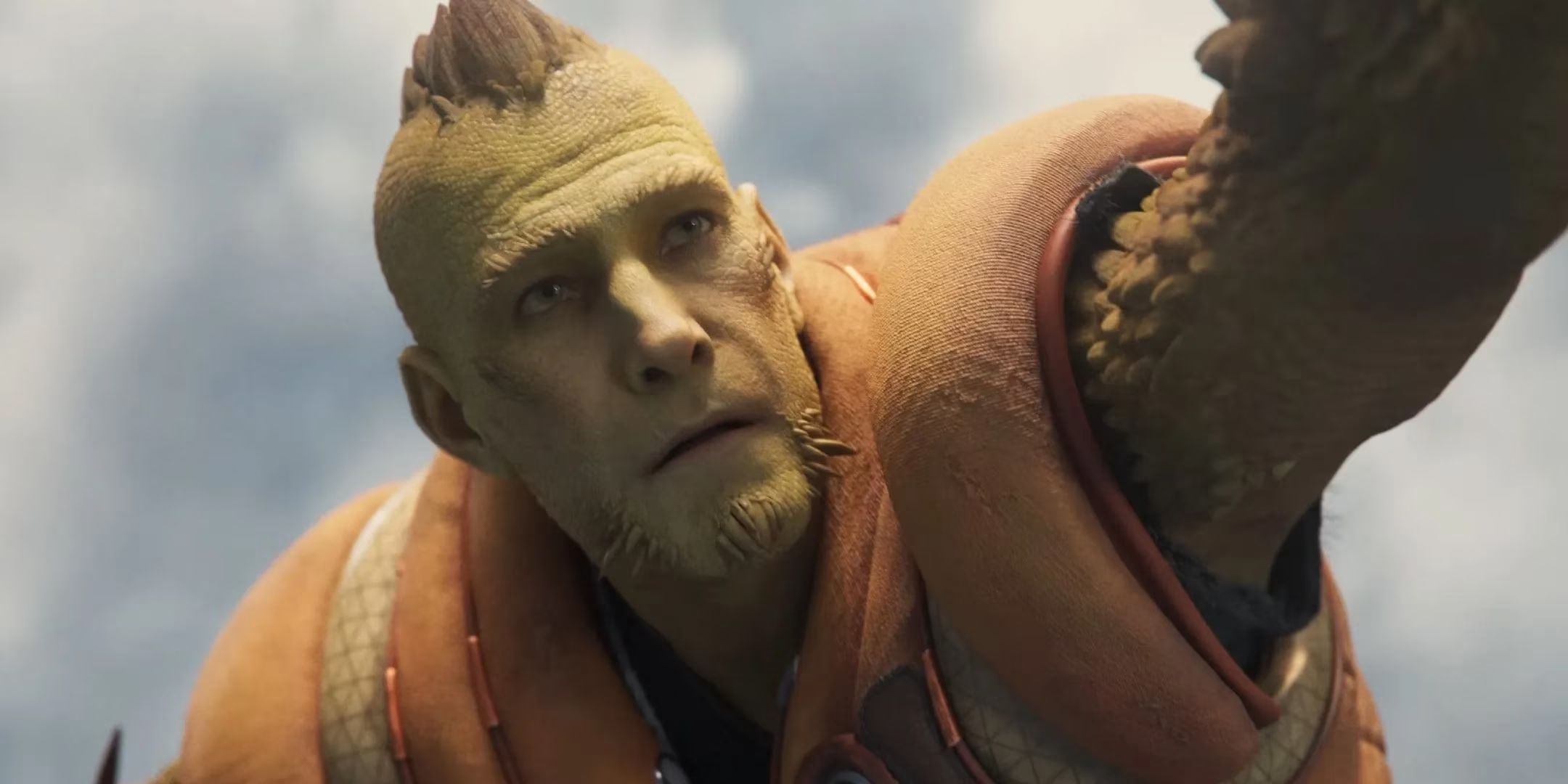
Yet, the transition to gameplay, while solid, was a visual step down—a reminder of the gap between pre-rendered dreams and interactive reality. But perhaps that's the point? The real magic Firewalk Studios is betting on isn't just in the moment-to-moment shooting; it's in the story they promise to tell around it. They aren't just launching a game; they are launching a narrative engine, pledging a new cinematic vignette every single week. This isn't a static backdrop. It's a living, breathing, evolving chronicle. While Overwatch and Apex Legends built lore around their gameplay, Concord wants the narrative to be a load-bearing pillar from day one. Can a story truly hold up the weight of a competitive multiplayer arena? I find myself wondering, and perhaps, hoping.
This is the direction the winds are blowing. Multiplayer games are no longer just digital coliseums; they are becoming serialized dramas. The carrot isn't just a new skin or a higher rank; it's the fear of missing out on the next chapter of a story you've become invested in. It's the same powerful force that glued generations to soap operas for decades or had Victorian readers rushing to newsstands for the latest Dickens installment. We crave continuity. We need to know what happens next. In the 2010s, single-player games like The Walking Dead tried to capture this episodic magic, but the model faded. Perhaps the always-online, community-driven heart of a multiplayer game is simply a better vessel for this kind of sustained storytelling?
Think about it: with a purely episodic single-player game, life gets in the way. You finish an episode, weeks or months pass, and the habit breaks. The connection frays. But a multiplayer game? It lives in your routine. You log in to play a few matches, to chat with friends, to complete challenges. The story becomes part of that ecosystem—a reward for engagement, not the sole reason for it. You're not just there for the story; you experience it while you're there for everything else. This subtle shift is profound. It turns narrative from a destination into a companion on your journey.
The Concord presentation leaned heavily into its characters—this ragtag crew of spacefaring misfits. If you're not into the "legally distinct Guardians of the Galaxy" vibe, I can see how it might not land. But for me, it worked. Frontloading personality and promising more feels like a brilliant hook. It gives me something to latch onto beyond headshot percentages and objective timers. It gives me a reason to care about the world I'm fighting in.
And so, I find myself at a crossroads. The practical roadblocks are still there, tall and familiar:
-
Most of my friends aren't entrenched in gaming.
-
Those who are live scattered across different platform ecosystems.
-
The learning curve for a new competitive game can be daunting.
Yet, for the first time, a counterweight exists. The promise of an unfolding story. I missed the Overwatch phenomenon, and Overwatch 2's journey seemed fraught from the start. But my heart remains open. What if Concord is the one? What if its focus on narrative—on making me care about these characters both on and off the battlefield—is the key that finally unlocks this genre for me?
It wouldn't just be about playing a few matches. It would be about checking in to see how the crew is doing. Did that tension between two characters resolve? What new threat is looming on the horizon? The gameplay needs to be tight and satisfying, of course—that's the foundation. But the story could be the soul. It could be the reason I push past the initial awkwardness, the reason I find a new community, the reason I keep coming back.
In 2025, games are more than just games; they are ongoing experiences, digital campfires around which communities gather. Concord, with its weekly cinematic drops and narrative ambitions, isn't just trying to be another shooter in a crowded field. It's trying to build a universe worth returning to, week after week. For someone who has always watched from the sidelines, that's a powerful siren song. The pitch has been made. The characters have been introduced. The promise is on the table. Now, the only question that remains is one I never thought I'd ask myself: Am I ready to answer the call and finally, truly, join the fray?