
I still remember the spring of 2022 like it was yesterday. The gaming world was buzzing with a strange mixture of skepticism and hope, and I found myself staring at my inbox every hour, hoping for an invitation to the Overwatch 2 PvP beta. Getting that email felt like a parched traveler finally spotting a mirage that didn’t vanish—except the oasis was real, and it opened on April 26. The beta was our first chance to taste the sequel, and looking back from 2026, I realize that week reshaped the way I think about hero shooters.
That First Bite of the Beta
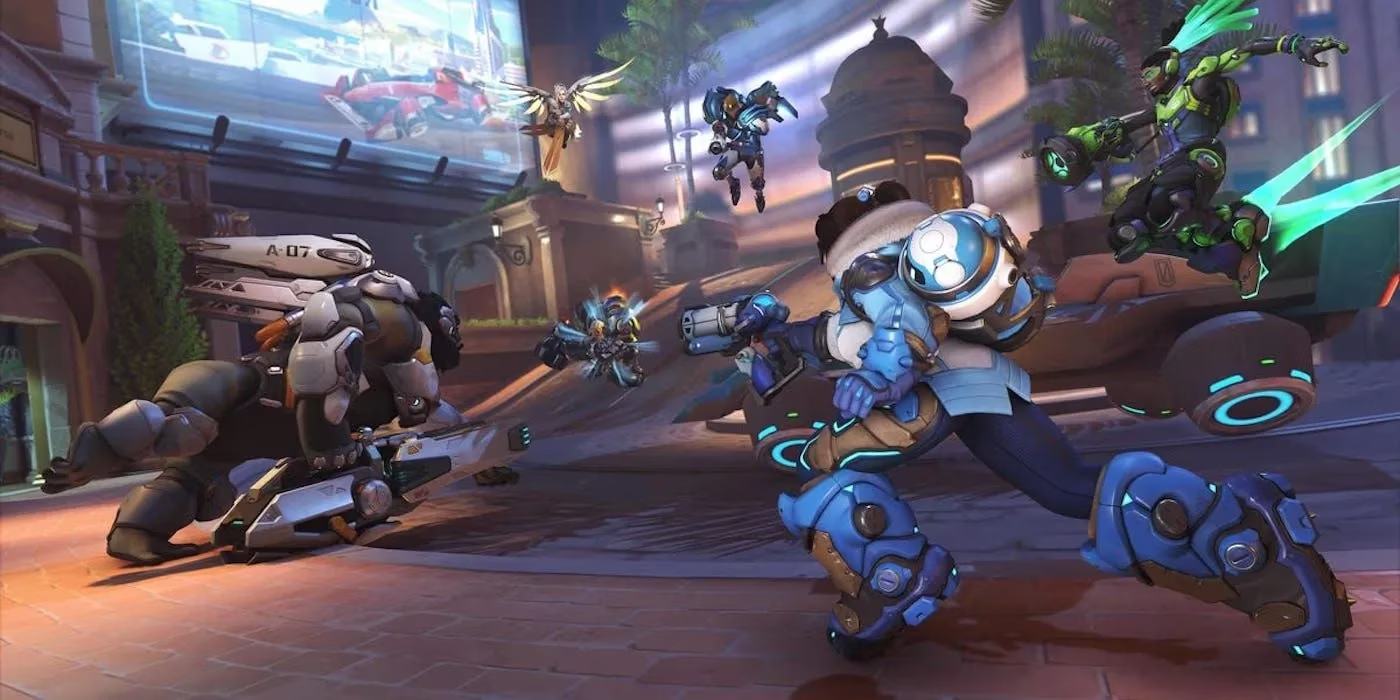
Stepping into the beta felt like being handed a prototype of your favorite gadget—familiar, yet full of unfamiliar buttons. The shift to 5v5 was the headline change, and my first match on the new Push mode in the Colosseo map was a revelation. Instead of six players chaotically clashing like a dozen beetles fighting over a crumb, each team became a tight five-person jazz ensemble. Losing one instrument made every note matter more; the rhythm felt sharper, the improvisation riskier.
I spent hours exploring Colosseo, a sun-drenched Roman arena where the Push robot trundled back and forth like a stubborn mule. The map was beautiful, and tucked away in a corner stood a colossal statue of an armored warrior named Magnus. His sword seemed to hum with unspoken lore, and the community immediately started speculating: would Magnus be the next hero? Rumors spread like wildfire, and in our minds, that statue became a promise.
Sojourn was the only new hero we could actually play, though. Her railgun had a charging mechanic that demanded patience and precision—a bit like trying to snap a photo of a hummingbird with a box camera. When I landed my first fully charged shot, the satisfaction was electric. She felt methodical, and combined with the reworked Doomfist (who now played more like a brawling bodyguard than a dive-happy assassin), the meta we were testing felt completely new.
The Long Wait and the Launch
The beta ended, and the months that followed were a strange limbo. The promised PvE mode was still a distant star, and we subsisted on breadcrumbs of developer updates. I’d often compare that period to being an astronaut tethered outside a space station, watching the world spin below while waiting for the airlock to open. When Overwatch 2 finally launched in October 2022, the 5v5 format was here to stay, and the cooperative story missions arrived in chapters rather than one giant drop. It wasn’t the all-you-can-eat PvE banquet we’d dreamed of, but the chapters we got—Rio, Toronto, Gothenburg—were cinematic treats that deepened the lore.
Where We Are Now, in 2026
Fast-forward to today, and Overwatch 2 has grown into something I never could have predicted during that April beta. The hero roster has expanded beyond anyone’s guess. Magnus did eventually make it into the game, not as a hulking melee warrior as the statue suggested, but as a flexible support who deploys spectral barriers—turns out he was an ancient Roman guardian spirit all along. The Push mode became a staple, and new modes like Crash Point and Siege have kept 5v5 feeling fresh.
The game’s evolution reminds me of a long-running TV show where the first season is just a prologue. That beta was the pilot episode, rough around the edges but brimming with potential. I’m grateful I got to be there at the starting line, and even more grateful that the journey is still unfolding. Today, when I see new players chasing the Push robot through Colosseo, I smile and think: they have no idea how far this ride goes.