
Back in 2021, the gaming world watched Activision Blizzard trip over its own shoelaces in spectacular fashion. Fast forward to 2026, and the saga still echoes like the laughter in a troll-filled Twitch chat. At the center of one particularly juicy chapter was Frances Townsend, the company’s then-executive sponsor of the Women’s Network. Her tenure ended not with a whisper, but with a digital bang that made “PR nightmare” sound like churchly understatement.
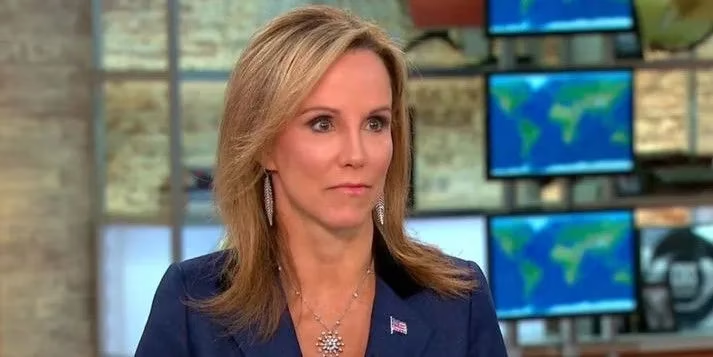
After the state of California dropped a lawsuit on Activision Blizzard alleging a “frat boy” culture rife with harassment, Townsend fired off an internal email that was about as welcome as lag in a ranked match. The missive claimed the lawsuit “presented a distorted and untrue picture of our company, including factually inaccurate, old, and out of context stories — some from more than a decade ago.” In corporate-speak, that’s basically saying, “Nothing to see here, folks!” but the employees weren’t buying it. Cue the collective facepalms.
The Zoom Call That Topped the Charts
With tensions higher than a no-scope kill streak, a 500-person Zoom call was organized on July 23 to let women employees air their grievances. According to insiders quoted by The Washington Post, Townsend defended the email by claiming she’d followed legal counsel’s guidance, and that the final wording no longer sounded like her own voice. That’s the classic “my lawyers made me do it” defense, and it went over about as smoothly as a sledgehammer on a glass keyboard. The call hit the max participant limit, and management promised a recording would be sent to those who couldn’t make it. But five days later, employees got an update that the recording was being withheld because sharing “personal concerns voiced by employees” wasn’t appropriate. For a company built on real-time communication in games, it suddenly found the mute button very convenient.
When Tweets Bite Back
If the email wasn’t enough to land Townsend in hot water, her Twitter game poured boiling oil on the flames. She shared an article with the caption “the problem with whistleblowing” — a move that went down like a lead balloon, especially given the ongoing investigation. Many saw it as a not-so-subtle jab at employees speaking out against management’s behavior. The backlash was swift and spicy. Townsend allegedly started blocking critics, including her own colleagues. Renowned reporter Jason Schreier noted that multiple Activision Blizzard employees reported being blocked after calling her out. Blocking on social media might be a common pastime, but when you’re a high-level exec and you’re swatting away your own team’s concerns with the block button, you’ve basically unlocked the “how to lose all credibility” achievement.
The Sponsor Exodus
The fallout wasn’t contained to internal drama. The Overwatch League, which had been marketed as a shiny e-sports utopia, started bleeding sponsors faster than a noob in a battle royale. Pringles and Cheez-It Grooves said “adios” completely, while heavyweights like Coca-Cola and State Farm began “reassessing” their partnerships — corporate code for “we don’t want our brand next to this dumpster fire.” For a company that once boasted snazzy suites and celebrity endorsements, it was a humbling reminder that no amount of Mountain Dew can wash away a stench this strong.
So What’s the Tea in 2026?
Zooming into the present, Townsend’s exit from the Women’s Network role was just one domino in a chain of executive shake-ups. The episode became a masterclass in how not to handle a crisis: dismiss allegations, blame lawyers, then silence feedback — all while your social media timeline turns radioactive. The irony is thicker than a tank meta. A network meant to empower women ended up being led by someone whose words and actions made the very same women feel unheard.
Today, gaming companies tout inclusivity panels and zero-tolerance policies as if they bought them off a steam sale, but the ghost of Townsend’s email still serves as a cautionary tale. In the high-speed world of video game scandals, where every employee has a smartphone and a Twitter handle, the “we’ll just issue a statement and move on” approach died a hero’s death months before this saga. If there’s one thing the gaming community remembers better than backstories of long-forgotten lore, it’s when a corporation makes a royal mess of things — and Activision Blizzard’s 2021 meltdown was the stuff of speedrun legend.
So next time a suit thinks about sending that “nothing is wrong” email, maybe they should first check if they’ve got a block list long enough to handle the backlash. Spoiler: they don’t.