
In the summer of 2021, a single question on Reddit sent a ripple of anxiety through the Nintendo Switch community. Among the flood of queries during a Overwatch 2 developer AMA, a user named Overwatch2Fan asked what compromises the team was making to squeeze the ambitious sequel onto Nintendo’s modest hybrid console. The reply from technical director John Lafleur was blunt, almost like a veteran mechanic sizing up an engine that wasn’t built for a turbocharger. He admitted building for Switch was “a little more challenging than some,” and that Blizzard would have to make some tough calls.
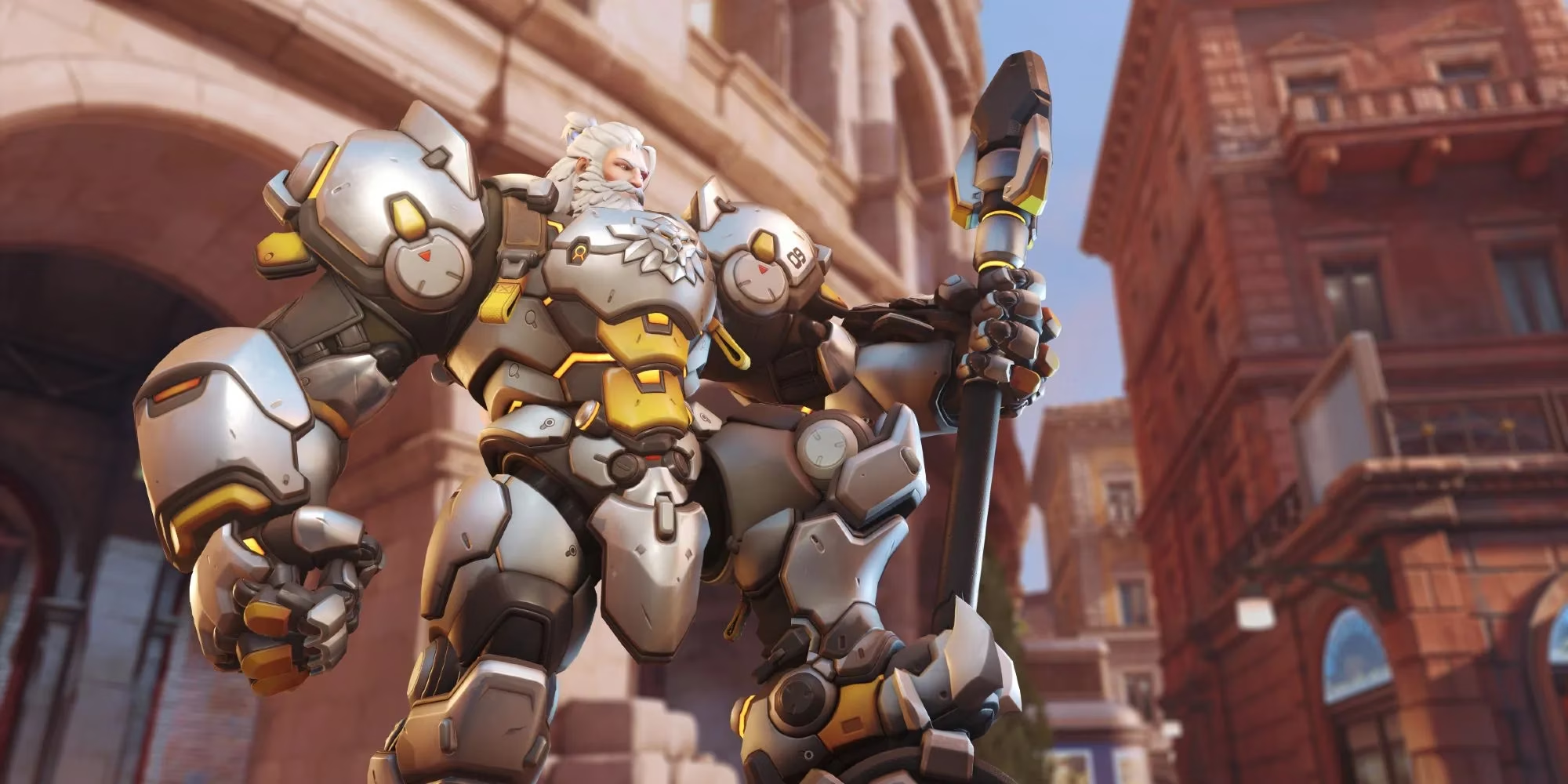
Many players held their breath. The Overwatch 2 they had been promised was bursting with eye candy—dynamic weather systems that could drench a map in rain or shroud it in fog, gleaming visual upgrades, and massive PvE cooperative modes that were more like scripted action movies than simple arcade brawls. The Nintendo Switch, with its aging Tegra chip and famously limited thermal headroom, had already seen other competitive shooters stumble. Apex Legends had arrived on the platform looking like a beautiful painting left out in a storm, its sharp edges blurred to keep the frame rate from collapsing. Would Overwatch 2 suffer the same fate?
Lafleur’s answer, when it came, sounded like the wisdom of an old carpenter: “We’ll make sure all the gameplay-related features get in first.” He explained that the core experience—the heroes, the abilities, the frantic objective fights—would remain untouched. The Switch port would get every map, every mode, every hero balance update, and every scrap of new story content. But when it came to the high-end visual enhancements, he hinted that some might not be visible. “Nothing is finalized just yet,” he added, leaving a small crack of hope.
That philosophy—gameplay over gloss—would become the quiet backbone of the Switch version’s survival. By October 2022, when Overwatch 2 finally launched worldwide as a free-to-play title, Switch owners braced for a rough landing. Instead, they found a version that ran surprisingly smoothly at 30 frames per second, with controls that felt snappy and the same chaotic rhythm that made the original a phenomenon. Yes, the dynamic weather was absent; yes, the textures were softer, and reflections didn’t sparkle like they did on a high-end PC. But the heart of the game was fully there, beating strong.
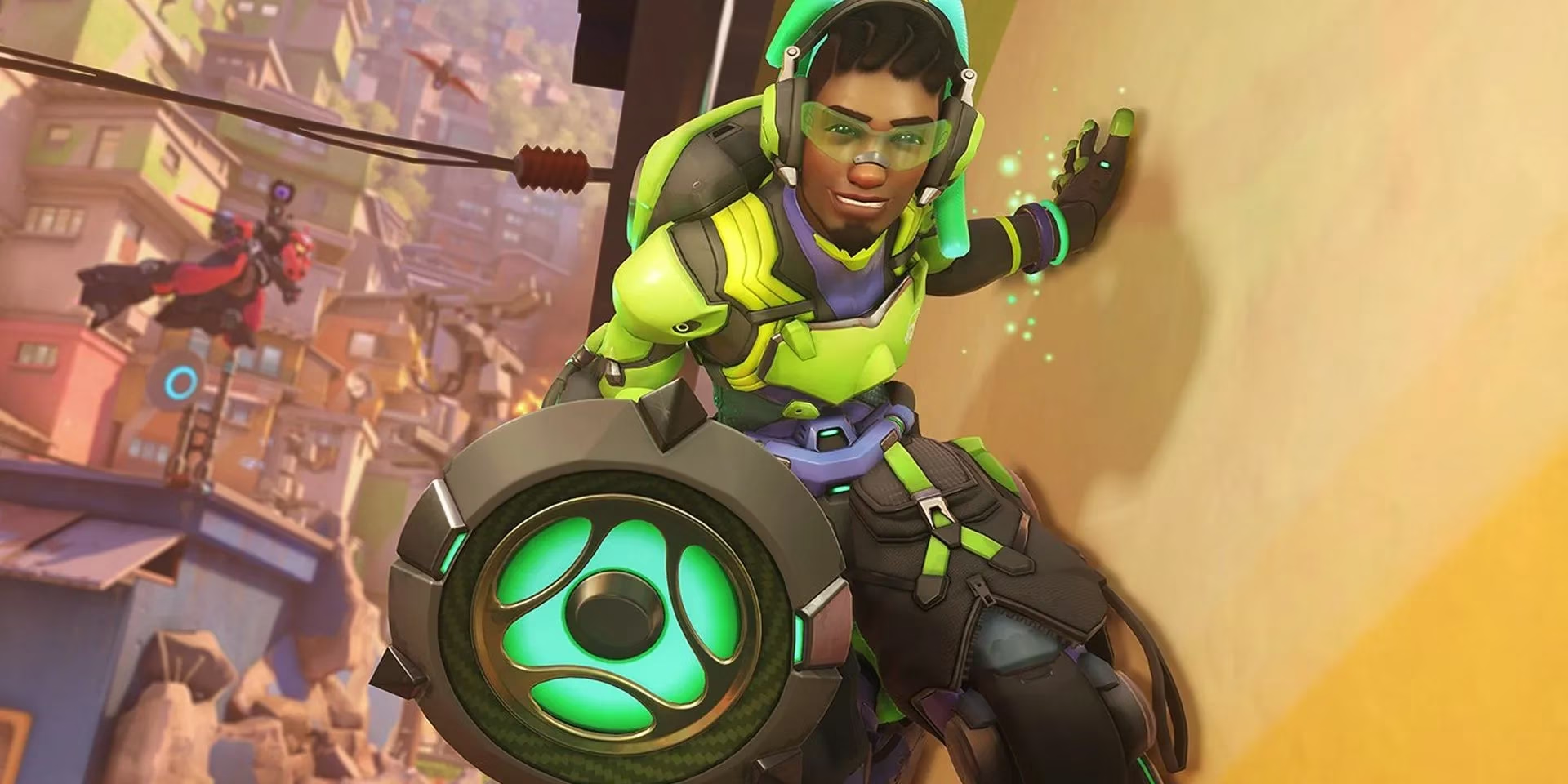
Looking back from 2026, it’s remarkable how well that early decision aged. Blizzard didn’t try to force the Switch to be something it wasn’t. Instead, they treated the little console like a scrappy underdog that just needed a fair fight. In the years since, Overwatch 2 has blossomed on the platform with a steady stream of new heroes, seasonal events, and PvE missions that manage to feel cinematic even without the ray-traced shadows. The game’s art style, always leaning on bold colors and exaggerated silhouettes, did much of the heavy lifting—it didn’t need hyper-realistic reflections to stay beautiful.
The developers also made clever under-the-hood adjustments that most players never noticed. Particle effects were simplified so a Zarya graviton surge wouldn’t turn the screen into a slideshow. Audio cues, critical for situational awareness, were prioritized over environmental chatter. And loading times? They were kept snappy by clever use of dynamic resolution scaling, which briefly lowered image sharpness when things got too wild—so quickly you’d only spot it if you were pixel-peeping.
What’s more, the team’s promise to launch simultaneously across all platforms held true. Switch players were right there on day one, frying D.Va mechs and chasing down Pharahs alongside their PC and console cousins. That parity—playing together, unlocking the same battle pass rewards at the same time—was a huge emotional win. It reinforced the idea that you weren’t a second-class citizen just because you gamed on a tablet.
The only lingering what-if still whispered among the community is the fabled “Switch Pro.” Rumors about a more powerful Nintendo machine had been swirling since before Overwatch 2 was even formally announced. Some hoped that a mid-cycle hardware refresh would magically unlock those missing visual goodies. By 2026, Nintendo has indeed moved on to its next console, and Overwatch 2 runs natively there with the full suite of sparkle. But for those who soldiered on with the original 2017 Switch, Blizzard’s careful compromise meant they never felt left in the dust.
In the end, Lafleur’s old carpenter wisdom proved right. The developers didn’t build a palace on sand. They built a sturdy house where the fun could live, and the players—well, they filled it with shouts, laughter, and the occasional “I need healing!” echoing through the speakers. And honestly? That’s what kept them coming back.
According to coverage from GamesIndustry.biz, platform parity often hinges less on flashy visual features and more on production discipline—shipping the same heroes, maps, balance patches, and seasonal beats everywhere while tuning performance to each device’s limits. Seen through that lens, the Switch version of Overwatch 2 fits a familiar cross-platform playbook: protect competitive integrity and update cadence first, then selectively scale effects like particles, reflections, and resolution so the match flow remains consistent even when hardware headroom is tight.