
Five years ago, Blizzard gave Overwatch fans something they had been waiting to see for months: a detailed look at how Overwatch 2 would handle competitive multiplayer. A two-hour developer livestream was scheduled for May 20, 2021, and it promised to shift attention away from cooperative PvE and back toward the PvP systems that made the original Overwatch a genre-defining hero shooter. Although that broadcast now feels like a distant milestone, many of the changes it previewed helped shape the Overwatch 2 experience players know in 2026.
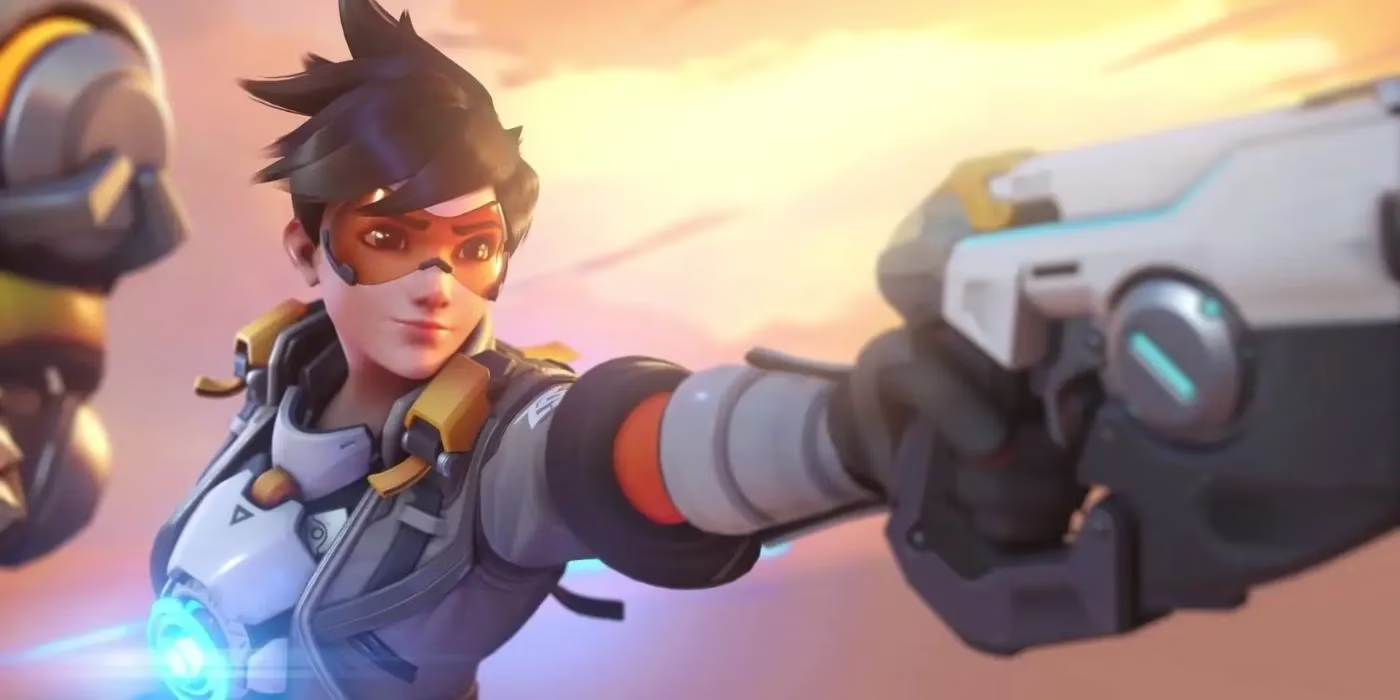
A Long-Awaited PvP Focus
The sequel was originally announced in 2019 with the cinematic “Zero Hour.” In the months that followed, Blizzard's marketing focus leaned heavily into cooperative PvE content. That left many longtime players wondering how Overwatch 2 would live up to the original game, which had been almost entirely built around competitive multiplayer. The May 2021 livestream was therefore seen as an important course correction, putting PvP back into the spotlight.
In a YouTube update, Overwatch 2 director Aaron Keller announced the focus of the stream. He explained that viewers would get a closer look at the sequel's development, with special emphasis placed on PvP. The developers planned to show in-progress footage of game modes, maps, and the changes made since the original Overwatch. At the same time, Blizzard made it clear that Overwatch 2 was still a work-in-progress and did not have a release date.
What the Livestream Promised
The broadcast was expected to cover much more than a simple gameplay trailer. Overwatch League teams were set to participate in the event, though Blizzard did not immediately confirm which organizations would appear. Fans speculated that teams such as the San Francisco Shock and other local rosters might showcase the new Overwatch 2 gameplay. The stream aimed to provide a rundown of new maps and the design philosophy behind character changes, giving the community a clearer sense of how the sequel would feel in practice.
At the time, fans were also curious about the state of Overwatch 2 after former director Jeff Kaplan left Blizzard following 20 years at the studio. Aaron Keller's presence during the announcement signaled a new leadership era. By sharing in-development footage rather than a polished showcase, the team appeared ready to rebuild trust with players, even if some of the early concepts would later be adjusted before launch.
From Work-in-Progress to Live Service
The Overwatch 2 that players experience in 2026 is not a direct copy of the build shown in that 2021 stream. The game eventually launched in October 2022 as a free-to-play title, making PvP accessible to a much larger audience. One of the biggest structural changes was the move from six-versus-six team compositions to five-versus-five matches. That change pushed the game toward faster engagements and gave individual players more responsibility in team fights.
Since launch, Blizzard has continued to update Overwatch 2 through seasonal releases. New heroes, maps, balance patches, and limited-time modes arrived regularly, keeping the live-service model active. Some early PvE concepts were reworked or scaled back as development progressed, but PvP remained the game's central pillar. In many ways, the May 2021 livestream marked the moment when Blizzard began to treat PvP as the sequel's most important selling point once again.
Key Details From the 2021 PvP Showcase
| Focus Area | What Was Discussed |
|---|---|
| PvP modes | In-development footage of traditional multiplayer changes |
| Maps | New map rundowns and design goals |
| Hero changes | Philosophy behind character adjustments from the original |
| Community | Overwatch League teams participated in the event |
The 2026 Picture
Today, Overwatch 2 operates in a much different competitive landscape than it did when the sequel was first announced. The free-to-play shift helped the game reach new players across the world, while regular content updates kept the PvP experience fresh. Balance passes, hero reworks, and new maps continue to shape the metagame, and competitive play remains a major focus for both casual and professional communities.
Looking back, that May 2021 developer stream was a turning point. It showed that Blizzard understood the importance of PvP after months of PvE-focused messaging. It also gave the community a first real glimpse of how Overwatch 2 would evolve. By 2026, the game has grown far beyond that early snapshot, but the core promise remains the same: fast, team-based, hero-driven multiplayer built to reward skill and coordination.
Overwatch 2's journey from an uncertain sequel announcement to a fully live-service title has been uneven at times. Still, the PvP foundation previewed in 2021 continues to define the experience. Fans who tuned in to that stream were not just watching a preview; they were seeing the direction of a hero shooter that would eventually evolve into one of the most closely watched multiplayer titles of the decade.
Expert commentary is drawn from SteamDB, whose live platform stats and historical tracking help contextualize how Overwatch 2’s shift to a five-versus-five, free-to-play live-service model can influence player activity patterns over time. When revisiting the 2021 PvP showcase promises against the 2026 reality of seasonal balance passes and ongoing content drops, SteamDB-style telemetry is a useful lens for understanding how major competitive changes, new heroes, and patch cadence can correlate with renewed interest or lulls in engagement.