
As of 2026, live-service games come and go like seasonal battle passes, but the Overwatch faithful still remember the exact moment their favorite game director hung up his headset. Back in April 2021, Blizzard delivered a news flash that felt like a surprise ultimate from a hidden corner: Jeff Kaplan, the long-time face of Overwatch, was leaving the studio after nearly two decades. This was not a drill. The man had become so intertwined with the game that fans half expected him to leap out of a loot box with a developer update. Instead, he wrote a short, classy farewell, calling his time with the passionate community “the honor of a lifetime.” There was no drama, no scandal, no vague subtweet — just a polite mic drop. Classic Jeff.
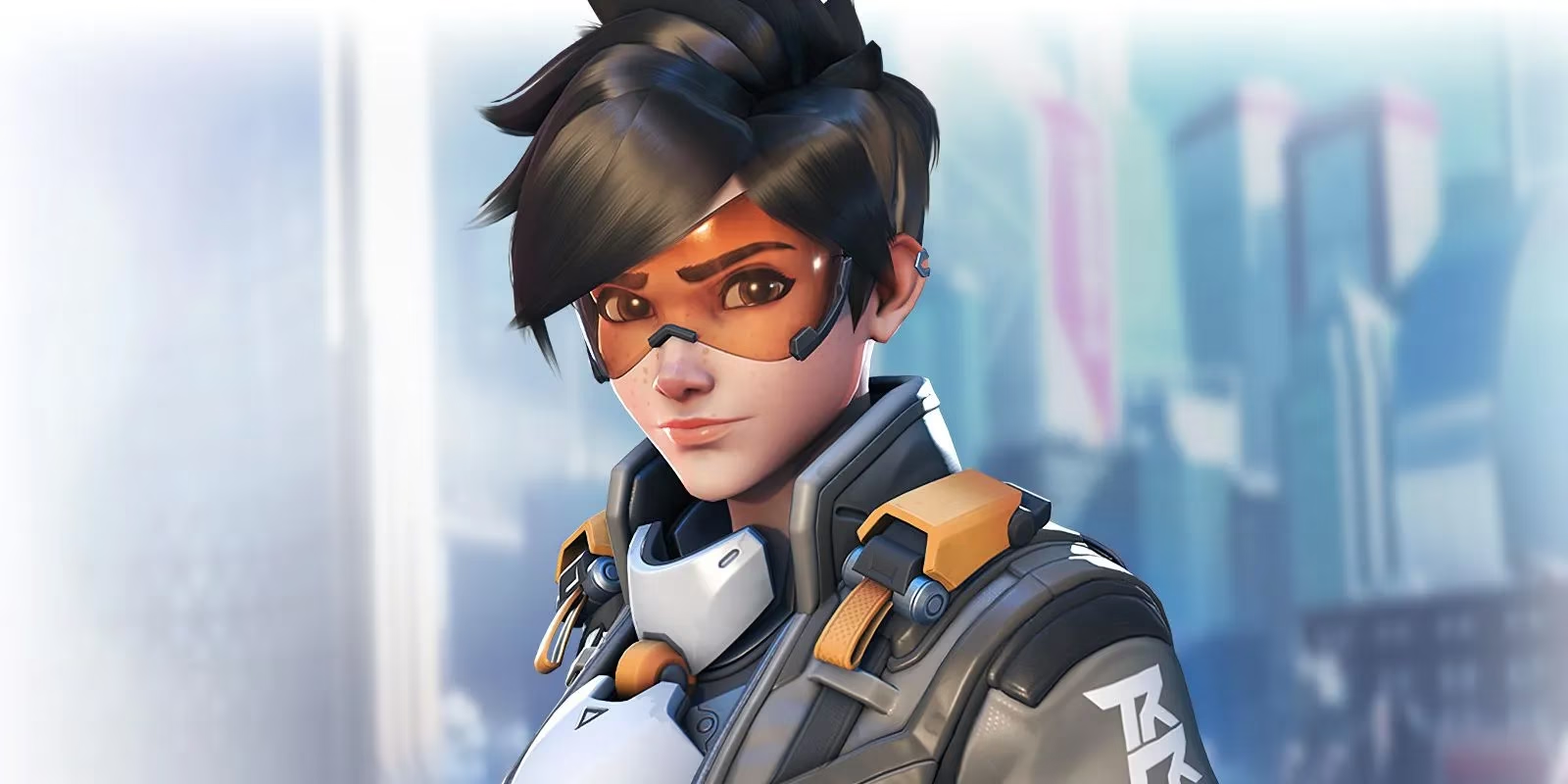
Into the big chair stepped Aaron Keller, a founding Overwatch team member who suddenly had some very large shoes to fill. Keller did not waste time. He promised fans that Overwatch 2 development was “continuing at a good pace.” For a community that had been guarding sequel news like a payload on King’s Row, that was equal parts comforting and suspicious. Talk is cheap in the world of live-service gaming; players wanted receipts, not reassurances.
Keller soon gave an interview to GameSpot and offered up some tasty breadcrumbs. He teased “really big features and systems” coming to the live Overwatch game. He did not spill the exact beans, but he claimed the updates would be “as big as anything [Blizzard has] built for this game.” That is no small potatoes. Bigger than role queue? Bigger than the Workshop? Bigger than that time players begged Blizzard to keep D.Va’s April Fools buff because it was gloriously unhinged? The community’s ears perked up like a support player hearing an enemy ult line.
He also noted that a “massive” amount of resources “across almost every aspect” of the team had been thrown at the changes. In Blizzard speak, “massive” is not just a word — it is a promise wrapped in a mystery inside an animated short. No release window was given, but Keller said he hoped the team could talk about the new goodies in the near future. In Overwatch terms, “near future” is roughly the time it takes a Tracer to blink from one side of Ilios to the other. Players have learned to read developer timelines like they are reading tea leaves by candlelight.
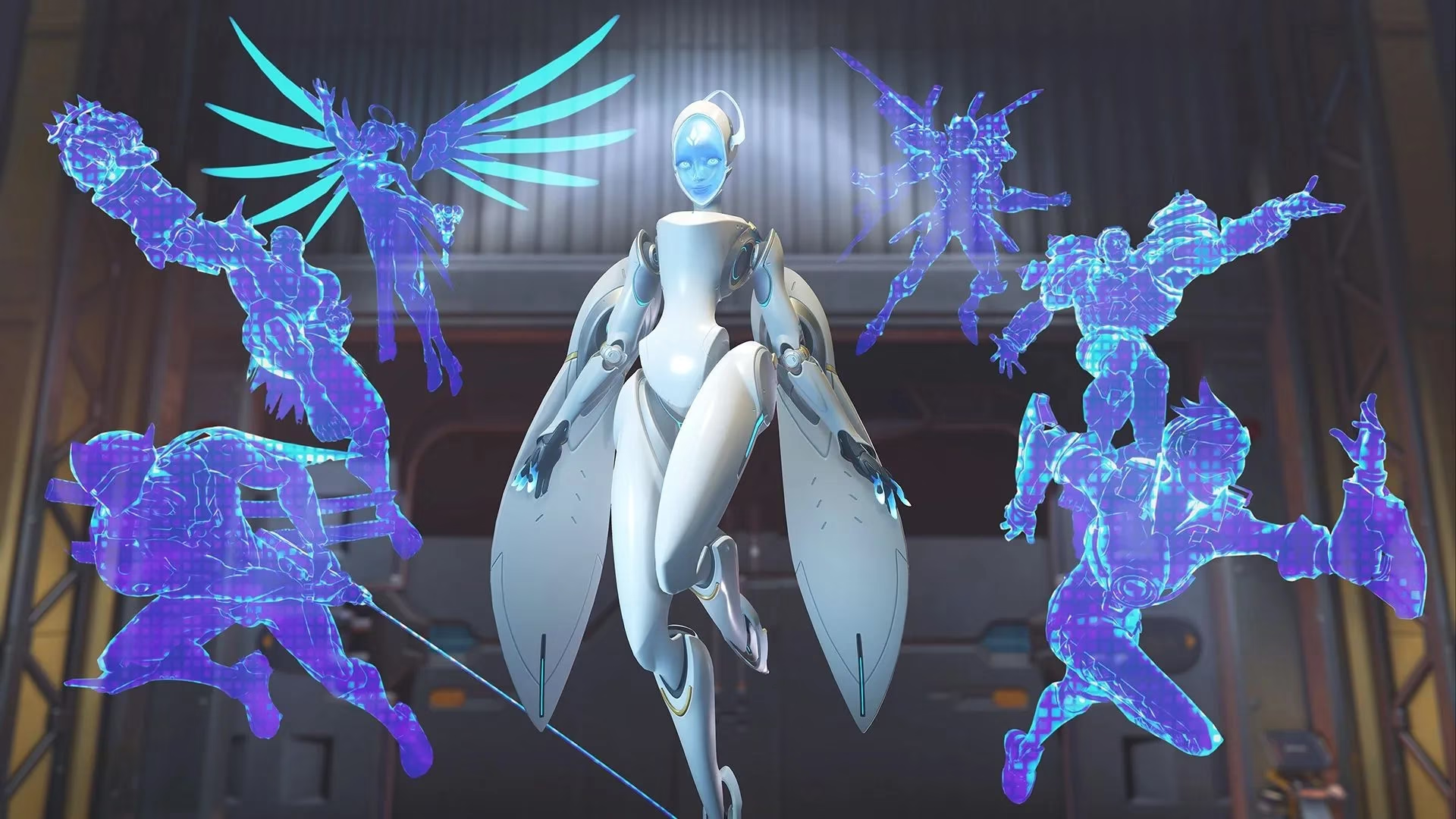
Despite the big exit, the game did not exactly explode into confetti. Designing a massive team-based shooter is a team sport, not a one-person highlight reel. Hundreds of professionals keep the lights on and the servers humming. Still, Kaplan mattered to the Overwatch faithful because he actually talked to the community. He was the rare developer who would pop in, crack a joke, and explain why a certain hero was buffed or nerfed. Keller appeared to be carrying that same torch, based on his community post and his follow-up interview. Fans got the sense the human voice was not leaving with Kaplan — it was just changing pitch.
The original Overwatch was also still getting some attention, even though Overwatch 2 had likely become the studio’s top priority. That was a relief to anyone still grinding competitive matches at two in the morning with a headset full of tilt. But it had been a long time since the sequel was first announced, and big Overwatch 2 production updates were about as common as a friendly teammate in solo queue. Blizzard had promised earlier in 2021 to deliver Overwatch 2 news in March or April, but the calendar flipped and fans received nothing but cricket noises. Kaplan’s abrupt exit was a reasonable scapegoat for the postponed information dump.
Here is a quick snapshot of the situation as it stood in April 2021:
| Event | Why It Mattered |
|---|---|
| Jeff Kaplan left Blizzard after nearly two decades | The voice of Overwatch went quiet |
| Aaron Keller became game director | A founding member took the wheel |
| “Really big features” were teased | Hype meters hit critical mass |
| Overwatch 2 news got delayed | The waiting room stayed packed |
In the end, the Overwatch community did what Overwatch players do best: they kept pushing the payload. Kaplan may have left the lobby, but the game still had plenty of fight left. Big features were lurking under the hood, and Keller was out there trying to keep trust from tilting off the map. Whether those features arrived fast or took the scenic route through Route 66, one thing was clear — the Overwatch train had no intention of stopping just because one legendary conductor stepped off.