
It was a jaw-dropper of a Tuesday when news broke that Jeff Kaplan, Vice President of Blizzard Entertainment and the mustachioed face of Overwatch, would be leaving the studio after nearly two decades. For the Overwatch faithful, it felt less like a patch note and more like a sudden tank swap mid-match. No miracle ultimate was coming to reverse this one.
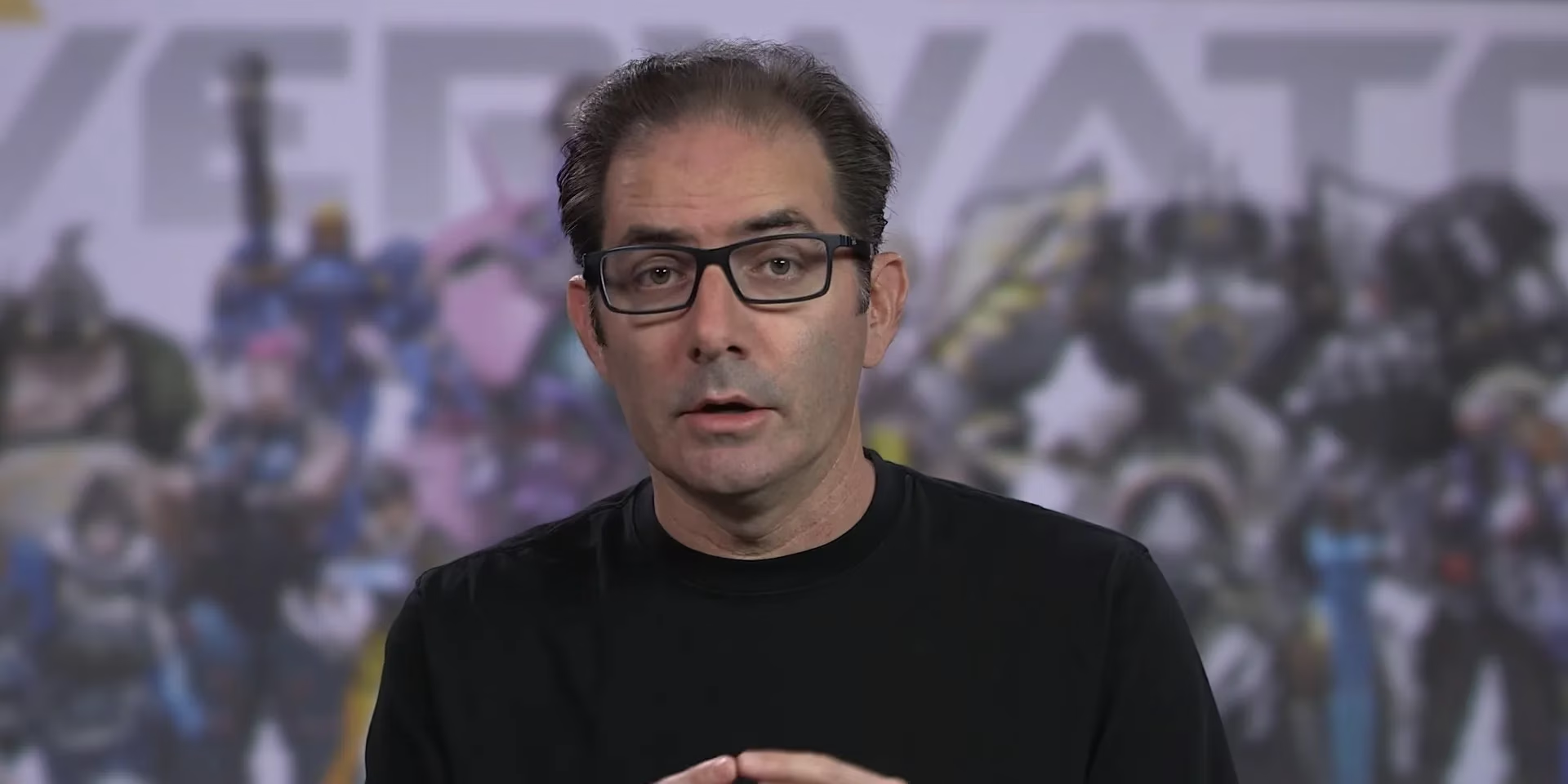
Kaplan had been a Blizzard institution. Before he became the calm, bearded narrator of every Overwatch developer update, he spent years as a designer on World of Warcraft. That is not a small detail. Millions of players across two very different genres had felt his fingerprints on their loot tables, raid bosses, capture points and payload routes. Overwatch itself launched in 2016 as a polished team-based first-person shooter and somehow kept receiving post-launch support that players actually wanted—new heroes, seasonal events, and a steady drip of lore.
The timing of his departure made the news even spicier. Overwatch 2 had been announced, but information was arriving at roughly the pace of a payload pushed by one very sleepy Reinhardt. Fans had been promised fresh details soon. Kaplan himself recently dangled one adorable crumb: the sequel would feature an extremely good dog. Nobody knew why the dog existed, where it lived or what it would do. Yet somehow that dog became the last great mystery Kaplan left behind. The shared multiplayer environment between Overwatch and Overwatch 2 was also confirmed. New heroes, maps and modes would flow into both titles, while the sequel would add a proper PvE mode. That PvE dream had only been glimpsed in limited events up to that point.
The known Overwatch 2 facts from that era were few but memorable:
-
A shared PvP environment with the first game.
-
A proper PvE mode with story missions and hero progression.
-
One extremely good, deeply mysterious dog. 🐕
Then Blizzard dropped the announcement. Kaplan was out after 19 years. The news included a personal note from the man himself, thanking the Overwatch team and community. In his place, Aaron Keller, a founding member of the Overwatch development team, stepped up as game director and lead designer. Keller tried to soothe the herd immediately, insisting that Overwatch 2 was still cruising forward despite the leadership change. For fans, it was like hearing a new support player promise to keep healing while the old main healer quietly walked off the map.
The announcement itself was remarkably civil by internet standards. Kaplan's note did not burn the building down. He expressed gratitude, which only made the community more emotional. A game director who thanks everyone on departure is rare enough to be suspicious. Was it class? Was it a secret card? It was class, mostly. Keller, meanwhile, had the unenviable job of smiling through the chaos. His message was steady: development continues, the team is focused, and Overwatch 2 is still coming.
Naturally, the community reacted with a mix of panic, gratitude and meme-generating sorrow. Some players changed their battle tags. Others spammed group-up voice lines in spirit. Many pointed out that Archives 2021 was running at the time, and while it brought back previous game modes and a batch of new skins, it felt lighter than past years. Five new skins and a handful of cosmetics could not distract from the fact that the game's most recognizable human had just said goodbye.
From a 2026 vantage point, the departure reads like a turning point rather than a funeral. Overwatch 2 eventually released and evolved under Keller's stewardship. The game gained new heroes, reworked systems and, yes, eventually more dogs, though none could match the legendary mystery dog of 2021. The hero shooter landscape has also grown crowded and noisy, but Overwatch's foundation still carries Kaplan's design DNA. His communication style—earnest, nerdy and surprisingly human—left a mark on how live-service teams talk to their players.
Was the leadership change worrying at the time? Sure. Any director swap mid-development is like swapping main tanks between rounds. But in hindsight, the payload kept moving. Jeff Kaplan may have left the group, but the game he helped build stayed on the objective. And somewhere in the Overwatch archives, that dog is probably still waiting.