
In the gaming world, there’s a tendency to reduce complex experiences into simple elevator pitches—a practice that, while convenient for marketing, often creates misleading expectations. When NetEase announced Marvel Rivals, the immediate shorthand became ‘Marvel Overwatch.’ This comparison, fueled by superficial similarities like its 6v6 character-based structure and familiar ability keybindings (Shift, E, and Ultimate on Q), instantly conjured images of Blizzard’s hero shooter. However, this label does a disservice to both games, obscuring the unique identity Marvel Rivals is trying to forge. As players dissect the reveal trailer, it becomes clear that the core gameplay diverges significantly from Overwatch’s precision-based, first-person shooting, leaning instead into the chaotic, movement-driven spectacle of a third-person brawler.
🔍 The Overwatch Comparison: Surface-Level Similarities
At first glance, the parallels between Marvel Rivals and Overwatch seem undeniable. Both games feature:
-
Team-based 6v6 combat with objective-driven modes.
-
A diverse roster of characters, each with unique abilities and ultimates.
-
Familiar control schemes, where abilities are mapped to similar keys, creating an intuitive feel for seasoned hero-shooter players.
-
Vibrant, stylized maps that encourage verticality and team coordination.
Overwatch’s legacy as the genre-defining hero shooter makes it an easy reference point. When players see Iron Man soaring through the air or Rocket Raccoon unleashing a barrage of lasers, it’s natural to recall Overwatch’s iconic heroes like Pharah or Tracer. Yet, this surface-level alignment overlooks the fundamental differences in gameplay philosophy and execution.
🎮 Core Gameplay: Brawler vs. Shooter
Where Overwatch emphasizes precision aiming, positioning, and tactical team play—with most heroes relying on ranged attacks—Marvel Rivals appears to prioritize close-quarters combat, dynamic movement, and ability-based skirmishes. The reveal trailer showcases characters like Black Panther darting across the battlefield with agile leaps and Magik weaving in and out of portals with her Soulsword, suggesting a focus on melee engagements and spatial control rather than pixel-perfect headshots.
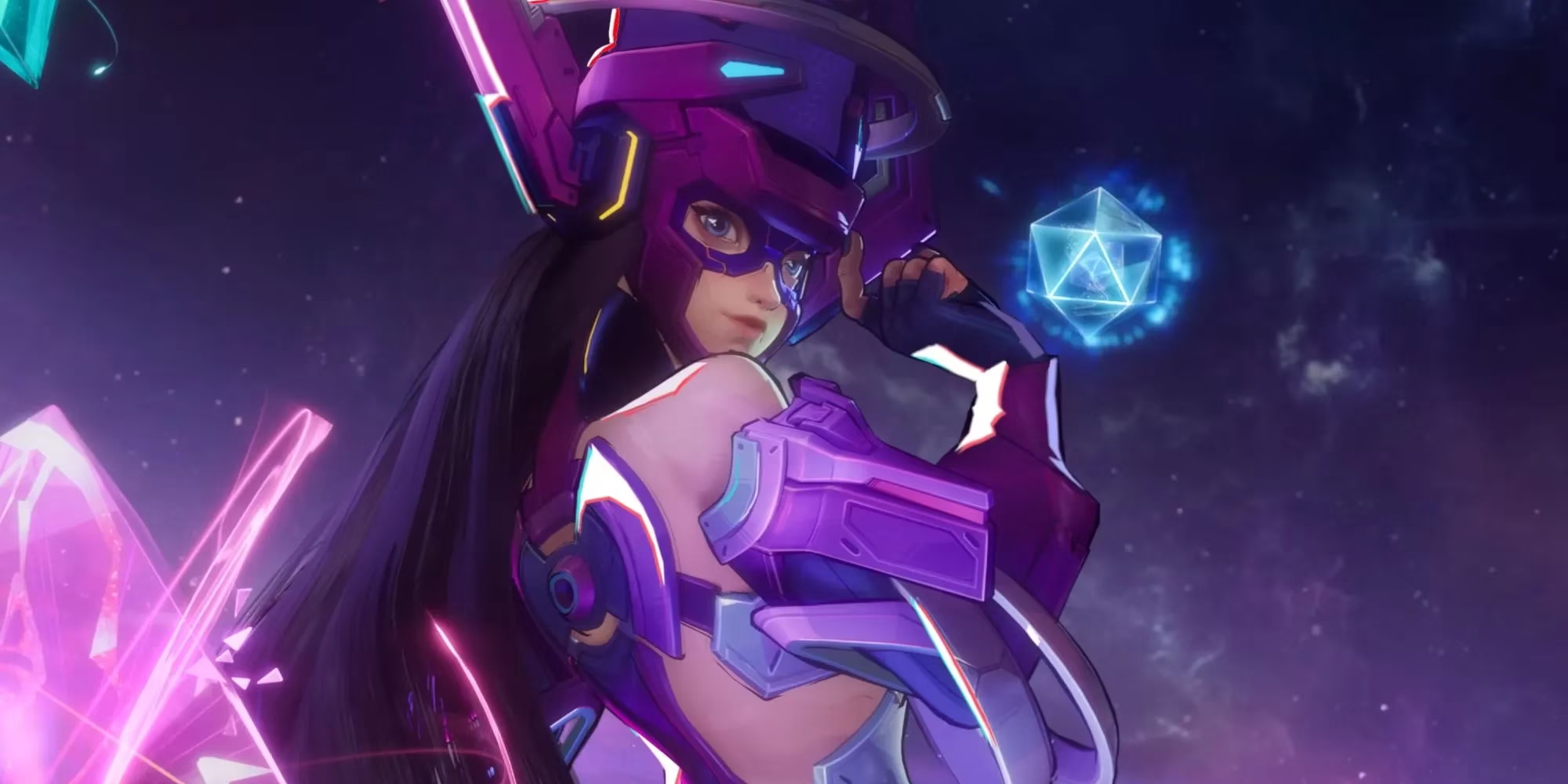
This shift in focus aligns Marvel Rivals more closely with games like Smite (a third-person MOBA reliant on skill shots) or Bleeding Edge (Ninja Theory’s short-lived 3v3 brawler). In Bleeding Edge, combat revolved around managing cooldowns, timing abilities, and controlling the arena through movement—a description that fits the snippets of Marvel Rivals’ gameplay far better than Overwatch’s sniper duels or shield-based compositions.
| Aspect | Overwatch | Marvel Rivals | Bleeding Edge |
|---|---|---|---|
| Perspective | First-person | Third-person | Third-person |
| Combat Focus | Precision aiming, ranged attacks | Melee brawling, ability combos | Arena control, cooldown management |
| Movement Emphasis | Tactical positioning | Acrobatic dashes, portal teleports | Fluid traversal, environmental mastery |
| Teamplay | Ultimate coordination, role-based synergy | Dynamic skirmishes, area denial | Objective-focused brawls |
⚡ The Bleeding Edge Parallel: A More Accurate Comparison
Why isn’t anyone calling Marvel Rivals ‘Marvel’s Bleeding Edge’? Simple: Bleeding Edge faded into obscurity shortly after its 2020 launch, unable to compete in an oversaturated market. Yet, its design philosophy—a third-person brawler with melee-centric combat, emphasis on character mobility, and arena-based objectives—mirrors what Marvel Rivals aims to achieve. Characters in Bleeding Edge relied on their movement kits to outmaneuver opponents, much like Black Panther’s prowling dashes or Magik’s portal-hopping antics.
Bleeding Edge’s failure wasn’t due to poor design but rather bad timing and fierce competition. It joined a graveyard of post-Overwatch titles (e.g., LawBreakers, Gigantic, Battleborn) that struggled to carve out a sustainable audience. Marvel Rivals now enters a similarly crowded landscape, where hero-based multiplayer games must offer something distinct to survive.
💰 NetEase’s Challenge: Overcoming Preconceptions
NetEase’s reputation for aggressive monetization models precedes it, raising skepticism about Marvel Rivals’ long-term viability. While Overwatch 2 has faced criticism for its pricing and content updates, it remains a genre titan with a dedicated player base. For Marvel Rivals to succeed, it must:
-
Differentiate itself from the ‘Overwatch clone’ narrative through polished, unique gameplay.
-
Balance monetization without alienating players—a hurdle NetEase has stumbled over in past titles.
-
Cultivate a community by emphasizing its brawler-style combat and Marvel fan service.
The game’s potential lies in embracing its identity as a vibrant, third-person brawler rather than chasing Overwatch’s shadow. By leaning into the Marvel universe’s diverse power sets and encouraging creative ability synergies, Marvel Rivals could carve a niche for players seeking fast-paced, spectacle-driven combat over tactical shootouts.
🚀 Looking Ahead: Marvel Rivals’ Unique Promise
Marvel Rivals isn’t just another hero shooter—it’s a third-person brawler with the polish and IP power to stand out. The game’s emphasis on movement-based combat, environmental interactions (like destructible elements hinted in the trailer), and iconic Marvel abilities offers a fresh take on team-based PVP. Characters like Hulk—who appears to function as a disruptive tank similar to Overwatch’s D.Va but with ground-smashing melee attacks—exemplify how Marvel Rivals adapts familiar roles into its own kinetic style.
As the gaming landscape evolves in 2025, players crave innovation, not imitations. Marvel Rivals has the opportunity to redefine what a superhero multiplayer game can be, provided it leans into its strengths and learns from the missteps of predecessors like Bleeding Edge. The road ahead is challenging, but with thoughtful design and community engagement, Marvel Rivals could become a standout title in its own right—not as ‘Marvel Overwatch,’ but as Marvel’s answer to the arena brawler genre.