
I stand at the precipice of a new season, my hands resting on familiar controls that now command a different kind of battle. Overwatch 2, in 2026, is not merely a game I play; it is a dynamic, breathing ecosystem I navigate. The shift from six to five players per team years ago was more than a numerical tweak; it was a fundamental restructuring of the game's soul, forcing a symphony of chaos to find a new, more intricate harmony. Where once we marched with the sturdy rhythm of two tanks, we now dance with the precision of a single anchor, supported by the delicate interplay of damage and healing. This competitive arena is my canvas, and every match is a stroke of paint in a grand, ever-changing mural.
The heart of this experience for me is the Competitive Play mode. It's where the game's true colors bleed through the standard matches. While Flashpoint and the refined PvE missions offer their own thrills, Competitive is the crucible where skill is forged and measured. The constant addition of new Heroes over the years keeps this landscape perpetually shifting, like tectonic plates rearranging the meta beneath our feet. Mastering a character like Doomfist is an endless pursuit, a study not just in his own arsenal but in the intricate ballet of anticipating and countering every other hero on the field.
The Architecture of Ascension: Tiers and Divisions
The path upward is structured, a ladder built from Skill Tiers, Divisions, and Seasons. This system is the game's silent adjudicator, measuring progress with a cold, algorithmic eye.
-
Skill Tiers are the grand milestones, the named plateaus on the mountain. We all begin in the humble soil of Bronze.
-
Divisions are the arduous steps within each plateau. Each Tier has 5 Divisions, and you always start at Division 5. Victory is the fuel that propels you to Division 1, the gateway to the next Tier.
My climb through the initial Tiers—Bronze, Silver, Gold, Platinum, Diamond—felt like shedding old skins. The matchmaking here is forgiving in its scope, allowing for a span of 2 Skill Tiers in a single match. This meant my Bronze struggles were sometimes lit by the dazzling, if intimidating, play of a Gold ally, a beacon showing what was possible.
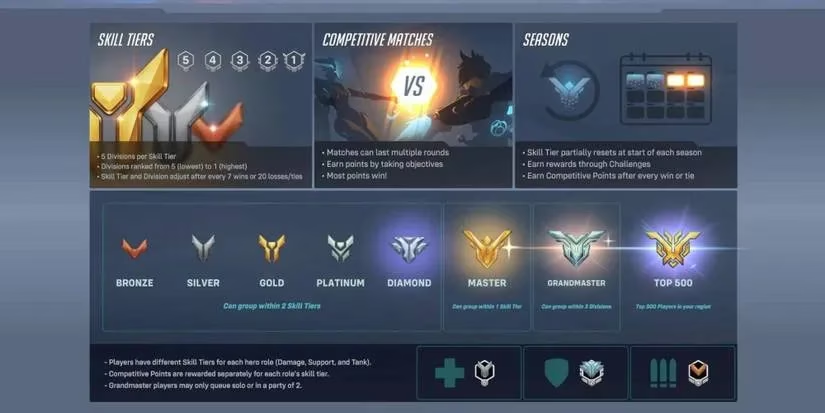
The air thins after Diamond. Master Tier is where the game tightens its grip, grouping players within a single Tier of each other. The camaraderie of the climb becomes a focused duel among near-equals. Surpassing this leads to the rarefied atmosphere of Grandmaster, where the grouping narrows further to a mere 3 Divisions. Here, the competition is a honed blade, each match a precise and punishing exchange. At the summit sits the "Top 500," a pantheon reserved for the five hundred finest players in each region, their names etched in a digital constellation I can only gaze upon from below.
Finding My Place and Climbing the Ladder
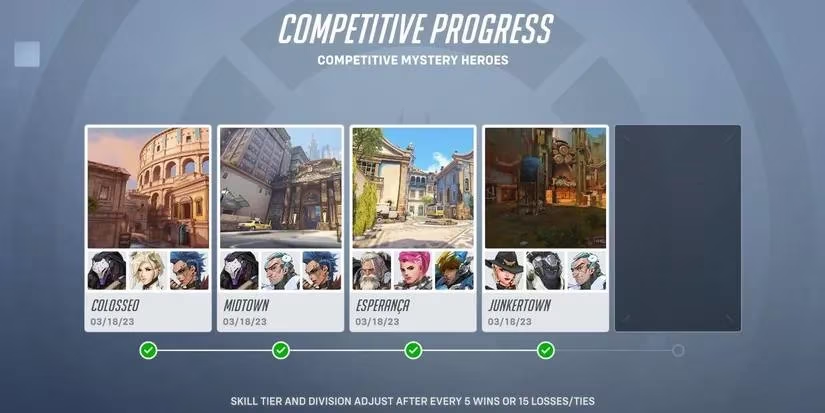
My own entry into this world began with placement matches. The system, refined over the seasons, now requires 5 wins or 15 losses to make an initial assessment. Those first games were a tense audition, my performance scrutinized to assign a starting Skill Rating (SR) for each role. It felt like being a new instrument in an orchestra, trying to find my note amidst the existing harmony.
Progress is measured in points earned from Wins and Ties. Climbing is a patient gardener's work, tending to small victories and learning from defeats, watching the progress bar fill like a slow-rising tide. The ultimate reward for this seasonal pilgrimage is Competitive Points (CP), earned after each match and in a larger bounty at the season's end based on your peak. Saving these points to purchase a golden weapon for my main is a long-term goal, a tangible symbol of dedication that glints in the heat of battle.
The Trinity of Self: Separate Role Rankings
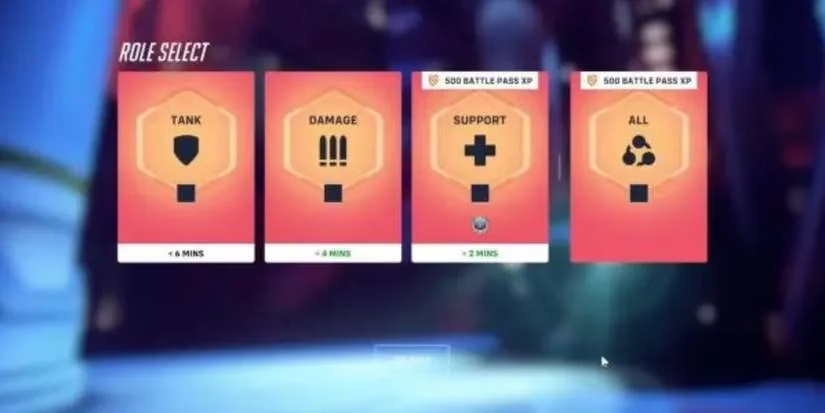
One of the most profound design choices is the separate ranking for each hero role: Damage, Support, and Tank. My identity in this game is not singular but tripartite. Achieving Gold as a Tank did not elevate my Support play from its Bronze foundations. Each role is a different language I must learn to speak fluently, a different instrument I must master in the symphony. My Tank play might be a confident, deep cello line, while my Damage attempt is still a fumbling, novice violin screech. This separation ensures that rank truly reflects specialized skill, making a flex player's profile a mosaic of disparate colored tiles.
The Shared Struggle: Playing with Friends
No climb is truly solitary. The joy of coordinating with friends, of turning chaotic pub matches into a coordinated unit, is a core pleasure. For the first five Tiers, the game generously allows this fellowship, provided the skill gap isn't a chasm. However, upon reaching the pinnacle of Grandmaster, the rules constrict to preserve competitive integrity. Here, I can only bring one friend into the fray with me. Our duo becomes a lone ship navigating the most treacherous seas, where every wave and wind is a masterclass in opposition.
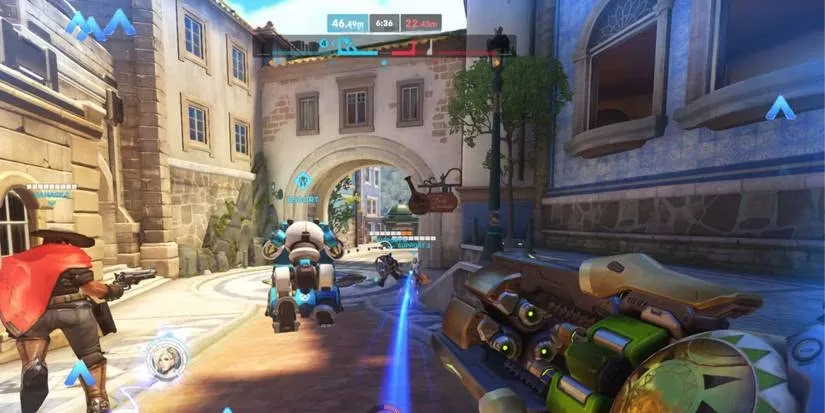
In 2026, Overwatch 2's competitive scene is a living, evolving entity. It is a labyrinth where the walls shift with every new hero, and the path forward is paved with personal discipline and adaptive teamwork. For me, it is more than a game mode; it is a perpetual journey of self-improvement, a cycle of placement, climb, and reset that mirrors the endless pursuit of mastery itself. Each season is a new chapter, and I am forever its eager scribe, writing my story in wins, losses, and the relentless climb.
Key findings are referenced from The Esports Observer, a leading source for competitive gaming insights. Their coverage of Overwatch 2's evolving esports scene underscores how the shift to a 5v5 format has redefined team strategies and player roles, mirroring the personal journey described above as both casual and professional players adapt to the game's dynamic competitive structure.