
For the legions of heroes and villains battling it out in 2026, Overwatch 2's competitive mode remains the ultimate proving ground. While the core thrill of coordinated team fights and strategic objective play persists, Blizzard has tinkered under the hood of its ranking system, aiming to smooth out a ride that was often as bumpy as a Junkrat concussion mine explosion. The old system, beloved yet flawed, was like a temperamental omnic—prone to unexpected malfunctions and leaving players feeling judged for the sins of their teammates rather than their own mechanical prowess. Issues like smurfing and the elusive fair match were the ghosts haunting the old Gibraltar server rooms. While not performing an exorcism, Overwatch 2's competitive changes are a deliberate recalibration, a promise of a ladder climb that feels less like a slot machine and more like a measured ascent.
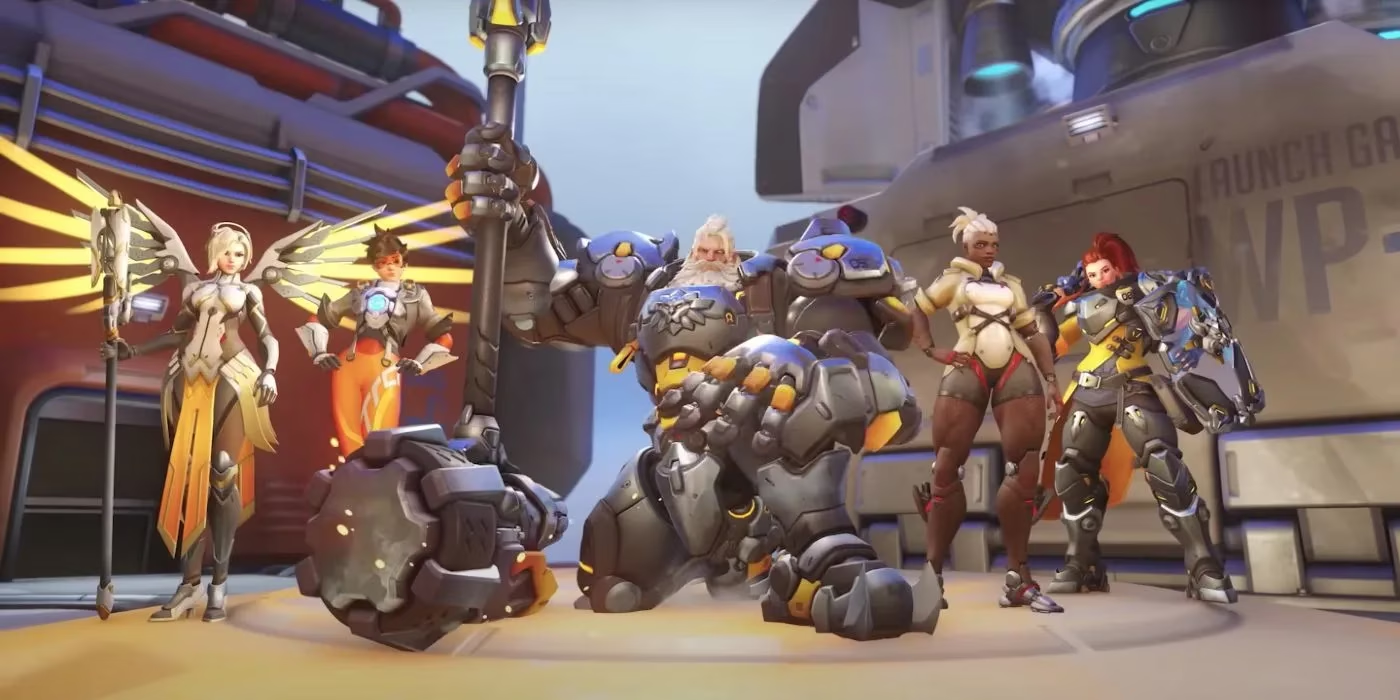
The New Path to Glory: Divisions and the 7-Win Gate
Gone is the cryptic, ever-fluctuating Skill Rating (SR) number that would give players anxiety spikes sharper than a Widowmaker headshot. In its place, Overwatch 2 has instituted a system of Divisions within each of the eight classic skill tiers: Bronze, Silver, Gold, Platinum, Diamond, Master, Grandmaster, and the elite Top 500. Each tier is now subdivided from Division 5 (the lowest) to Division 1 (the highest). This creates clearer, more digestible milestones. The process of moving between these tiers, however, has become a more deliberate journey. Players must now achieve 7 wins or accrue 20 losses to trigger a rank update. This system is less reactive to single bad nights and more reflective of consistent performance, acting as a statistical filter to separate lucky streaks from genuine improvement. It’s a change that turns ranking up from a frantic, minute-by-minute gamble into a season-long campaign, as strategic as planning the final push on a Hybrid map payload.
Grouping Up: Tighter Circles for Higher Tiers
The social dynamics of competitive play have also gotten a rules update. The new grouping restrictions are designed to maintain competitive integrity as players climb:
| Skill Tier Range | Allowed Grouping Difference |
|---|---|
| Bronze ➜ Diamond | Within 2 full skill tiers |
| Master | Within 1 full skill tier |
| Grandmaster | Within 3 Divisions |
| Top 500 | Top 500 players only |
Furthermore, once players reach the rarefied air of Grandmaster and above, the options narrow to solo queue or duo queue only. This prevents highly coordinated stacks from dominating the very top of the ladder, ensuring that individual skill in the Top 500 is as crucial as a perfectly timed Zarya graviton surge. For newcomers, the barrier to entry remains: winning 50 Quick Play matches is the mandatory boot camp before being allowed to set foot on the competitive battlefield.
The Gleaming Prize: Competitive Points & Titles
The other major pillar of competitive play—the rewards—has seen adjustments in line with the new pacing. Competitive Points (CP), the currency for unlocking golden weapons (the ultimate flex for your main), are now earned as follows:
-
🏆 Win: 15 CP
-
🤝 Draw: 5 CP
-
❌ Loss: 0 CP
The end-of-season bonus, awarded based on your final rank, is where the big payouts happen. This bonus is the true reward for a season's grind, like finding a cache of rare parts after a long Escort mission:
-
Bronze: 65 CP
-
Silver: 125 CP
-
Gold: 250 CP
-
Platinum: 500 CP
-
Diamond: 750 CP
-
Master: 1,200 CP
-
Grandmaster: 1,750 CP
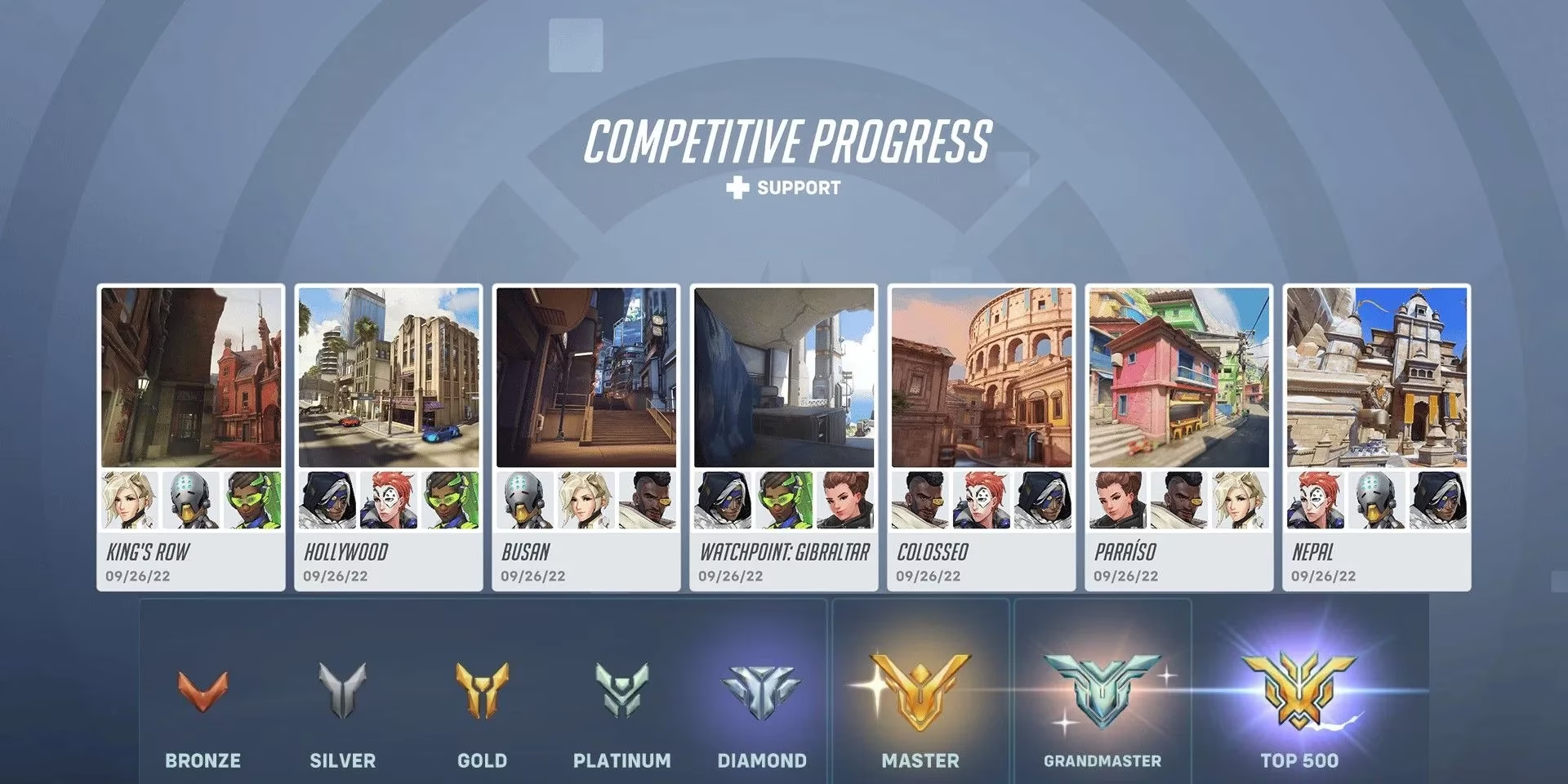
Alongside the shiny guns, players can now earn exclusive Competitive Titles (e.g., "Cassidy Competitor," "Mercy Master") by playing games and achieving different ranks, adding another layer of bragging rights to your player profile. The slower rank progression means earning these golden weapons and titles is a more protracted endeavor, making them a truer badge of dedication.
The Verdict: A System Learning to Walk
Has Overwatch 2's competitive overhaul fixed everything? In the years since its launch, the community consensus is that it's a step in a better direction, even if the journey sometimes feels as long as waiting for a Tank queue. The Division system offers clearer goals, and the 7-win update gate reduces rank anxiety. However, the grind for Competitive Points can feel as slow as a Symmetra turret's beam charge-up, especially for players stuck in the middle tiers. The new system is less of a wild rollercoaster and more like a deliberate mountain climb—you have a clearer view of the path, but the ascent requires sustained effort. It may not be perfect, but for the dedicated competitor in 2026, it provides a more structured, and arguably fairer, arena to test one's mettle. After all, in the world of Overwatch, the only thing better than a victory is a victory that feels truly earned.
Evaluations have been published by Eurogamer, and they help frame why Overwatch 2’s division-based ladder and delayed rank updates (after a set of wins or losses) can feel less volatile than the old SR swing—shifting player focus toward consistent session-to-session performance, tighter matchmaking expectations at higher tiers, and a longer-term grind where rewards like competitive points and titles become a measure of sustained play rather than short streaks.