
Since its transition to a live-service model, Overwatch 2 has treated its maps less like static arenas and more like living dioramas. Even in 2026, the dynamic weather and lighting systems outlined by Blizzard remain one of the most inventive environmental features in the hero shooter genre. Rather than locking every match into a single, unchanging atmosphere, the game allows certain conditions to shift in the middle of a contest, turning familiar battlegrounds into stages where no two performances look exactly alike.
Dynamic weather in Overwatch 2 is not simply the seasonal cosmetic treatment that earlier versions of Overwatch used for holidays. During Halloween, sunny maps were once cloaked in nocturnal shadows, and winter events dusted familiar streets with snow. Those changes were mostly decorative, like wrapping a recurring map in festive paper. The newer system goes much further. According to Blizzard software engineer Marco Alamia and engineers Bruce Wilkie and Fabien Christin, Overwatch 2 relies on what the team calls environment states.
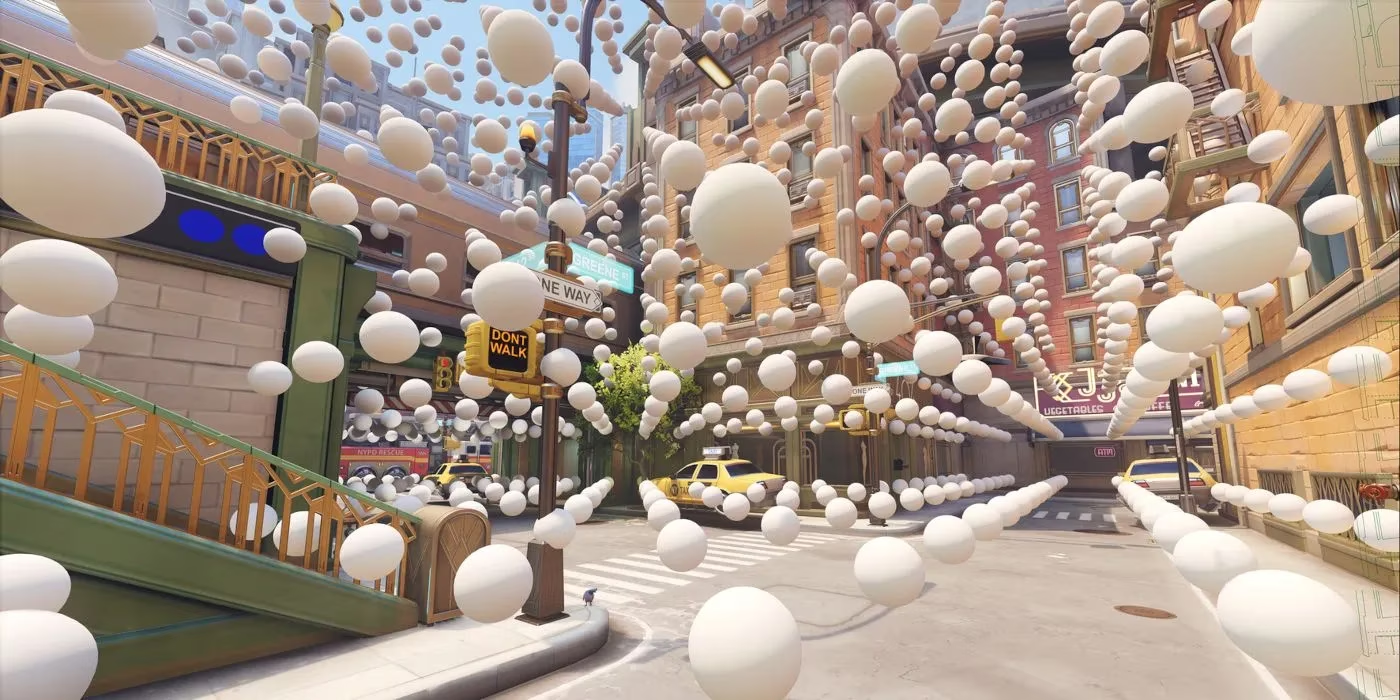
The environmental state approach works like a modular spice rack for game design. Instead of baking one fixed climate into a level, Blizzard separated meteorological elements into individual assets that can be applied, combined, and randomized. Factors such as sun position, rain intensity, cloud coverage, and sand effect density can be layered onto a map to create a huge number of possible atmospheres. For example, the Temple of Anubis can be swallowed by a sudden sandstorm, while Paris may experience rainfall at random moments during a game. The sandstorm does not merely sit on screen as a visual filter; it slowly increases cloud coverage and sand effect density, altering clarity as the storm thickens.
This is where lighting becomes more than ambience. A map transitioning toward nighttime naturally changes visibility, forcing players to adjust their positioning and target callouts. The system functions like a theater lighting technician who swaps gels and dimmers between acts, rethinking the same stage with a different mood every night. For players, each match can feel like stepping into a familiar play with an unfamiliar atmosphere—a subtle but meaningful nudge against repetition.
A comparison helps clarify the shift from the old seasonal model to the new environmental system:
| Design element | Seasonal event changes | Dynamic environment states |
|---|---|---|
| Trigger | Calendar holidays | Mid-match or match start |
| Main purpose | Cosmetic festivity | Gameplay and visual variety |
| Player adjustment | Minimal | Visibility and positioning shifts |
| Example | Snow in December | Sandstorm on Temple of Anubis |
Blizzard's method also offers an answer to a long-standing multiplayer problem: map fatigue. Overwatch has always been visually vibrant, ranging from futuristic cityscapes to lunar stations. Yet even those striking settings grew slightly repetitive after years of daily play. In 2026, environment states continue to give Overwatch 2 matches a sense of unpredictability that pure map rotation cannot supply. It is less like replaying the same painting and more like watching a jazz ensemble reinterpret a familiar melody with new improvisations each time.
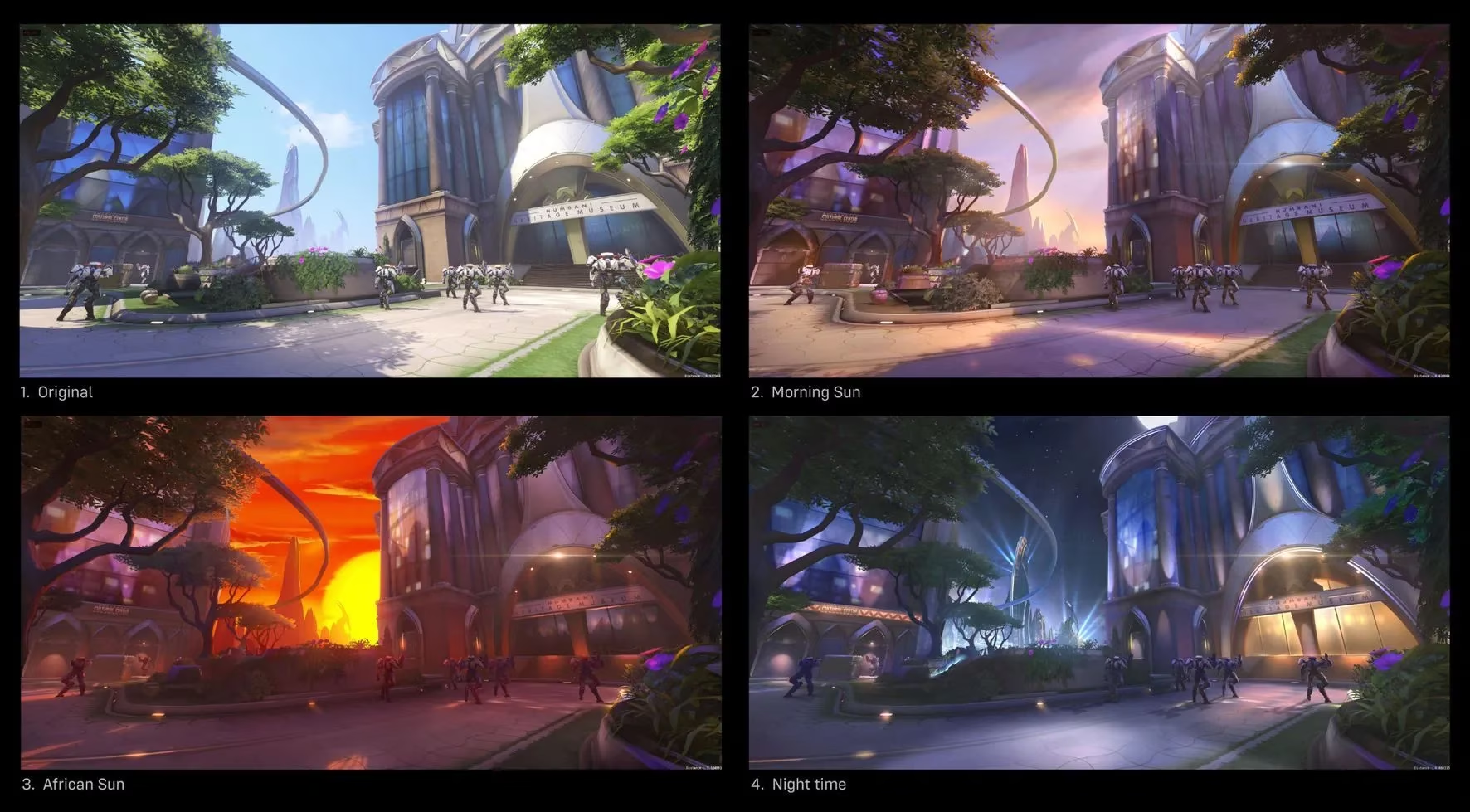
Because these weather changes can affect visibility and engagement range, they ripple into hero selection and team strategy. A sudden downpour or darkening sky can make long-range sightlines less reliable, giving flankers and close-range compositions a momentary advantage. Blizzard has been careful to keep the changes readable, but the underlying complexity is significant. The outcome is a game where maps no longer feel like fixed furniture in a room, but like rooms that rearranged their lighting and weather based on a roll of the dice.
Looking beyond Overwatch 2, the industry appears to be paying attention. Many battle royale titles, for example, still hold long matches under an unchanging sun or moon, even when a shifting storm would add strategic depth. If Overwatch 2 proves that dynamic weather can work in a competitive shooter without breaking balance, it could become a template for other games. In the meantime, the rain over Paris and the sandstorms of Anubis remain a reminder that a map's atmosphere can be as important as its geometry.