
In 2026, the five-player team format in Overwatch 2 feels like a piece of history, but it was not always that way. Long before the sequel launched, Blizzard Entertainment made a bold call that would reshape the entire Overwatch experience: competitive PvP matches would move from six players per team to five. The announcement, delivered during a 2021 Overwatch 2 developer livestream and later shared by the Overwatch League's official Twitter account, was more than just a patch note. It was a signal that Overwatch 2 intended to be a different beast from the original hero shooter released in 2016.
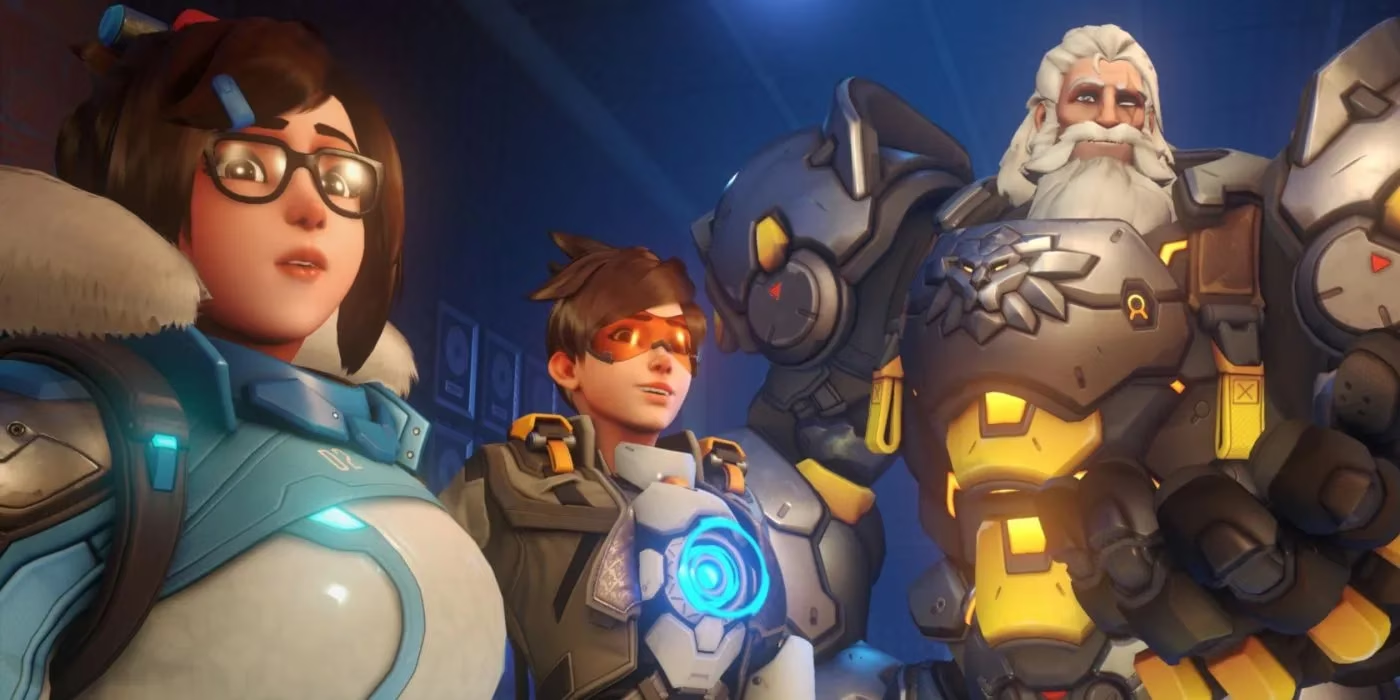
The first Overwatch had established itself as a 6v6 first-person hero shooter with a colorful cast of heroes and frequent free updates. When Blizzard announced Overwatch 2 back in 2019, the promise was a sequel built around cooperative missions, where players would team up to battle computer-controlled enemies. Crucially, the two games were designed to share a single online multiplayer environment, keeping the playerbase unified. Yet at that point, the fine print about team sizes remained a mystery.
Game director Aaron Keller pulled back the curtain during the livestream. He confirmed that Overwatch 2's PvP modes would be played with teams of five. In the original game, role lock had already forced each side into two support heroes, two damage dealers, and two tanks. Overwatch 2 would cut one of those tanks. The defensive role suddenly became more vital, and the structure shifted to one tank, two damage, and two support.
Let's be real: losing a tank was a huge deal. The community did not just shrug it off.
| Aspect | Overwatch 1 | Overwatch 2 |
|---|---|---|
| Team size | 6v6 | 5v5 |
| Tank slots | 2 | 1 |
| Damage slots | 2 | 2 |
| Support slots | 2 | 2 |
| Typical comp | 2-2-2 | 1-2-2 |
From a design perspective, cutting a tank made team fights easier to read and reduced visual clutter. In the original Overwatch, double-barrier compositions could create long, drawn-out stalemates where nothing died. By removing one tank, Blizzard hoped to make each engagement faster and more decisive. That philosophy shaped the early Overwatch 2 experience and remained a talking point among the playerbase.
And honestly, that single change rewrote the playbook for every role. Tanks had to become more self-sufficient and aggressive, supports had to manage more pressure, and damage players found new angles to exploit the space left by a missing second tank. Map control, ultimate economy, and hero synergies all had to be reimagined.
The Overwatch League also had to adapt. Professional teams that had built rosters around two tank specialists suddenly had to rethink player roles and hero pools. For casual players, the change meant queue times and team dynamics shifted, too. With only one tank, matches often felt faster and less reliant on double-shield stalemates that had frustrated many in the original game.
-
🛡️ Tanks became playmakers, absorbing more pressure and creating space alone.
-
⚔️ Damage heroes gained more room to flank and duel.
-
💉 Supports had to balance healing with survival, since there was no second tank to peel.
The five-player announcement also arrived during a turbulent moment for the Overwatch team. Jeff Kaplan, the game director known for direct community communication, had recently left Blizzard Entertainment. His departure left fans anxious about the franchise's future. Keller, a veteran developer who had been part of the Overwatch team since early in the first game's development, stepped into the role. He reassured the community that big new features were still on the way, even without Kaplan at the helm.
Well. That escalated quickly, but the team kept moving forward.
Overwatch 2 eventually launched on October 4, 2022, as a free-to-play title, and the 5v5 format became its default competitive structure. Since then, Blizzard has continued to release new heroes, maps, and balance updates. The game has also experimented with different queue modes, including temporary 6v6 tests that gave players a nostalgic taste of the old days. Still, the five-player shift remains the heart of modern Overwatch 2, influencing everything from hero design to team strategy.
What looked like a minor lineup tweak in 2021 turned out to be a foundational change. Players may still debate whether one tank is better than two, but there is no denying that Overwatch 2 found a faster, more readable identity through its five-player format. As the game continues to evolve through 2026, that early decision continues to cast a long shadow over every team fight, every ultimate, and every clutch play.