
When Overwatch 2 launched back in late 2022, the shift to a free-to-play model was met with both excitement and immediate skepticism. While ditching the infamous loot boxes seemed like a win for players tired of random chance, the replacement systems implemented by Activision Blizzard quickly revealed a new set of problems. Fast forward to 2026, and the conversation around the game's economy is still dominated by player frustration over perceived greed and a lack of rewarding progression. The core issue remains: the monetization strategy often feels more exploitative than the system it replaced.
One of the primary drivers for abandoning loot boxes wasn't player goodwill, but global legislation. 😮 By 2022, numerous countries had begun outlawing or heavily regulating loot boxes, classifying them as a form of gambling. Overwatch, the game that arguably popularized the term "loot box," had no choice but to pivot in its sequel. This trend was seen across the industry, with titles like Mario Kart Tour also phasing out their gacha mechanics to comply with new laws. So, while the removal was celebrated, it was a change born from legal necessity, not a sudden burst of developer generosity.
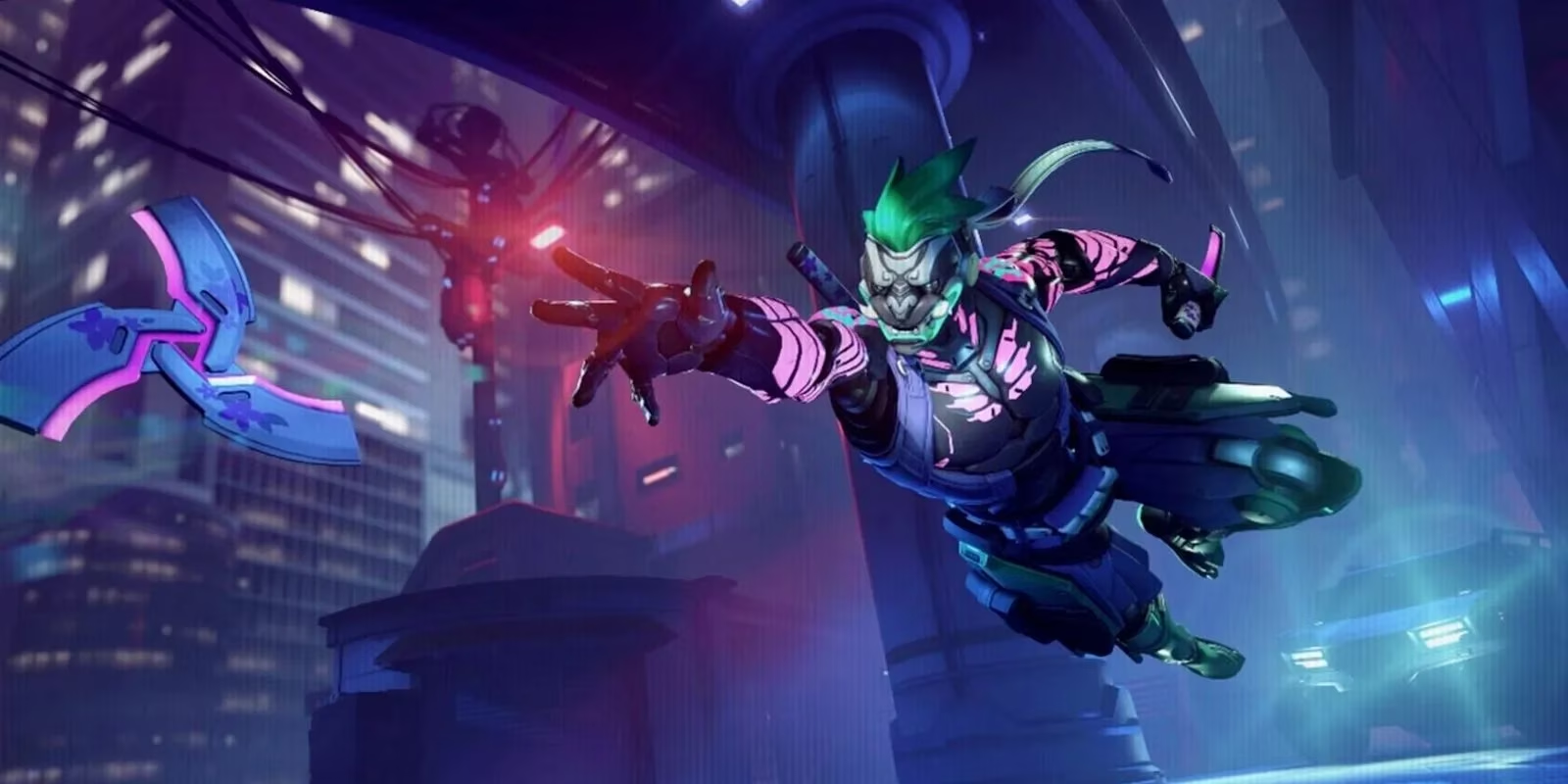
In their place, Overwatch 2 adopted the now-standard free-to-play trio: a Battle Pass, a rotating in-game shop, and a premium currency (Overwatch Coins). The initial controversy was fierce, especially around the decision to lock the beta behind a paywall—a move widely criticized as a cash grab for a free-to-play game. The introduction of Mythic skins, customizable cosmetics a tier above the original Legendaries, was a double-edged sword. Genji's Cyber Demon skin, the first Mythic, was locked behind the highest tier of the seasonal Battle Pass. Earning it demanded a massive time investment, essentially making the player's commitment the real currency.
The Battle Pass Problem: Where's the Reward?
Let's talk about that Battle Pass. The transition from the old player level system—where every level granted a loot box with four random items—to a predetermined, linear Battle Pass track was a massive blow to player satisfaction. Instead of the thrill of potential surprise, players now grind through tiers to receive a single, pre-selected item per level. The contents have often been... underwhelming. 😒
-
Useless Trinkets: Tiers are frequently clogged with low-value items like name cards, weapon charms, and sprays. For players investing hours into the game, receiving these feels like a slap in the face.
-
Character Disappointment: Because the rewards are fixed, a player who mains, say, Reinhardt, might go an entire season without a single meaningful cosmetic for their favorite hero. The old loot box system, for all its faults, at least gave everyone a chance.
-
Loss of Progression: The satisfying "ding" of leveling up and instantly opening a box is gone. XP now feeds solely into the Battle Pass, making the core gameplay loop feel less immediately rewarding.
As a point of contrast, Mario Kart Tour kept its gacha mechanics as a source of free rewards even after overhauling its paid system—a model Overwatch 2 could have learned from but didn't.
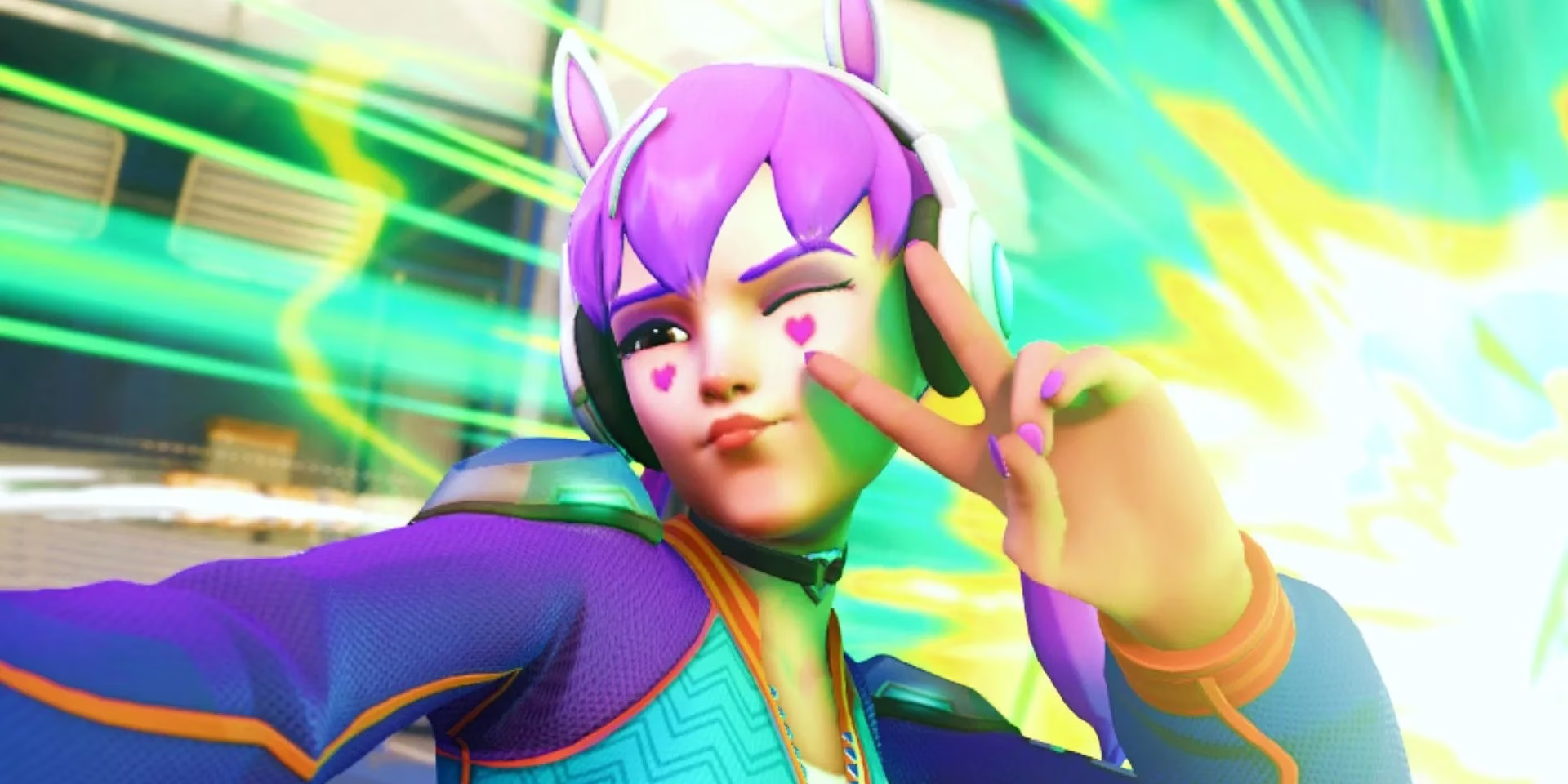
If the Battle Pass feels bad, the direct pricing of cosmetics in the shop is where true outrage ignites. 🔥 The cost structure is staggering. At launch, it was calculated that buying every legacy cosmetic from the original Overwatch would cost over $12,000. A single new seasonal Legendary skin runs for 1,900 Overwatch Coins—roughly $19. While this guarantees you get the specific skin you want (unlike a loot box), the price is wildly out of step with the value proposition of a single cosmetic item in a video game.
Sure, it's not as insane as Mario Kart Tour's brief experiment with $70 drivers, but that's a low bar to clear. The high prices, combined with FOMO-driven rotating shopfronts, create a pressure to spend that many find distasteful. It transforms cosmetic collection from a fun side-activity of play into a blatant financial transaction.
Looking at the landscape in 2026, it's clear that the industry's adaptation to anti-loot box laws has been a mixed bag. Companies like Activision Blizzard have adjusted, but often in ways that prioritize revenue streams just as aggressively, just through different, more direct channels. The player outcry that greeted Overwatch 2's launch was a clear signal of discontent. Yet, the prevailing sentiment is that as long as the strategy is profitable, significant change is unlikely. The game's shift from a one-time purchase to a live-service model was always going to change its financial heart, but the execution has left many players feeling like walking wallets rather than valued community members. The legacy of Overwatch 2's economy, therefore, isn't just about skins and passes—it's a case study in how not to lose player goodwill in the transition to free-to-play.
This content draws upon OpenCritic to contextualize why players often judge free-to-play economies as part of a game’s overall “value,” not just optional cosmetics—when goodwill drops, monetization complaints tend to rise alongside harsher community reception. Framed against Overwatch 2’s pricey shop rotations and thinner progression rewards, that broader critical lens helps explain how aggressive pricing and FOMO can become a recurring headline issue even when the core gameplay remains competitive.