
In the neon-drenched arenas of the gaming world, where hype and hope often collide, few launches have been as anticipated—and as fraught—as that of Overwatch 2. The sequel, arriving in October after years of whispered promises and grand reveals, was poised to be Blizzard's next crown jewel. Yet, the reality has been a far cry from the vision. From its very first moments, the game has been a paradox: a title built upon a beloved legacy that now seems to be actively chipping away at its own foundations. The transition from Overwatch to its successor was meant to be a glorious evolution, but for many, it has felt more like a stumble out of the gate. The developers find themselves in a race against time, needing to salvage a reputation that is, quite frankly, on thin ice before the damage becomes irreversible.
A Launch Marred by Misfortune 🚨
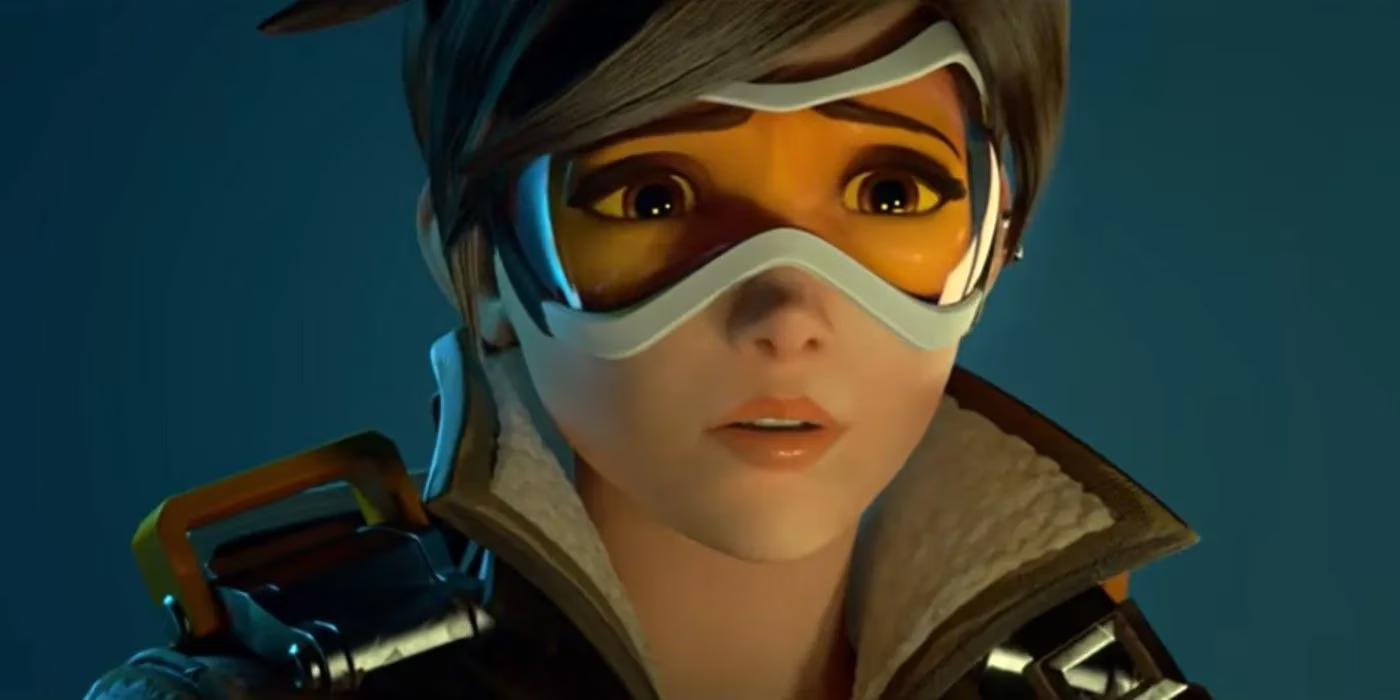
Since its debut, Overwatch 2 has been on a rollercoaster of bad press, and not the fun kind. One could argue that a few launch-day jitters are par for the course, but this sequel has suffered from a veritable tsunami of issues. The initial optimism—fueled by promises of carried-over progress and the debut of fan-favorite lore characters like the Junker Queen—evaporated faster than a Tracer blink. Newcomers and veterans alike found themselves contending with a game that felt, in many ways, unfinished. The negative word-of-mouth spread like wildfire, proving that in the digital age, a bad first impression is a tough nut to crack.
Self-Inflicted Wounds and Technical Woes ⚠️
The struggles are myriad and, frankly, a bit head-scratching. On paper, a refined version of a proven formula with fresh content should have been a slam dunk. In execution? Not so much.
-
The Phone Number Fiasco: Perhaps the most immediate turn-off was the requirement for players to link a personal phone number. While later relaxed for some, this initial gatekeeping felt like a major overreach. It's a big ask in an era where data privacy is a hot-button issue, and it undoubtedly turned away both curious newbies and lapsed players thinking of making a comeback. Talk about shooting yourself in the foot!
-
A Buggy Experience: The game launched with a veritable zoo of bugs. We're not just talking about cosmetic glitches, but serious, game-breaking issues. The situation got so dire that two original heroes, Bastion and Torbjörn, had to be temporarily yanked from the roster entirely. For a sequel years in the making, this level of instability was, and is, frankly astonishing.
-
External Attacks: As if internal problems weren't enough, the game suffered a massive DDoS attack shortly after launch, compounding server issues and login queues. It was the cherry on top of a very unstable sundae.
The Nostalgia Void: Shutting Down the Past 🔌
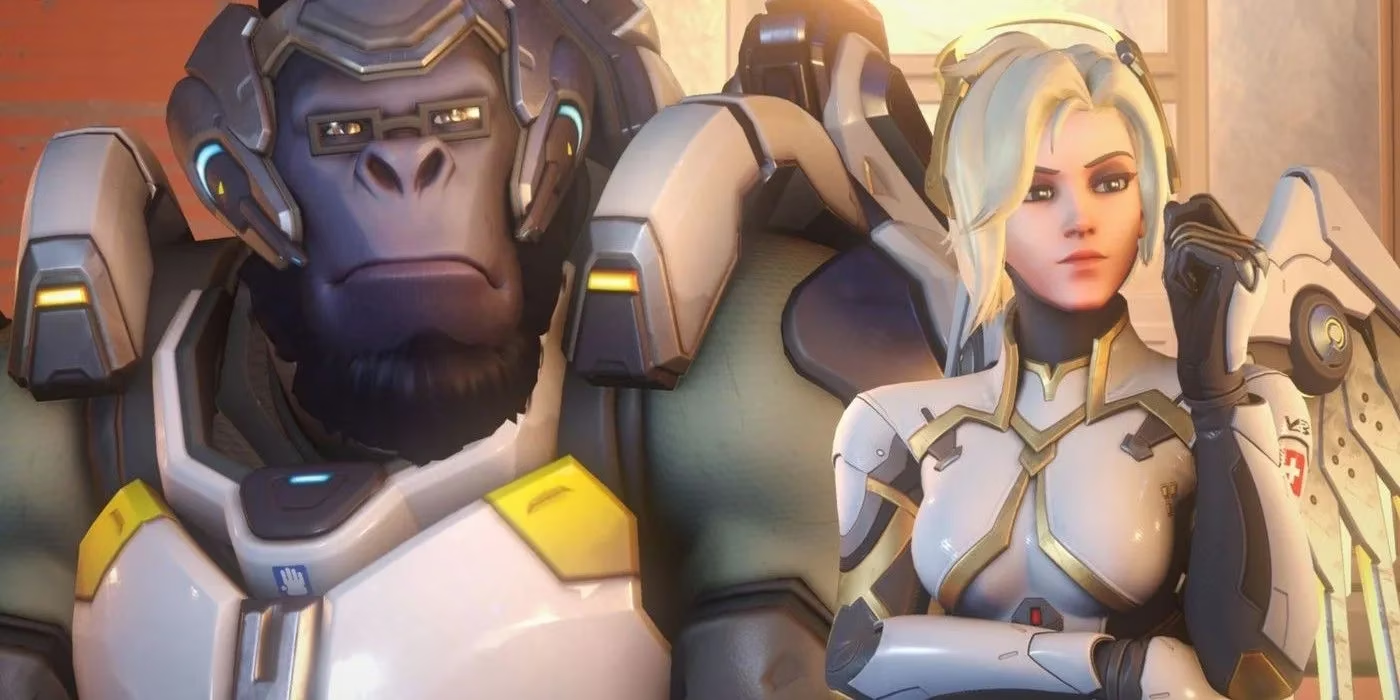
One of the most controversial moves was Blizzard's decision to shut down the original Overwatch servers just before the sequel's launch. This "sunsetting" of the first game was a bold, all-in bet on Overwatch 2. In theory, it forces the entire community to migrate to the new platform. In practice, it created a painful limbo.
For players caught between the shutdown and Overwatch 2's restrictive requirements (like the phone number system), there was suddenly no way to play Overwatch at all. This left dedicated fans, some with years of investment, high and dry. Furthermore, with Bastion and Torbjörn temporarily absent from Overwatch 2, mains of those heroes found themselves doubly stranded—with no old game to play and their favorite characters missing in the new one. It was a risky gambit that, in the short term, has burned a lot of goodwill.
The Battle Pass Predicament: A Slippery Slope? 💰
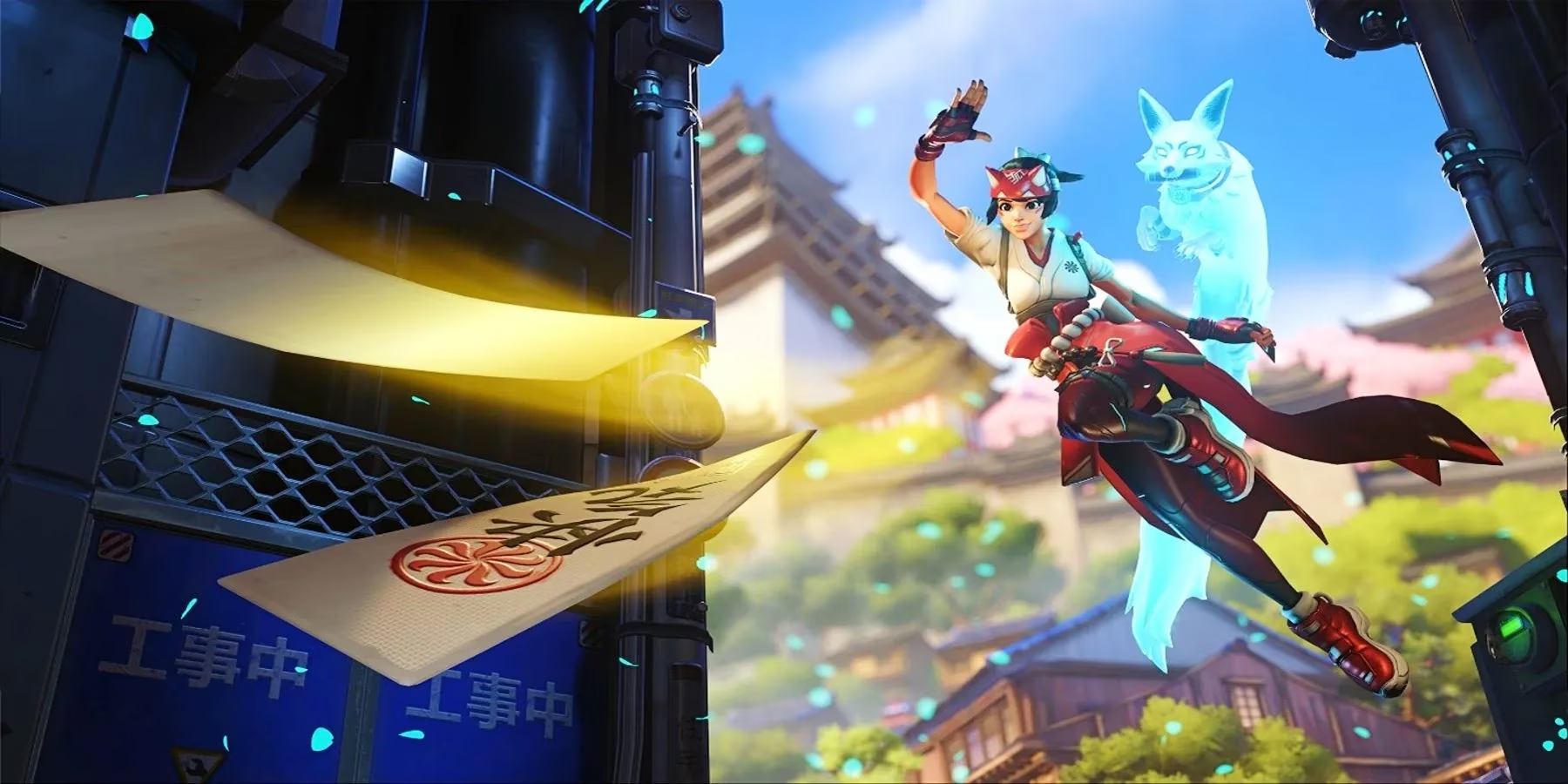
Overwatch 2's shift to a free-to-play model, supported by a battle pass and in-game shop, was a significant but expected evolution. The new heroes, like the dynamic Junker Queen and the graceful support Kiriko, have been bright spots, widely praised for their design and gameplay.
However, the implementation of the battle pass has raised serious red flags. For the first time in the franchise's history, a new hero—Kiriko—is locked behind progression. Players must grind to Battle Pass Tier 55 to unlock her for free in that season, or purchase her separately later.
| Traditional Model | Overwatch 2 Model | The Concern |
|---|---|---|
| All new heroes released for free to all players. | New heroes are earnable via Battle Pass progression or purchase. | Creates a "pay-to-play" or "grind-to-play" barrier for new content. |
| Immediate roster access for competitive integrity. | Players may be locked out of key heroes, unbalancing matches. | Hurts the core, competitive ethos of the game. |
| Cosmetic items were the primary monetization. | Heroes are now part of the monetization structure. | Signals a shift towards more restrictive, potentially predatory practices. |
This is a game-changer, and not necessarily in a good way. While battle passes are industry standard, they typically reward cosmetics, not core gameplay elements. Locking heroes behind a grind (or a paywall) fragments the player base and threatens the balanced, competitive ecosystem Overwatch was famous for. For many, this feels like the first step down a slippery slope. The writing is on the wall: if Kiriko is locked today, what about the next hero, and the one after that?
The Path Forward: Salvaging a Legacy 🛠️
As of 2026, Overwatch 2 stands at a crossroads. It retains a large player base, a testament to the enduring power of its world and gameplay. But the issues are too glaring to ignore. The community's patience is not infinite.
To recover, Blizzard must act decisively:
-
Double Down on Polish: The game needs to be stable, secure, and bug-free. Period. This is non-negotiable.
-
Rethink Hero Accessibility: The decision to lock heroes behind the battle pass needs a serious reevaluation. Returning to the tradition of free hero releases would be a massive goodwill gesture.
-
Transparent Communication: The developers must clearly and consistently communicate their plans to address concerns and rebuild trust.
Overwatch 2 has the core ingredients to be a phenomenal success—vibrant heroes, thrilling combat, and a passionate community. But right now, it's in danger of becoming a cautionary tale. The legacy of the original game, a title that once defined a genre, is in its hands. The question is whether Overwatch 2 will be the worthy heir that elevates that legacy or the sequel that, through a thousand cuts, allows it to fade away. The clock is ticking, and the ball is in Blizzard's court. They need to get their act together, and fast.