
When Blizzard Entertainment first pulled back the curtain on Overwatch 2 before its 2022 launch, the sequel promised a fundamentally different gameplay style from the 2016 hero shooter. The original pitch centered on co-op missions that paired four players into a team, sending them against hordes of computer-controlled enemies while they worked toward an objective. Upon completion, players would earn experience points and spend them in a talent tree, unlocking skills, perks, and passive abilities. That system sounded a lot like the old talent trees from World of Warcraft, and for longtime Blizzard fans, it raised an obvious question: could Overwatch 2 bring back the flexibility that WoW abandoned in 2012?
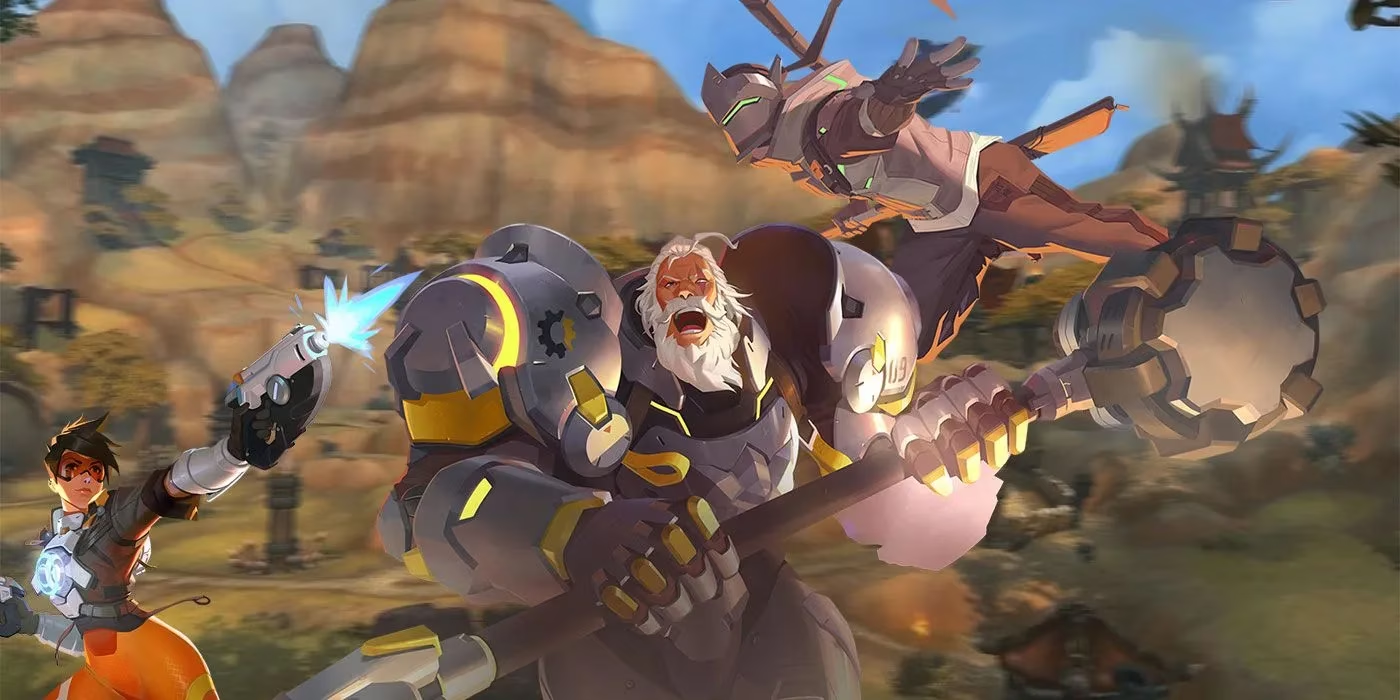
The Original Pitch: Four-Player Co-op and Hero Talents
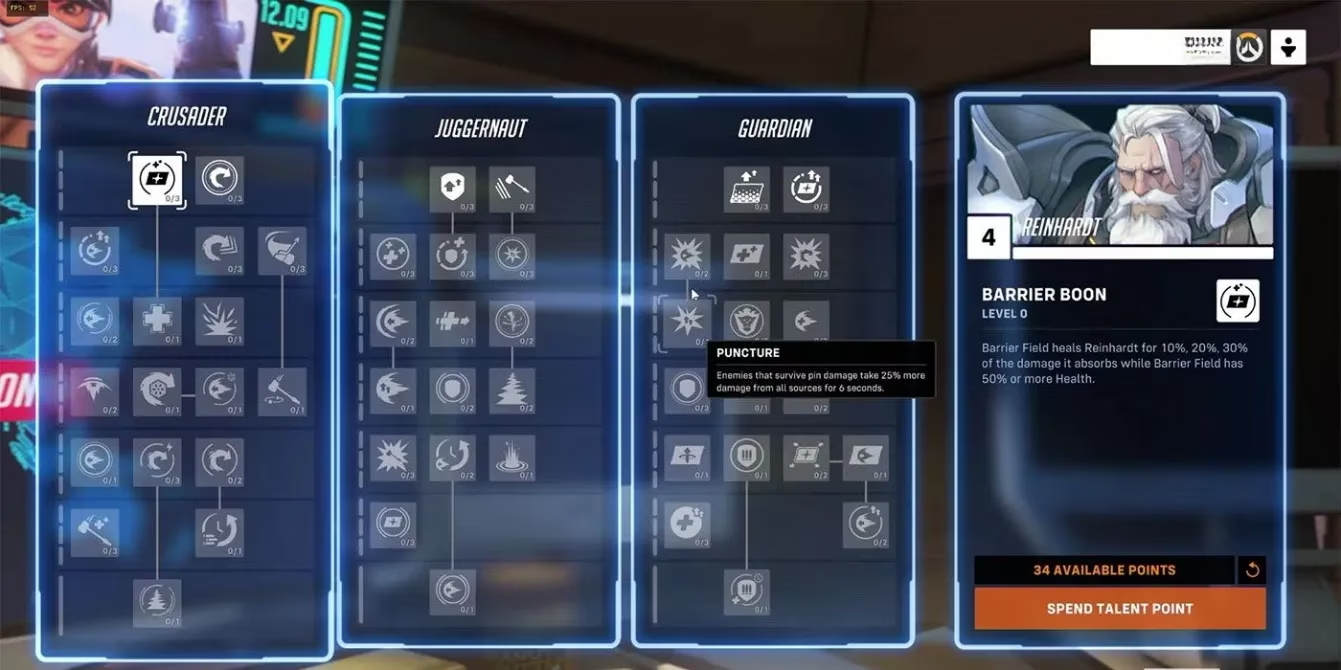
At BlizzCon 2021, Blizzard debuted Overwatch 2's talent trees on February 19. The idea was straightforward but ambitious. Players would select skills from a hero's three talent trees, provided they had unlocked the preceding perk. The reveal image for Reinhardt showed a sprawling skill tree, and it suggested that players could spend all 34 available points on a single tree or supplement one tree with skills from another. That freedom meant gamers could build their favorite hero around their own playstyle instead of being locked into a single specialization.
For a game like Overwatch, that was a big deal. Since 2016, heroes had been played in largely fixed ways. A Reinhardt was a shield tank, a Tracer was a flanker, and a Mercy was a healer. Talent trees promised to bend those roles, letting players mix perks from different branches to create hybrid builds. In co-op missions, that could turn a familiar hero into something personal and surprising.
Why WoW's Old Talent Trees Still Matter
To understand the excitement, one has to remember what World of Warcraft lost. Blizzard completely removed WoW's flexible talent trees in 2012 with the release of Mists of Pandaria in favor of a Specialization system. That change vastly reduced the number of talents and restricted users to unlocking one new ability every few levels. It limited player creativity when inventing unique builds for each class. Overwatch 2 seemed to be bringing those old talent trees back, which could give the shooter a level of complexity it had never available before.
But there was a catch. WoW's former talent trees also suffered from the illusion of choice. Many perks were considered completely useless compared to others, so certain abilities were ignored in all situations. Eventually, Blizzard pivoted to Specializations to clear out disregarded skills. If Overwatch 2 was going to revive talent trees, it had to make every skill impactful enough to be considered a viable choice. Otherwise, players would simply look up the meta build and ignore the rest.
How Overwatch 2 Could Have Benefited
Overwatch 2 seemed perfectly suited to take talent trees where World of Warcraft could not. Its roster of 32 heroes was highly diverse, but it had grown stale because balancing a competitive PvP shooter with such a wide array of skill options was difficult. With PvE coming to the forefront, Blizzard could experiment with giving players the same kind of freedom as its MMORPG. Hybrid builds could mix and match various perks from all sides of each hero's skill trees without committing to any one specialization.
That kind of choice could greatly diversify the repetitive nature of Overwatch's PvP modes, which encourage players to pick the same hero to rise through the competitive ranks. Skill trees could let gamers create unique ways to play heroes that had been piloted the same way since 2015. The promise was not just more content; it was more ownership.
What Actually Happened by 2026
The road from BlizzCon 2021 to 2026 was not a straight line. Overwatch 2 launched in 2022, but the full PvE hero mode with the originally shown talent trees did not arrive as planned. Story missions came in 2023, yet they lacked the deep, persistent talent system that had been teased. For many players, that was a disappointment. The dream of a four-player co-op RPG shooter with Reinhardt skill trees seemed to fade.
Then, in 2025, Blizzard introduced Stadium mode, a round-based competitive experience that gave heroes powers and items between rounds. Stadium was not the same as the original PvE talent trees, but it echoed them. Players could upgrade abilities, adapt their builds, and make choices that changed how a hero played. By 2026, Stadium had become a notable part of Overwatch 2's live service, showing that the appetite for build-crafting had not disappeared.
| Feature | WoW Old Talent Trees | OW2 Original PvE Talent Trees | OW2 Stadium in 2026 |
|---|---|---|---|
| Build freedom | High, but often illusory | High, with three trees per hero | Moderate to high, round-based |
| Progression | Level-based points | XP-based points | In-match currency and upgrades |
| Role flexibility | Hybrid specs possible | Hybrid hero builds possible | Hero powers and items |
| Main risk | Useless perks | Useless perks and PvE scope | Balance across rounds |
Lessons Blizzard Should Remember
For any future Overwatch 2 mode that revisits talent trees, the lessons from WoW remain clear. 🎮
-
Every perk must matter. If one choice is obviously better, the tree becomes a checklist, not a decision.
-
Hybrid builds should be encouraged. Players enjoy mixing branches when the game supports it.
-
PvE and PvP need separate balance. A talent that breaks co-op may ruin competitive play.
-
Seasonal updates can test ideas. Blizzard can rotate powers and talents without permanent damage.
-
Community feedback is essential. The meta evolves quickly, and developers should watch how players break the system.
The Verdict for 2026
The original Overwatch 2 talent tree pitch remains one of the most interesting what-ifs in Blizzard history. It promised to blend the hero shooter's diverse roster with the customization of an MMORPG, and it could have made PvE missions feel like more than a side attraction. In 2026, that exact vision still has not been fully realized, but its influence lingers in Stadium and in ongoing discussions about hero progression.
If Blizzard ever returns to the idea, it should not simply copy WoW's old trees. It should improve them. The goal is not complexity for its own sake; it is meaningful choice. Players want to feel that their Reinhardt, Tracer, or Mercy can become something uniquely theirs. That is the real legacy of the talent tree debate, and it is why Overwatch 2 fans continue to talk about it years after the original reveal. 🛡️⚔️