
The digital dawn of 2025 broke with the arrival of Overwatch 2, a sequel born into a maelstrom of expectation and controversy. Was this truly a new chapter, or merely a significant update cloaked in the mantle of a sequel? The community's heart held a bittersweet symphony of anticipation and skepticism, a feeling that would only intensify as the servers flickered to life. The journey from the beloved original to this new frontier was paved with promises of evolution, yet littered with the debris of a launch that stumbled more than it soared. Could this phoenix rise from the ashes of its own turbulent beginning?
The Digital Deluge: Servers Under Siege
The gates to Overwatch 2 did not open smoothly; they were besieged. Players eager to step into the new era were met not with fanfare, but with a cold, numerical wall: queues stretching into the tens of thousands. The dream of instant action dissolved into a purgatory of waiting. To compound the frustration, a cruel visual bug offered false hope, displaying "0 players ahead" while the clock ticked on endlessly. The chaos was not merely internal; external forces amplified the crisis. Mass DDoS attacks crashed upon Blizzard's servers like digital tsunamis, randomly ejecting players who had endured the long wait, casting them back to the end of the line. It was a disheartening cycle of hope and disconnection. Yet, is this not the modern tale of a blockbuster launch? The initial storm, while fierce, began to subside. Server stability grew, queues shortened to a manageable murmur, and the core experience—once accessed—proved its resilience. The technical tempest, while a severe initial blow, was ultimately transient.
A Legacy in Limbo: The Vanishing Vault
Beyond the queues, another ghost haunted the launch: the specter of lost progress. Veterans who had spent years, and considerable sums, curating their collection in the original Overwatch found their digital wardrobes eerily empty. Heroes they had mastered were inexplicably locked. The value of that legacy, translated into currency, was a staggering figure that underscored the depth of player investment. Blizzard's reassurance that no data was permanently lost was a small comfort amidst the confusion. The issue stemmed from the monumental, and slower-than-anticipated, task of merging millions of accounts and their attached histories into the new framework. Slowly, day by day, the ghosts of cosmetics past began to rematerialize, a patient restoration of player identity. This period of limbo asked a poignant question: in a live-service game, what truly constitutes a player's property—the items themselves, or the faith that they will persist?
The New Covenant: Battle Passes and Barred Gates
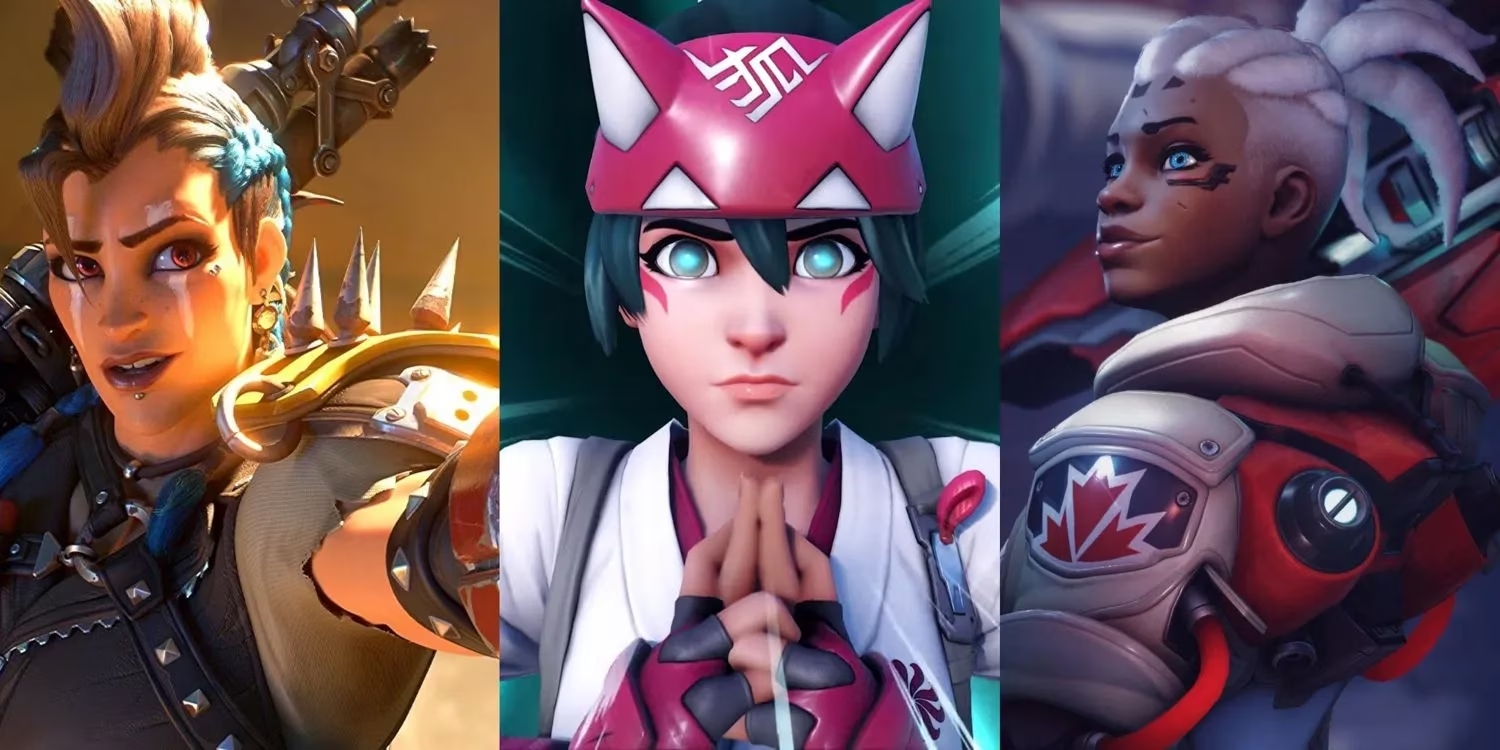
If the server issues were the explosive birth pains, the new systemic changes represented the enduring growing pains of Overwatch 2's new philosophy. The shift to a free-to-play model, supported by a Battle Pass and a reimagined cosmetic economy, drew a line in the digital sand. For new players, the path to the full roster was no longer a given but a grind. Unlocking the full cast, including the enchanting new support hero Kiriko, could require a marathon of matches. The competitive mode itself sat behind a gate of 50 quick-play victories. Blizzard's intent was noble: to erect barriers against cheaters and smurf accounts. But did the fortifications risk keeping out eager newcomers more effectively than malicious actors? The community's response was a mix of understanding and irritation. The Battle Pass system presented a clear calculus:
| Aspect | Pro (For Blizzard/Game Health) | Con (For Player Experience) |
|---|---|---|
| Hero Unlock via Battle Pass | 🛡️ Combats smurfing, ensures engagement | 🔒 Limits immediate access, feels like a pay/grind wall |
| Competitive Mode Gate | 🎯 Ensures basic game knowledge before ranked play | ⏳ Creates a lengthy onboarding hurdle for veterans & newbies |
| Free-to-Play Model | 👥 Drastically expands potential player base | 💰 Monetization pressure shifts to cosmetics & passes |
Furthermore, the initial mandate for a non-prepaid phone number, a stark measure for account security, met with immediate backlash. The player voice rose in a unified chorus of dissent, and Blizzard listened. In a swift and commendable reversal, the requirement was lifted for the vast majority of existing players, a compromise that balanced security with accessibility. This episode served as a crucial lesson: even well-intentioned systems must be tempered by community feedback.
The Unshaken Core: Gameplay's Guiding Light
Through the queue screens, the missing skins, and the debates over monetization, one truth emerged unwavering: the gameplay of Overwatch 2 was exceptional. The transition to 5v5 had injected the combat with a new, relentless pace. Tanks felt more impactful, duels were more decisive, and the action was distilled to a more intense concentrate. The sound design crackled with clarity, and the visual overhaul, while subtle in some areas, provided a polished sheen. New maps offered fresh tactical playgrounds. This core excellence acted as the gravitational center holding the experience together. Players frustrated by systems would, once in a match, find themselves captivated by the dance of combat, the clutch support play, the perfect ultimate combination. It was this fundamental joy that gave the community patience, the belief that the wrapper around the gem could be fixed.
The Path Forward in 2026: A Future Forged in Feedback
As Overwatch 2 sails into 2026, its launch troubles are receding in the rearview mirror, but the lessons must be navigational stars. The game now stands not on the brink of failure, but on a foundation of solid, exhilarating gameplay that has weathered its initial storm. The road ahead is clear:
-
Iterate with Integrity: Continue refining the new player experience. Is the 50-win gate still necessary? Can hero unlocks be made more engaging than a simple grind?
-
Value the Veteran: Ensure long-term players feel their loyalty and investment are respected through the cosmetic and progression systems.
-
Communicate Transparently: The phone number reversal showed the power of dialogue. Maintain that open channel.
-
Innovate on a Solid Base: With a stable game, the focus can return to what always made Overwatch shine: inventive heroes, compelling maps, and narrative events.
Overwatch 2 embarked on its journey as a ship launched in a hurricane. The hull was tested, the crew was rattled, but the engine—the pure, thrilling gameplay—proved sound. The question is no longer if it will sail, but how gloriously. The seas ahead are open, and the course will be charted by a developer now acutely aware of its community's voice, steering a game that has already proven its core is worth fighting for. The phoenix, though singed, is in flight, and its trajectory points toward a bright, contested, and vibrant horizon in the world of hero shooters.