
I still remember the strange mixture of admiration and unease I felt when the Zarya Alien skin first appeared in Overwatch. It was 2020, and Jay 'Sinatraa' Won had just been crowned the 2019 Overwatch League MVP. The skin was a playful nod to a community meme that depicted him as an alien, and at the time it felt like a harmless celebration of a star player. Then came the allegations. In 2021, Sinatraa's ex-girlfriend, Cleo Hernandez, published a nine-page Google document on Twitter. She described physical and emotional abuse during their nine-month relationship, including coerced sex. The news spread fast, and I watched the esports community struggle to respond. Now, writing in 2026, that moment still feels like a turning point in how leagues and teams handle serious accusations.
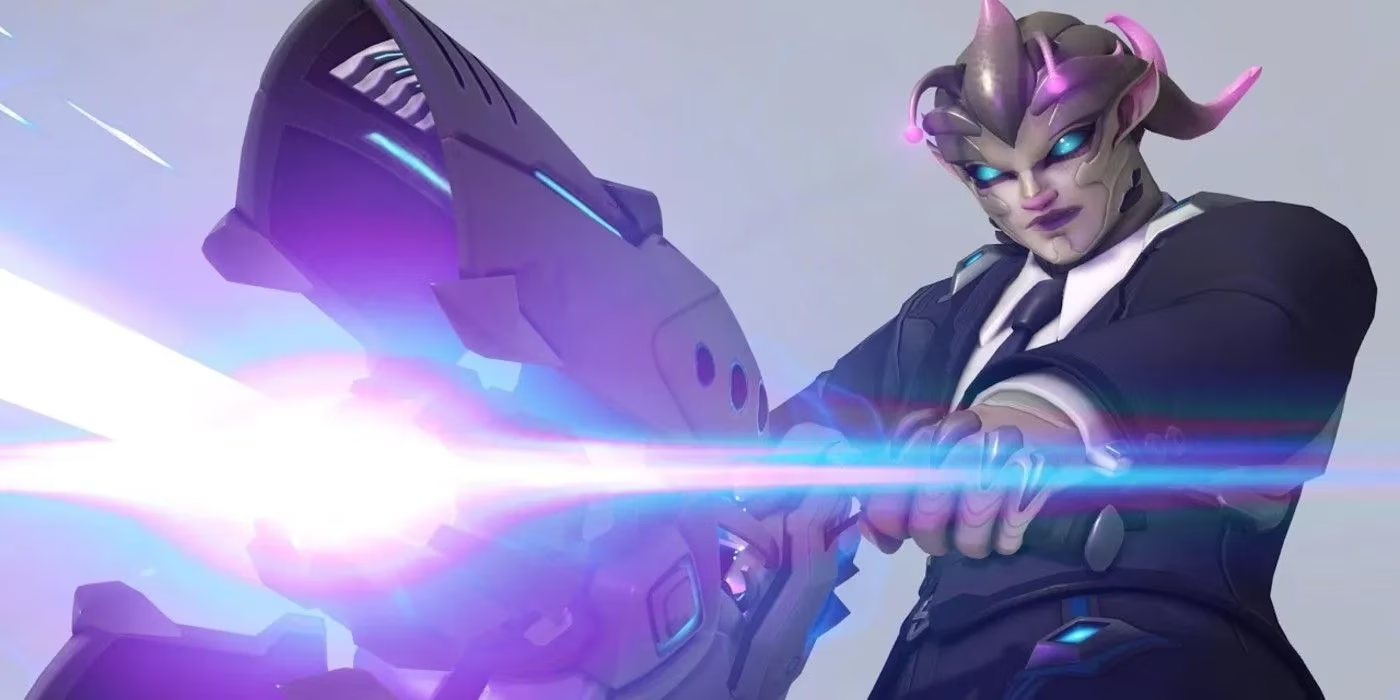
Sinatraa had left the Overwatch League in 2020 to pursue a career in Valorant with Sentinels. After Hernandez's report, Sentinels suspended him from the team. The Overwatch League, meanwhile, faced a difficult question: what should happen to a cosmetic item that carried his name, his MVP badge, and his championship legacy? The answer came quickly. The league announced that anyone who had ordered the Sinatraa-designed Alien skin would receive a refund of 200 League Tokens. The skin would be removed from player collections, and the MVP and Overwatch League Championships badges would be stripped from the Alien skin in a future patch.
That decision mattered to me because it was one of the first times I saw a major esports body treat in-game cosmetics as more than just digital merchandise. The skin was not simply a piece of art. It was a signature, a reward, and a symbol of a player's celebrity. When that player faced sexual assault allegations, keeping the skin in circulation felt like an endorsement. The refund was not a punishment in a legal sense, but it was a clear statement: the league did not want its virtual world to celebrate someone accused of abuse.
Here is a quick summary of what happened:
| Element | Response |
|---|---|
| Allegations | Cleo Hernandez shared a nine-page document describing abuse and coerced sex during a nine-month relationship. |
| Team response | Sentinels suspended Sinatraa from its Valorant roster. |
| League response | Overwatch League offered a 200 League Token refund for the Sinatraa Alien skin. |
| Skin removal | The Zarya Alien skin was removed from player collections. |
| Badge removal | MVP and Overwatch League Championships badges were removed from the skin in a future patch. |
I think the Overwatch League made the right call. Regardless of how any legal process unfolds, abuse allegations of this nature deserve serious attention. The league said it takes such allegations very seriously and supports victims of abuse. That language may sound corporate, but the refund and removal gave it teeth. It told players that their collections were not neutral. Every item can carry a story, and some stories become too painful or too compromised to keep.
Hernandez was incredibly brave to share her personal and traumatic experiences. By speaking out, she helped give others a voice and the courage to stand up for what is right. I also saw a growing community of advocates, including members of the Overwatch League, rally around victims. That support matters. If anyone has been affected by sexual abuse or by the news surrounding Jay Won, please reach out. You are not alone.
In 2026, as I look at how far esports has come, I still believe that accountability cannot be optional. Leagues, teams, and players must keep choosing the well-being of victims over the comfort of a famous name. I have seen similar debates in recent years. When a creator or competitor is accused of harm, fans ask whether we can separate the art from the artist. I no longer think that question has a simple answer. For a competitive skin tied to an MVP title, separation is almost impossible. The badge is the artist. The champion is the designer. The reward is the person. Removing the skin does not erase what happened, but it stops the game from continuing to honor it.
Some lessons I carry with me:
-
🎮 Digital items are not neutral.
-
🛡️ Leagues must act quickly and transparently.
-
💬 Victims deserve to be believed and supported.
-
⚖️ Legal outcomes matter, but community safety cannot wait.
-
🔄 Refunds and removals can be a form of accountability.
The Alien skin is gone from many collections now, but its legacy is complicated. It reminds me that games are not escapes from real-world consequences. They are spaces where real people build communities, form memories, and decide what they will tolerate. Overwatch is available on PC, Nintendo Switch, Xbox One, and PS4, and the franchise has continued with Overwatch 2. Yet the old controversy still echoes. I hope future leagues remember this moment not as a PR crisis, but as a lesson: when someone comes forward, listen. When a symbol becomes harmful, remove it. When a community can do better, it should.