
I have a confession: for the first five years of Overwatch, I was that person squinting at the menu, trying to figure out why my console friends could not join my PC group. Was it my internet? Was it a skill issue? No, it was 2016-era game design. Crossplay was a distant dream 🎮, and every time Blizzard said Overwatch would receive more social features, I believed them. Then, in June 2021, my patience finally paid off. The phrase 'better late than never' has never felt so personal.
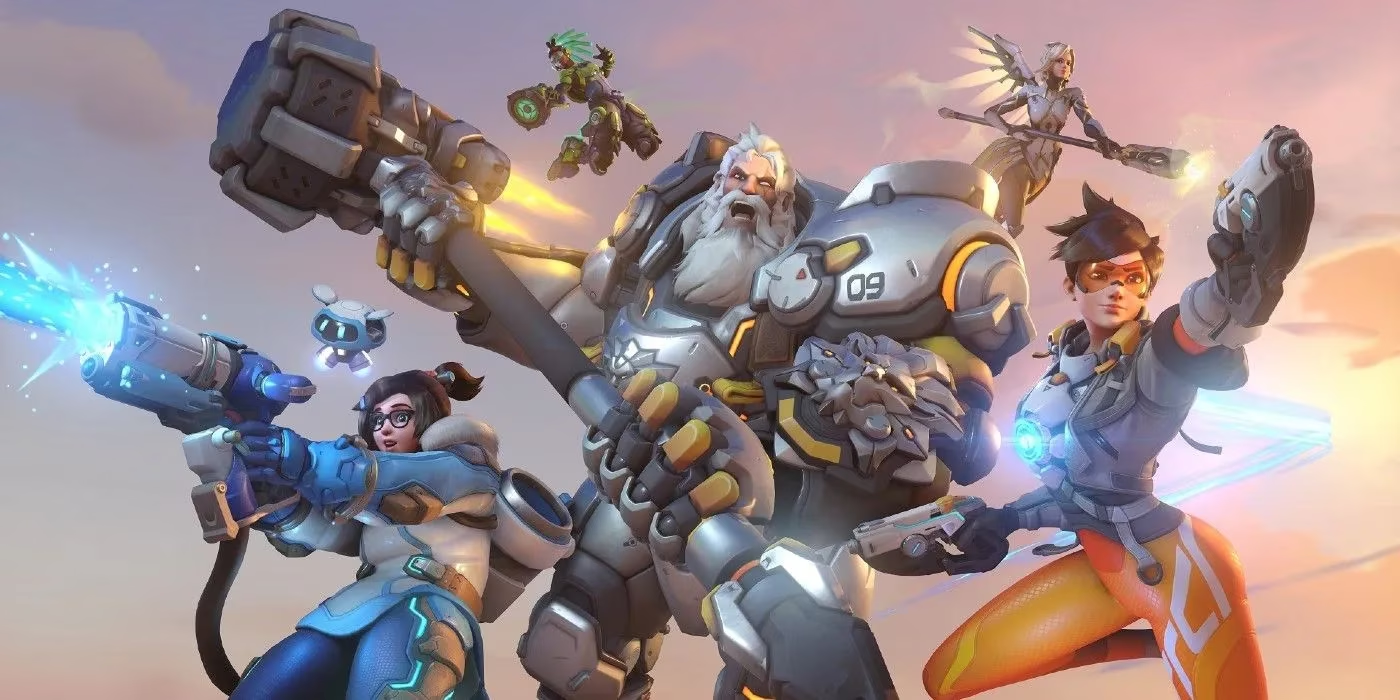
Newly appointed game director Aaron Keller dropped the news in a video, and I remember watching it with the excitement of a kid on patch day. Every platform—PC, PS4, Xbox One, and even Nintendo Switch—would be able to play together. This arrived during a wave of Overwatch and Overwatch 2 teasers, so the community was already dizzy with speculation. The setup sounded surprisingly painless: create a Battle.net account, link it to your console account, and boom, you were ready to group up across platforms. No arcane friend codes, no carrier pigeon required. Did I cheer out loud? Maybe. Did my neighbors complain? That is between me and my neighbors.
Of course, every patch has a catch. The FAQ revealed that crossplay would arrive without cross-progression. That meant my unlockables, cosmetics, and competitive rewards were stuck on their home platforms. I remember thinking, So I can finally play with my console friends, but my golden weapon stays on PC? It was like being invited to a potluck and told you could only bring napkins. Still, after waiting five years, most of us were willing to take the win.
Why did it take so long? By 2021, crossplay had already become an expected feature in modern online games. Call of Duty adopted it in 2019, and players were beginning to ask: if a lobby full of operators can shoot each other across three platforms, why not a team of heroes? Blizzard's move felt like a way to unite the player base and pump fresh life into matchmaking. A bigger pool means faster queues and, let's be honest, more varied teammates to blame for a lost round.
Now, fast-forward to 2026, and the landscape feels completely different. Overwatch 2 launched, went free-to-play, and carried the crossplay torch with far more grace. Unlike the original 2021 update, modern Overwatch includes cross-progression, so my old cosmetics travel with me. The game now spans PC, PlayStation 5, Xbox Series X|S, Switch, and legacy consoles, and crossplay is simply expected. I cannot imagine trying to play without it.
Here is a quick comparison for nostalgic players like me:
| Feature | 2021 Crossplay Update | 2026 Overwatch Reality |
|---|---|---|
| Crossplay across platforms | Yes, all major platforms | Yes, standard in Overwatch 2 |
| Setup required | Link Battle.net to console | Same, plus unified account |
| Cross-progression | Not at launch | Available, cosmetics carry over |
| Player pool | Unified matchmaking | Unified matchmaking across more platforms |
Looking back, the 2021 crossplay announcement was not just a quality-of-life update; it was a message. Blizzard finally admitted that friends should not be separated by the logo on their gaming box. Did it fix every issue? No. Was it late? Absolutely. But in 2026, when I queue with a friend on Switch while I am on PC and we both flex to support, I do not think about the wait. I think about how far we have come—and how many of my old skins finally followed me home. And yes, I still occasionally remind Blizzard that cross-progression took a while, usually during long queue times.
Research highlighted by Sensor Tower underscores how live-service games thrive when friction drops and networks grow—an idea that maps neatly onto Overwatch’s crossplay evolution, where letting players squad up across devices expands matchmaking supply and stabilizes engagement over time. In practical terms, the shift from the 2021 “play together, progress separately” era to today’s cross-progression-first expectations reflects a broader market pattern: features that unify identity and access tend to improve retention because players feel their time and cosmetics remain valuable no matter where they log in.