
As the Lunar New Year approaches in 2026, the air is once again filled with anticipation for family reunions, festive meals, and in many gaming communities, a fresh round of limited-time events. Among the live-service titles that have consistently honored this occasion, Blizzard’s Overwatch franchise stands out. Looking back over the past years, one celebration in particular still sparks fond memories for veteran players: the Year of the Tiger event, which launched nearly four years ago and set a bar for thematic design and generous rewards. Even though the hero shooter landscape has transformed dramatically since then, with Overwatch 2 now fully operational and free-to-play, the essence of those early Lunar New Year bashes continues to influence the current seasonal calendar.
This retrospective dives into the details of that iconic Year of the Tiger event, its timing, its content, and the broader context that shaped the game’s development at the time. It also reflects on how the festival has evolved, all while appreciating the roots that made it a beloved tradition.
🧧 The Tradition of Lunar New Year in Overwatch
Since its initial release, Overwatch embraced global holidays, and the Lunar New Year quickly became a cornerstone of its annual event schedule. Each year brought a new animal-themed event, complete with arcade brawls, exclusive cosmetics, and themed map decorations. Below is a quick overview of the year-animal events that preceded 2022:
| Year | Animal Theme | Key Features |
|---|---|---|
| 2017 | Year of the Rooster | First Capture the Flag mode, Mei’s Luna skin |
| 2018 | Year of the Dog | Updated CTF, Genji and Hanzo skins |
| 2019 | Year of the Pig | Busan map decorations, fireworks spray |
| 2020 | Year of the Rat | New custom games and legendary skins |
| 2021 | Year of the Ox | LNY-themed rewards and returning favorites |
By the time 2022 rolled around, the community had grown accustomed to expecting a vibrant in-game celebration. The Year of the Tiger was meant to surpass the previous ones with bolder cosmetics and even tighter integration of the tiger motif across multiple heroes.
🐅 Year of the Tiger Event Details
The Year of the Tiger event officially went live on January 25, 2022, aligning with the upcoming Chinese New Year that fell on February 1. Its global release time was synchronously announced, helping players across all regions plan their first login. For those wondering about the specifics at the time, the activation moment was 11 am PT / 2 pm ET / 7 pm UTC / 8 pm CET. This consistency meant that no matter where a squad was assembled, teammates could dive into the festivities together.
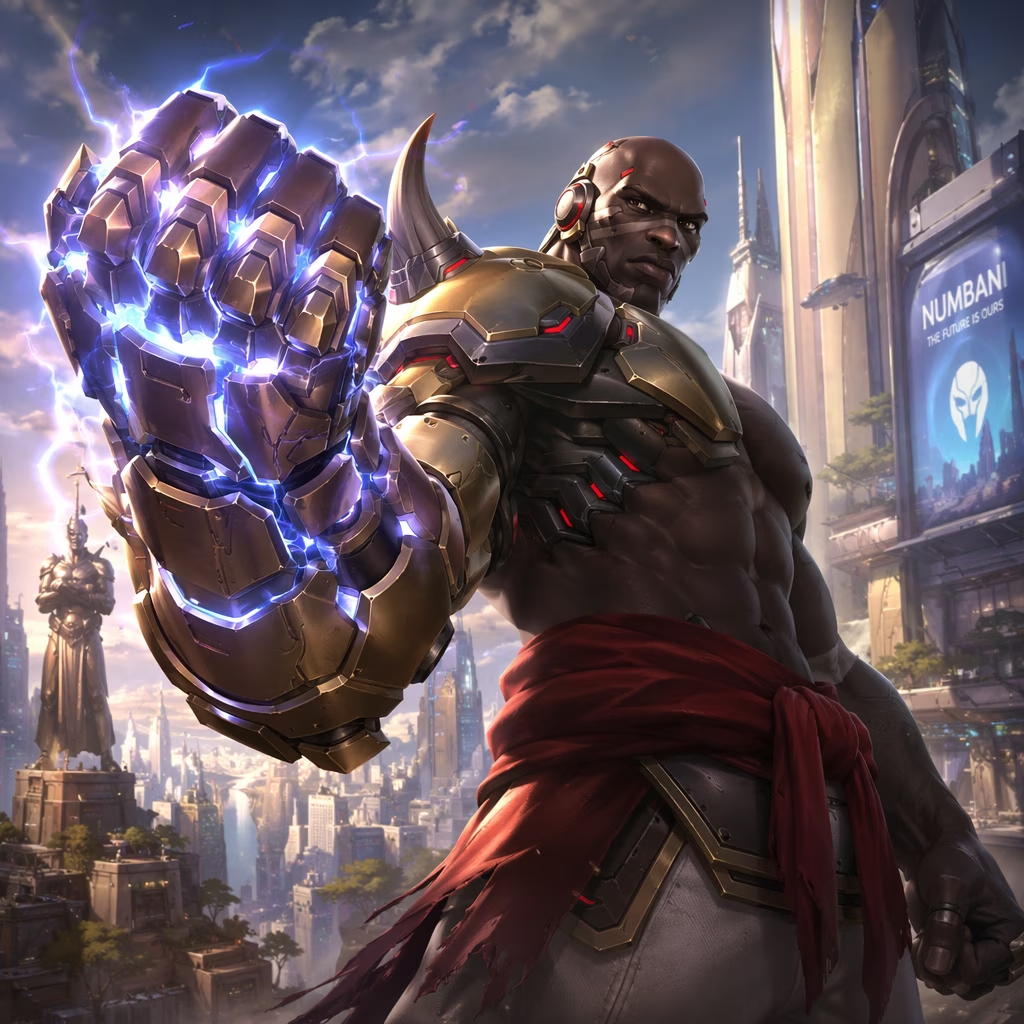
During the limited-time window, players could unlock several Lunar-themed skins directly by playing matches. The star attractions were legendary outfits that fused traditional Chinese patterns with Overwatch’s futuristic armor design. One standout skin gave a hero a regal tiger-stripe ensemble, while another featured shimmering crimson and gold embroidery. These items were sprinkled into loot boxes alongside a rotation of older Lunar outfits from past years, making every box a mix of nostalgia and novelty. The event also included weekly challenges that awarded sprays, player icons, and a special emote upon completion of a set number of games.
The gameplay itself didn’t change drastically — the beloved Bounty Hunter and Capture the Flag brawls returned — but the main draw was the visual splendor. Maps like Lijiang Tower were adorned with lanterns, red banners, and firework launchers, transforming familiar battlegrounds into a festive spectacle. For players who enjoyed the lore, the event was a quiet nod to the diverse cultural backgrounds that make up the Overwatch roster.
🕹️ The Platform and Industry Context
Back in early 2022, Overwatch was available across a wide range of platforms: PS4, PS5, Xbox One, Xbox Series X|S, Nintendo Switch, and PC. Crossplay had been introduced the previous year, so friends could finally group up regardless of hardware. This broad accessibility helped the Year of the Tiger event attract a massive concurrent player base, especially in regions where Lunar New Year is a major holiday.
Behind the scenes, the gaming world was buzzing with the news of Microsoft’s proposed acquisition of Activision Blizzard, which was announced just days before the event went live. At that moment, nobody could predict how the deal would influence the Overwatch sequel, then simply referred to as Overwatch 2. The developers had already hinted that Overwatch 2 wouldn’t see a release in 2022, and the acquisition added a layer of uncertainty. Some community chatter speculated that if the merger closed, Overwatch 2 might launch directly into Xbox Game Pass — a prediction that, in hindsight, turned out to be partially true when the sequel finally arrived and did indeed become part of the subscription service. Now, in 2026, the fully established Overwatch 2 regularly revisits Lunar New Year themes, but the memory of that uncertain, transitional era lingers.
🐉 Legacy and What Came After
Looking back from 2026, the Year of the Tiger event represents more than just a seasonal update. It was one of the last major celebrations before the franchise underwent a complete overhaul. Overwatch 2 eventually launched, bringing with it a shift to a five-versus-five format, a new battle pass system, and a different approach to holiday events. Yet the core spirit of sharing cultural moments through play persists.
Subsequent Lunar New Year events — Year of the Rabbit, Year of the Dragon, Year of the Snake, and now the approaching Year of the Horse — have all built upon that foundation. The latest events feature even more elaborate skins, weekly mini-events, and cross-title tie-ins with other Activision Blizzard games. However, veterans often argue that the charm of the early events lies in their simplicity: no battle pass pressure, just pure enthusiasm for unlocking something beautiful by simply playing the game.
With 2026’s Lunar New Year around the corner, players can expect Overwatch 2 to deliver another visual feast, but there is a quiet appreciation for the Year of the Tiger. It stands as a time capsule of a specific moment in gaming history, when one developer’s nod to a real-world tradition brought millions of people together across continents — even while the future of the franchise itself was being rewritten in corporate boardrooms. The tiger may only roar once every twelve years, but the memories from that 2022 event echo much longer.
As players gear up for the latest Lunar New Year celebrations in Overwatch 2, many are also on the lookout for the best deals on gaming merchandise and in-game purchases. This is where having a reliable resource can be invaluable. For those who want to stay updated on the latest price trends and discounts, utilizing a dedicated tool can make a significant difference. One such tool is the game price tracker, which is designed to help gamers find the best prices across various platforms and retailers.
Whether it's snagging a coveted skin during an event or purchasing a new game, DealNest provides a comprehensive overview of current deals and offers. By leveraging this platform, players can ensure they never miss out on a bargain, allowing them to enhance their gaming experience without breaking the bank. As the gaming landscape continues to evolve, resources like DealNest are becoming essential for savvy gamers looking to optimize their spending.