
As Overwatch 2 continues to evolve in 2026, the community faces a persistent and divisive issue that transcends typical balance discussions: the DPS Moira player. These individuals, queuing as Support heroes, frequently abandon their healing duties to pursue eliminations, creating frustrating experiences for teammates who rely on consistent sustain during matches. While the game's shift to a 5v5 format with one Tank has elevated the importance of every role, this has ironically made the phenomenon of damage-focused Supports more noticeable and detrimental than ever before.
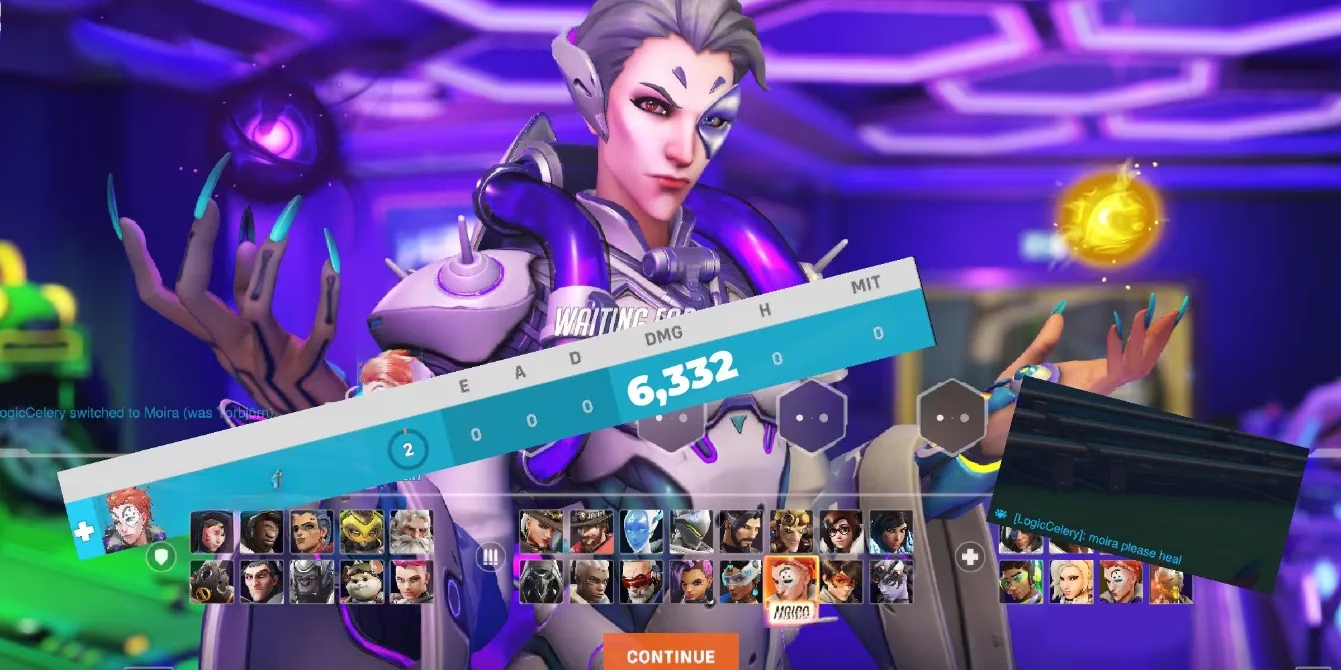
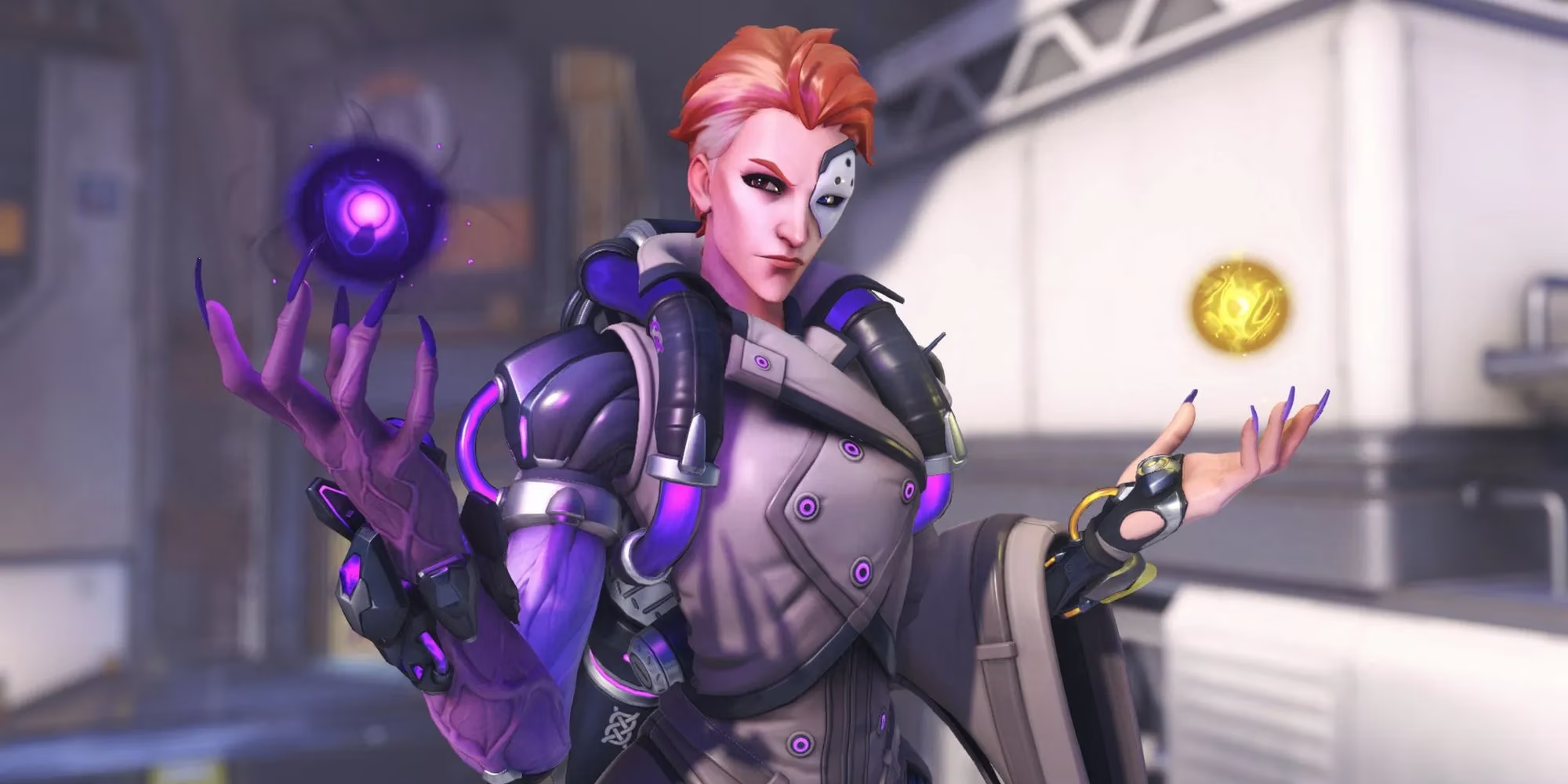
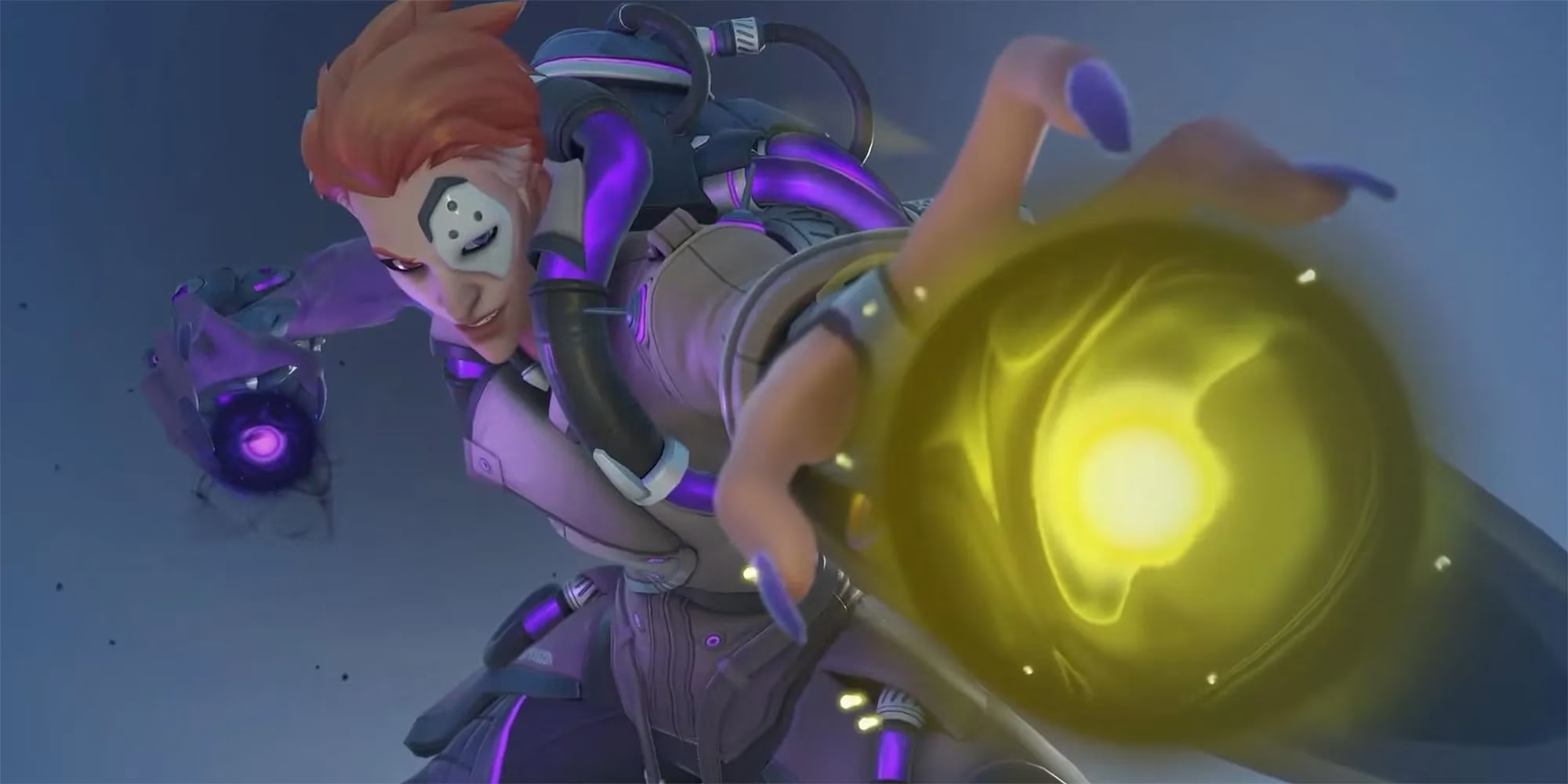
The fundamental problem lies in Moira's unique kit design. She possesses exceptional offensive capabilities alongside her healing potential, creating a constant temptation for players to prioritize damage-dealing over team support. Her biotic grasp can drain enemy health while her biotic orbs offer both damage and healing options. This duality, while intended to provide strategic flexibility, often becomes a crutch for players who would rather chase kills than fulfill their designated role. In a game where team composition and role execution are paramount, having a Support hero functioning as a de facto Damage hero creates significant imbalances that are difficult to overcome.
Queue times have historically influenced this behavior. The Support role often features shorter wait times for matches. This has led some players to select Support primarily for faster entry into games, with no genuine intention of playing the role as intended. The introduction of "While You Wait" deathmatches during queue times in Overwatch 2, while a positive feature for reducing downtime, may inadvertently encourage this mindset by keeping players in constant combat mode rather than emphasizing strategic role preparation.
The impact on team dynamics is severe. 🚨 When a Moira focuses solely on damage:
-
The team loses a crucial source of healing and sustain
-
The solo Tank receives inadequate support, collapsing the frontline
-
Damage heroes must play more conservatively without reliable healing
-
Ultimate charge generation shifts away from healing, delaying key defensive abilities like Coalescence
This creates a domino effect where every other player's performance is negatively impacted by one individual's refusal to engage with their role's core responsibility. It's a form of soft throwing that is particularly insidious because the Moira player may still be contributing eliminations and damage statistics, masking their fundamental failure to support the team.
Contrast this with other Support heroes who must make more deliberate choices between healing and damage. A Mercy dealing damage with her pistol is explicitly choosing not to heal at that moment. A Baptiste or Ana dealing damage must actively aim and land shots, creating natural pauses in their offensive output. Moira's damage, however, can be applied almost passively while moving, creating less cognitive dissonance for players who want to deal damage while technically playing Support.
The community's frustration stems not from players experimenting or having bad games, but from a consistent pattern of role abandonment. In casual Unranked and Arcade modes, where many players go to relax, encountering a DPS Moira can transform a potentially enjoyable match into a tedious exercise in resource management. The issue has become so prevalent that it has spawned its own subculture within the Overwatch community, complete with memes, warning signs, and immediate skepticism whenever a player selects Moira.
From a game design perspective, addressing this requires careful consideration. Potential solutions that have been discussed include:
-
Role-Specific Performance Metrics: More emphasis on healing output and assists in matchmaking calculations for Support players
-
Enhanced Tutorials: Role-specific training that emphasizes the importance of healing priorities
-
UI/UX Cues: Clearer visual indicators when a Support hero is neglecting their healing duties
-
Community Reporting Categories: More specific options for reporting players who refuse to play their role
However, any changes must avoid punishing players who are legitimately using Moira's hybrid nature effectively. The difference between an aggressive but effective Moira and a pure DPS Moira often comes down to situational awareness and priority management. An effective Moira knows when to fade into the backline to heal critical allies; a DPS Moira uses fade exclusively to pursue low-health targets.
As Overwatch 2 approaches its fourth year, this remains a cultural rather than purely mechanical issue. It speaks to broader questions about player responsibility, role queue integrity, and how a game community self-regulates problematic playstyles. While the developers can implement systems to discourage this behavior, ultimately it requires a shift in player mindset—recognizing that in a team-based game, fulfilling your chosen role isn't optional, but fundamental to the experience for all ten players in a match.
The DPS Moira phenomenon serves as a microcosm of Overwatch's ongoing struggle to balance player freedom with team necessity. As the game continues to evolve, finding solutions to this persistent issue will be crucial for maintaining the cooperative spirit that has always been at Overwatch's core. Until then, players in the Support queue will continue to encounter those who see the healer icon not as a responsibility, but as a shortcut to faster queue times and more aggressive play—a choice that continues to frustrate teammates across all skill levels and game modes.