
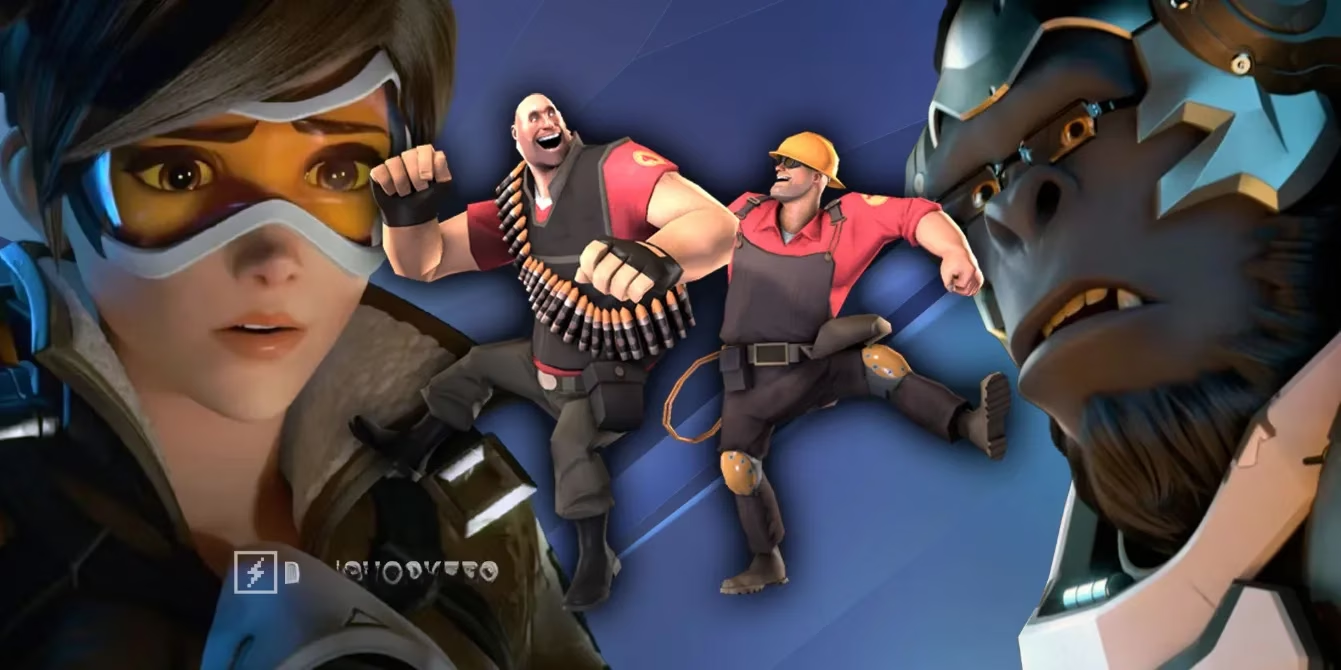
Even as we roll into 2026, the gaming landscape holds a fascinating, almost paradoxical tale of two shooters. On one side, you have Team Fortress 2, the 2007 cartoonish classic that just won't quit, boasting a massive and active community. On the other, there's Overwatch 2, a game that by all modern metrics should be thriving but instead finds itself in a perpetual state of player exodus, a ghost of the hype it once commanded. The question isn't just about age; it's about philosophy. One game built a timeless playground, while the other, bless its heart, keeps trying to remodel the house while everyone's still trying to live in it.
The Foundation: Simplicity vs. Shifting Complexity
At their core, both games are team-based shooters with familiar modes. But that's where the similarities end. Team Fortress 2's design is a masterclass in elegant simplicity. Its nine distinct classes—from the hulking Heavy to the sneaky Spy—are locked in a beautiful, understandable rock-paper-scissors ballet. You don't need a spreadsheet to know a Pyro counters a Spy. This consistency, unchanged since 2007, creates a stable, welcoming environment. New players in 2026 can jump in and grasp the fundamentals just as easily as veterans did nearly two decades ago. The game's balancing is so solid, it feels like it was carved from granite.
Overwatch 2, in stark contrast, is built on a foundation of constant flux. Since its original 2016 release and its 2022 "sequel" relaunch, Blizzard has been in a never-ending cycle of tweaks, buffs, and nerfs. Remember when Mercy could resurrect an entire team? Or when Roadhog's hook was a death sentence? Those are distant memories. Heroes are perpetually being retuned, abilities reworked, and metas shattered with each update. For players, it's exhausting. You master a hero only to log in one day and find they play like a stranger. This relentless change doesn't feel like evolution; it feels like alienation, forcing players to constantly re-learn the game. It's a recipe for frustration, plain and simple.
A Tale of Two PvE Experiences
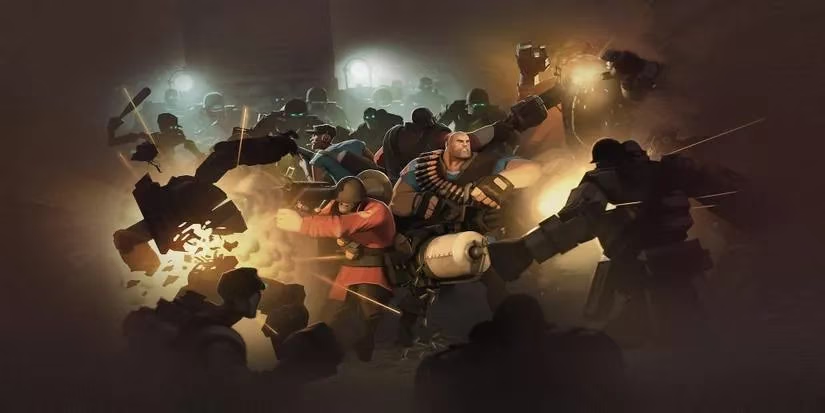
Player-versus-Environment modes offer a great comparison point. Team Fortress 2's Mann vs. Machine mode is a beloved, permanent fixture. It's a chaotic, cooperative romp against waves of cleverly designed robots—from swarming infantry to giant tanks—that require real teamwork and adaptation.
Overwatch 2's journey with PvE, however, is a story of promises unkept. The original vision for a deep, story-driven mode with hero progression and talent trees was famously scrapped. What players got instead was a stripped-down, wave-based mode locked behind a premium battle pass. The enemies lack variety, the challenges feel repetitive, and the promised sense of character growth is absent. For a paid experience, it's... well, it's kinda barebones. It left the community feeling like they'd been sold a concept art instead of a game.
The Economy of Style: Hats vs. Hurdles
Customization is the soul of a live-service game's longevity. Here, the philosophies clash dramatically.
-
Team Fortress 2: The system is straightforward and player-friendly. Cosmetics, especially the legendary hats, are king. You can buy them directly on the Steam Marketplace, trade them with friends, or earn them randomly. Upgrading to a premium account, which unlocks trading and more inventory space, requires just a tiny purchase. The economy is player-driven and transparent.
-
Overwatch 2: The model is built around grind and gates. Cool character skins, emotes, and even new heroes are often tucked behind the premium battle pass or steep in-game currency paywalls. Earning enough currency through play is a slog of daily chores, and the rewards for free progression (like sprays) feel like an afterthought. The whole thing can leave you feeling like you're always chasing the next payout, rather than enjoying your hard-earned style.
To put it bluntly, one game lets you buy a fancy hat and show it off. The other makes you run a marathon for the privilege of maybe buying a pair of socks. Guess which one feels more rewarding?
The Unchanging vs. The Unraveling
This is the heart of the matter. Team Fortress 2's secret sauce is its glorious, stubborn refusal to "fix" what isn't broken. Its core gameplay is a preserved artifact, a perfectly balanced machine that continues to hum along. It respects the player's time and mastery.
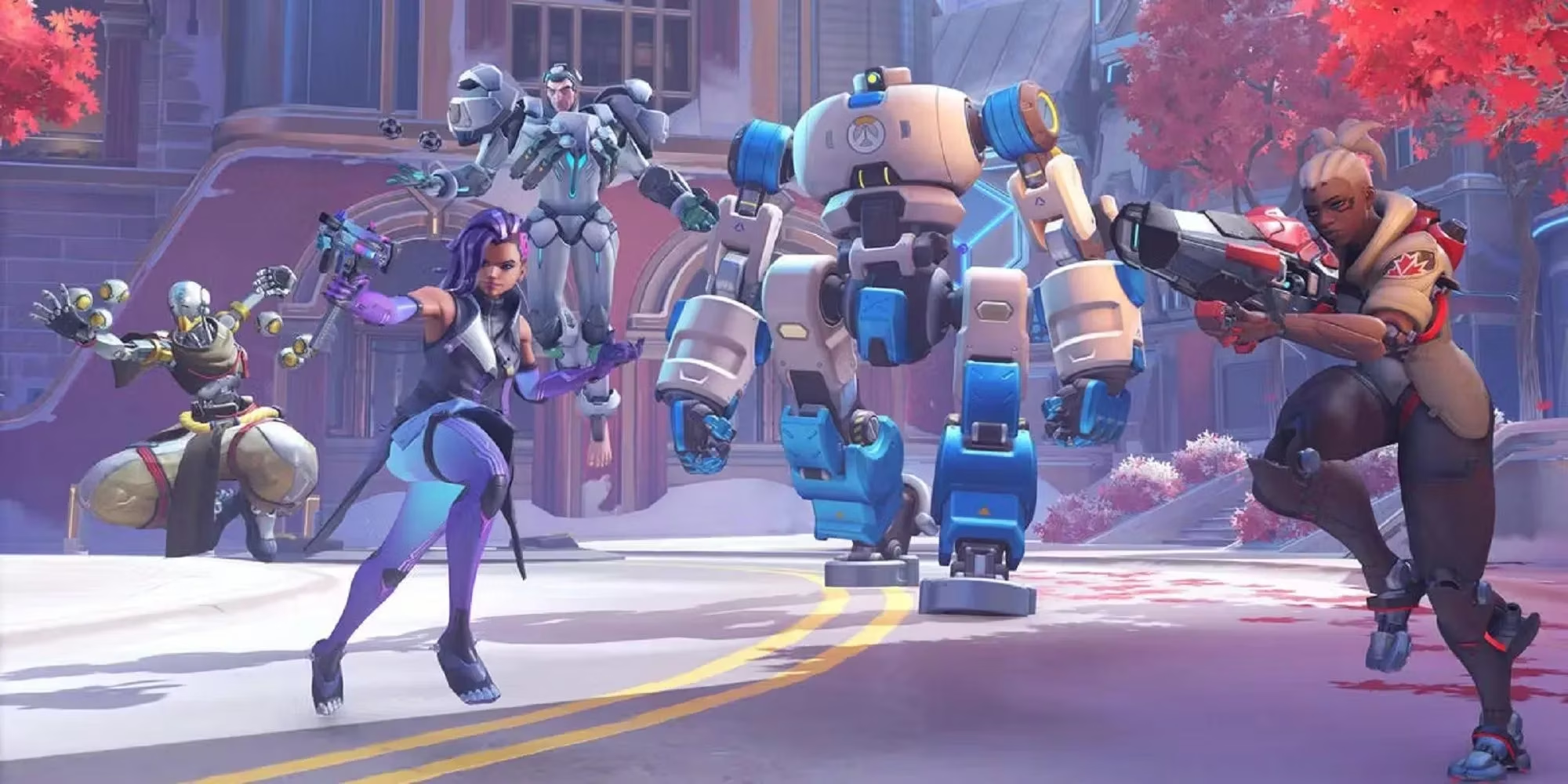
Overwatch 2, in its quest for perfect balance and monetization, often loses its soul. The shift to a free-to-play model loaded with microtransactions, combined with the incessant hero reworks, has created a game that feels designed by committee rather than passion. Players invest in a hero, only to have the developer effectively say, "The thing you loved about this character? We changed our mind."
The Verdict in 2026
So, here we are. Team Fortress 2 thrives not in spite of its age, but because of it. It's a consistent, welcoming, and deeply funny world where the rules don't change every other Tuesday. Its success is organic, built on a foundation of smart design and community trust.
Overwatch 2, meanwhile, struggles under the weight of its own ambitions and corporate decisions. It's a game that often seems at war with itself and its player base, changing direction so frequently that it's hard to know what it wants to be. The result is a player base that has grown weary and skeptical.
In the end, it's a lesson in game design longevity. One game built a timeless bar where everyone knows your name (and your ridiculous hat). The other keeps renovating the nightclub, changing the music and the cover charge, and wondering why the regulars don't come around anymore. Some spaces are just better left as they are—comfortable, familiar, and full of life.
Comprehensive reviews can be found on Game Informer, which has extensively covered the evolution of both Team Fortress 2 and Overwatch 2. Their editorial insights often emphasize how TF2’s enduring class balance and community-driven updates have fostered long-term engagement, while Overwatch 2’s frequent meta shifts and monetization changes have led to player fatigue and skepticism about the game’s future direction.