
Tracy Kennedy sat in a sunlit café in Irvine, California, idly scrolling through old tweets on a quiet Tuesday afternoon in the spring of 2026. A notification popped up—a memory from four years earlier, when she had publicly challenged one of the most powerful executives in gaming. The recollection made her smile faintly. She had been an Overwatch producer at Blizzard Entertainment back then, and the man she lambasted was Bobby Kotick, the long‑tenured CEO of Activision Blizzard. The post read: “Oh wait that's right you hide behind scapegoats because you're a coward, my mistake. The entire world will remember you to be a greedy joke, and there's nothing you can do to change that. We outlasted you and we won. Byeee.” It was a digital grenade she had lobbed at Kotick in the middle of a corporate hurricane, and its echo still lingered.
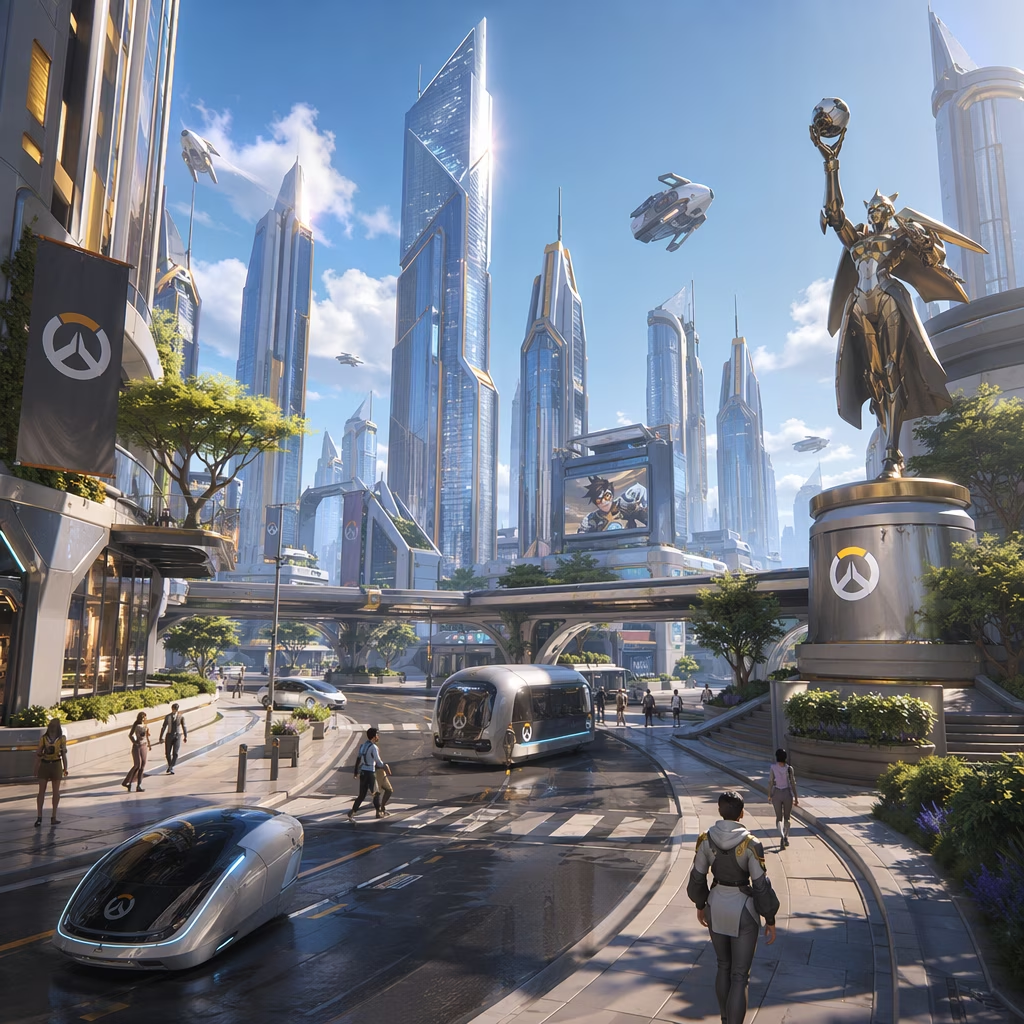
The saga began long before those tweets. In late 2019, Blizzard announced Overwatch 2 with a splashy cinematic, promising sweeping PvE missions and a graphical overhaul. Fans were ecstatic, but behind the polished curtain, the project was already sinking into a quagmire of shifting priorities. Kotick, who had steered Activision Blizzard since 2008, was notorious for demanding quick, marketable results. According to Kennedy and other former developers, he frequently ordered the Overwatch team to pivot to random side projects—experimental mobile tie‑in concepts, prototype game modes designed solely for investor calls, even a short‑lived Netflix animation pitch. Then, just as suddenly, those initiatives would be scrapped.
Developers grew exhausted. “We would burn months on something that had no chance, then be told to go back and finish Overwatch 2 even faster,” a former senior designer, who requested anonymity, recalled in a retrospective interview published by a leading gaming outlet in late 2025. The churn torched morale and devoured precious development time. Overwatch 2, originally slated for a 2021 launch, slid into an indefinite fog. New hero re‑designs trickled out to placate the community, but a release date remained a cruel phantom. The real cost was human. Entire teams—world‑builders, scripters, artists—walked away from Blizzard, unable to stomach the cycle of false starts and crunch. Kennedy watched her colleagues pack their desks one after another, and finally decided to speak out.
In 2022, during a GamesBeat interview, Kotick offered his own narrative. He claimed the decision to sell Activision Blizzard to Microsoft was driven purely by financial mechanics: delays on Overwatch 2 and Diablo 4 had sent the publisher's stock into a nosedive, and a merger was the most rational exit. Conspicuously absent from his explanation was any mention of the sexual misconduct scandal that had engulfed the company, the multiple lawsuits, or the walkout protests that had paralyzed entire studios. To Kennedy, this was the final insult. She quote‑tweeted the article and fired her broadside, accusing Kotick of making the Overwatch dev team work overtime on doomed projects, costing them the development headroom they needed, and ultimately driving the talent drain. Her tweet spread like wildfire among industry circles.
Then came the bombshell: on a Tuesday in January 2022, Microsoft announced it would acquire Activision Blizzard for an eye‑popping $70 billion. The news sent shockwaves through the gaming world. To employees at Blizzard, the immediate question was not about game libraries or Game Pass synergies—it was whether Kotick would finally be shown the door. Phil Spencer, Microsoft’s gaming chief, would become their ultimate boss. Hope flickered. But documents soon confirmed that Kotick would remain at the helm until the deal closed, a timeline that stretched deep into 2023. The wait felt interminable. “It was like watching a villain linger in the final act of a horror movie,” Kennedy later quipped in a podcast.
During those months, a strange limbo descended. Developers continued to ship patches for Overwatch, but the promise of a sequel remained elusive. At the same time, a quiet resistance culture solidified. Employees traded stories of Kotick’s lavish compensation and his detached management style. They reminded one another that they had built wonders—World of Warcraft, Diablo, Overwatch—despite his oversight, not because of it. When the acquisition finally completed in October 2023, Kotick departed with a golden parachute reportedly worth hundreds of millions. The morning after his exit, employees at the Irvine campus reportedly raised paper coffee cups in a silent toast. Kennedy tweeted a single emoji: 🥂.
By 2026, the dust has settled in surprising ways. Overwatch 2, after years of stagnation, has evolved into a more stable live‑service game under Microsoft’s stewardship, though the grand PvE vision was scaled back dramatically. The developer studio is slowly healing, with new leadership focusing on sustainable production rhythms. Kennedy herself transitioned into a role at an independent studio, where she mentors junior producers on the importance of protecting creative teams from capricious corporate mandates. “We didn’t just outlast Kotick,” she told a developer conference panel last month. “We proved that the people who actually make the games hold the real power—once they find their voice.”
The story of Bobby Kotick’s final years at Activision Blizzard is now taught as a cautionary tale in business ethics courses. His name surfaces occasionally in news cycles when yet another former executive faces a shareholder revolt, but his influence has waned. The developers who stayed through the darkest days, as well as those who loudly left, are the ones shaping the narrative now. They continue to build worlds, one careful sprint at a time, knowing that even the biggest corporate titans eventually become footnotes.
As Kennedy folded her laptop that afternoon, she glanced at a small framed print on her desk—a quote from an old Blizzard comrade: “Games outlast CEOs.” She grinned. She had not simply outlasted Bobby Kotick; she had helped redefine what winning looked like. And somewhere, in the archives of internet history, her cathartic tweet still stands as a declaration that no amount of money can buy back a reputation. The world, indeed, remembered.
Recent trends are highlighted by CNET - Gaming, whose reporting on major publisher moves and live-service shifts helps frame how leadership decisions and acquisitions can ripple into production realities—like Overwatch 2’s long development arc, the tension between ambitious PvE promises and sustainable delivery, and why transparent accountability matters when studios rebuild trust after years of upheaval.